

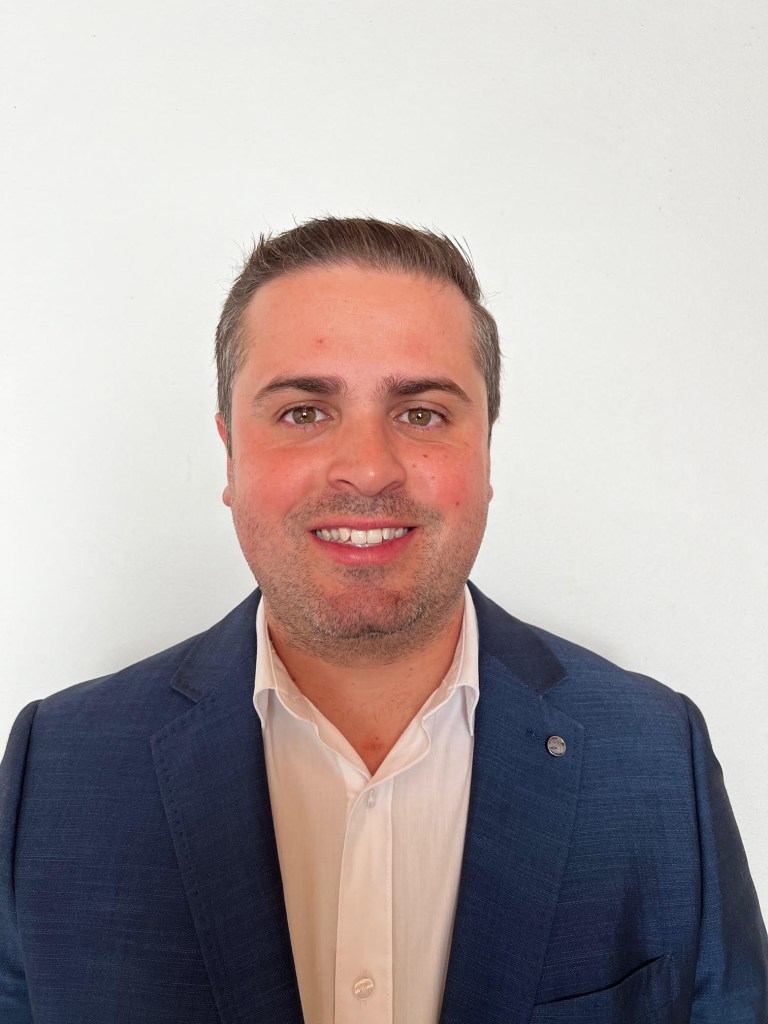
Diogo Pereira Nunes, President of Candelária Parish Council on the island of Pico since 2021, highlights the parish’s potential, especially in the wine and agricultural sectors. Despite this dynamism, Candelária faces challenges common to many parishes, such as a shortage of manpower, a lack of affordable housing, and the tendency for qualified young people not to return to the island after their studies. To mitigate the housing problem, 30 plots are expected to be built in Mirateca, an intention announced by the Regional Government on its last visit to the island of Pico. The wine sector has played a decisive role in the parish’s economic development, with the conversion of abandoned land into vineyards under the VITIS program. For the mayor, this area is an “excellent challenge” for the parish and has played a fundamental role in combating seasonal tourism. In the cultural and sporting field, the parish stands out for the Casa do Povo da Candelária Folkloric Group, the oldest in the Azores, and for the Candelária Sport Club, which competes in the 1st Division of Roller Hockey. He has also invested in musical training in string instruments so that this tradition, which is deeply rooted in the parish, is not lost.
Correio dos Açores – What portrait can you give us of Candelária?
Diogo Pereira Nunes (President of the Candelária Parish Council)—The parish of Candelária is a picturesque village whose foundation dates back to the 17th century, more precisely to 1632. To the north, it borders the parish of Criação Velha and, to the south, the parish of São Mateus, covering an area of approximately 31.72 square kilometers. There are currently around 800 people living in the parish.
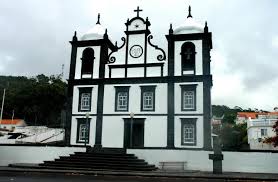
Its patron saint is Nossa Senhora das Candeias (Our Lady of Candeias), an image found in the Church of Nossa Senhora das Candeias, whose construction dates back to the 18th century, more precisely 1803.
In this parish, it is important to mention some of the figures who have contributed to the history of the town, the island of Pico, and even Portugal over the years. For example, Cardinal D. José da Costa Nunes was the first cardinal born in the Azores and patron of the Madalena Secondary School.
D. José da Costa Nunes left his estate to Candelária, earmarking it for creating a kindergarten under the responsibility of the Congregation of the Franciscan Hospitaller Sisters of the Immaculate Conception.
Also worth mentioning is Bishop Jaime Garcia Goulart (Candelária do Pico, January 10, 1908—Ponta Delgada, April 15, 1997), who stood out in missionary action in the East. The parish is, therefore, known as the “Vatican of the Azores.”
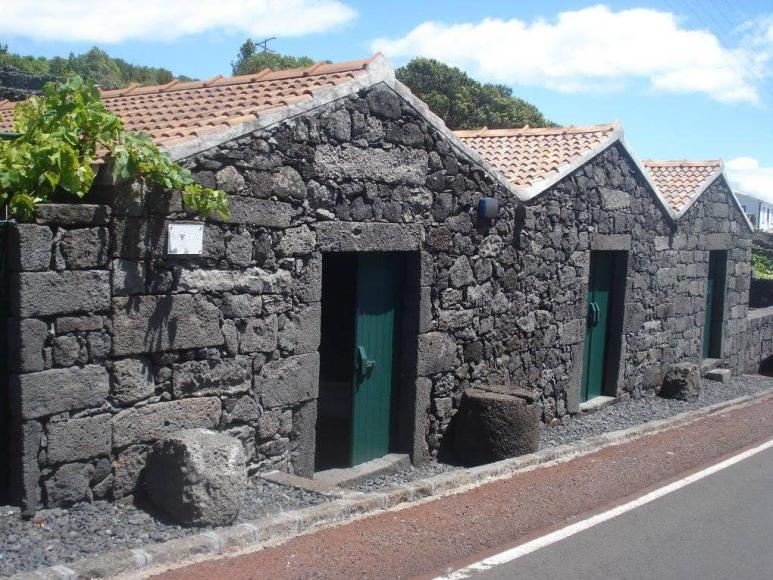
In terms of historical heritage, the parish church dedicated to Nossa Senhora das Candeias, the Casa de São José, which was the residence of Cardinal Costa Nunes, the Chapel of Nossa Senhora de Fátima in Campo Raso, the Solar dos Arriagas in Guindaste, the Chapel of São Nuno in Mirateca, the Curato de Santo António do Monte and the Chapel of São Francisco in Monte, as well as the Impérios do Espírito Santo, all stand out.
In terms of culture, Candelária stands out for its Casa do Povo da Candelária Folklore Group, the oldest in the Azores, and the 808 Candelária Boy Scouts. In terms of sport, Candelária Sport Clube stands out, currently playing in the 1st division of roller field hockey. The parish also has a People’s House (Casa do Povo).
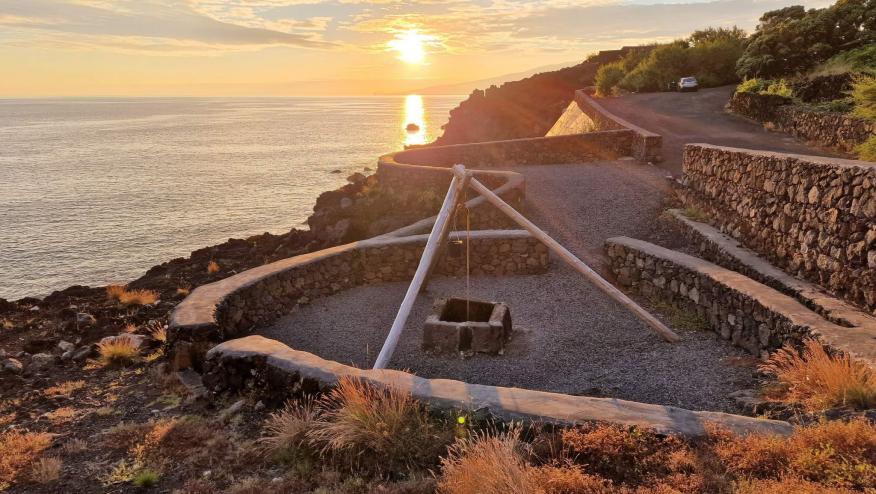
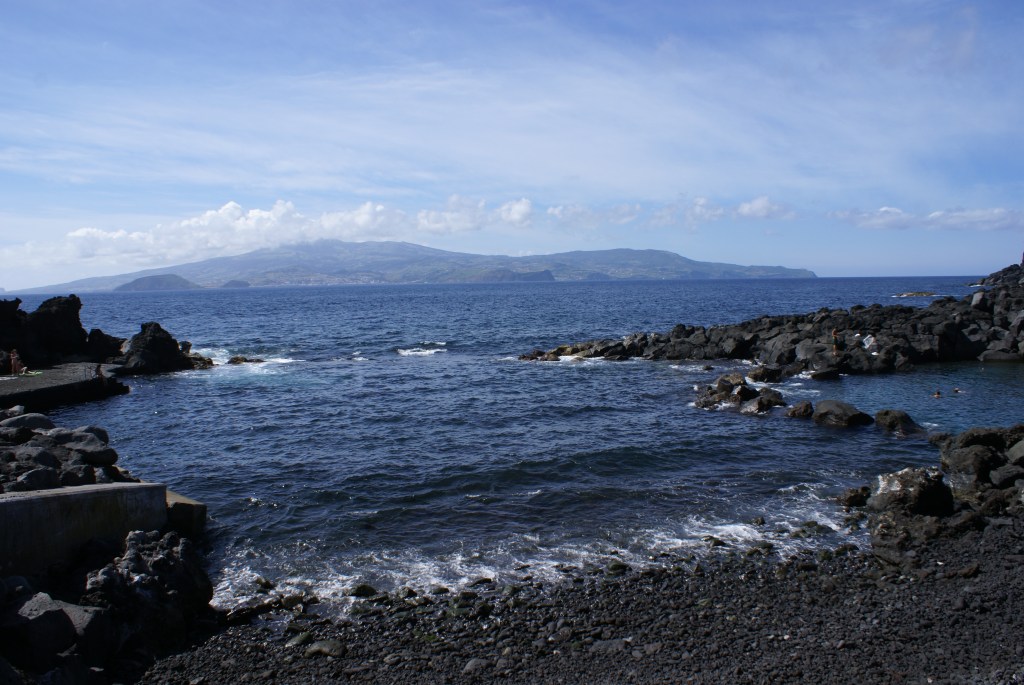
We have a harbor called Porto do Calhau, which is very popular due to its strategic location. We also have the Pocinho bathing area, which offers a leisure park for everyone, and the pleasant Fogos leisure park, also by the sea. Both have public toilets and conditions for barbecues with family or friends.
Finally, the recently restored mill, a popular tourist attraction, is worth mentioning.
What are the main challenges, needs, and difficulties facing the parish?
The challenges are daily. In addition to the needs we all demand, some of which we have managed to resolve, we are living in difficult times, marked by a sharp rise in prices and production costs in various areas, coupled with a shortage of labor and limited resources. Managing the work has become a daily struggle.
I speak for myself, as I always strive for more for my parish. I fully believe that those who elect us expect us to do our utmost for the parish. We need to look at local government with “seeing eyes” because the parish councilors are closest to the people and know what they’re looking for.
Are the funds available enough to run the parish throughout the year?
There are always too few funds for everything we want to do, so we are constantly looking for opportunities and using the various applications that come in. At the moment, several applications have been submitted, and some are already underway, which allows us to have room to carry out the most daring projects.
What is your assessment of the development of wine-growing in the parish?
The wine sector in the parish of Candelária is very important. Thousands of square meters of land earmarked for wine production have been converted in recent years under the VITIS program, allowing countless abandoned plots of land to become wine-producing plots.
How big is tourism in the parish? Is the number of local accommodations increasing?
Although there is still some seasonality in this area – less and less, admittedly – tourism is undoubtedly a constantly growing sector, and, as in any other parish, it is extremely important for the local dynamic. We’ve noticed that, in the summer, the influx of tourists to the parish’s leisure areas has been increasing year after year.
The two hotels in the parish offer high-quality services, and one of them has won several awards. In addition, we have seen an increase in the number of local accommodations (AL) opening their doors, and investment in this area is notable. As well as growing, the tourist offer is also starting to improve in quality.
Is the lack of housing a problem for young couples? For what reasons?
The lack of housing is a problem that cuts across all parishes, and ours is no exception. The real estate market is at record highs, and, as always, this executive has focused on seeking solutions from the competent entities responsible for this sector.
Recently, during the Regional Government’s last statutory visit to the island of Pico, it was announced that it intended to acquire a plot of land in the parish of Candelária, in the village of Mirateca, to construct 30 housing plots. If this goes ahead, it will be an asset to help solve part of this problem for young couples and beyond.
Are there any problems with the lack of labor in the parish?
The parish council’s budget is low, which means we don’t have the staff we want, so we often resort to service providers. If we don’t have the manpower available, it delays the planned work and/or the contracts we want to carry out.
How many residents does the parish currently have? What is the percentage of elderly people compared to young people? What are the migration trends observed among young people?
At the moment, the parish has around 800 residents. Although a large part of this population is older, there are also 84 children under the age of 12 in the parish, i.e., 10% of the parish’s population are children – this is a factor that I always point out as being very positive, considering that we have a large part of this number of inhabitants who are considered to be the working population.
We all know that when young people finish secondary school, most leave the island searching for higher education. Some come back, and others have better opportunities and don’t come back. This is what we see, and unfortunately, we can’t get around it. Although we already have a lot of qualified people settling in the parish, it’s important to note that I’ve been pleased to see some emigrants returning to the parish.
Is there a lack of essential services or infrastructure in the parish?
I’ve been working hard to bring two services to the parish I’d like to see up and running. The first would be a leisure space for children and young people, as I think it’s a real help for parents and guardians to have a qualified space to leave their children. I’ve already made several representations to higher authorities. Still, there are so many obstacles that it baffles me how there can be so many obstacles to a social project like this one, which wants to help families. Despite this, we won’t stop working so that Candelária can have a space with these characteristics one day.
The second service is an ATM machine. I have held meetings with various local banks year after year, but I have had no success. We will continue to work on this, as I believe it is a necessary piece of equipment, especially to help people who still cannot get around independently.
What have been the main actions to promote culture in the parish?
In the parish, the various factory committees and associations have played an important role in commemorating and promoting the festivities of the different patron saints. However, when I ran for the Parish Council, I thought I’d create a special event: Parish Day. This is a day open to the whole community, celebrating the union between the people of the parish. It’s a way for us to showcase the best of what we do in the parish, whether through the artisans’ exhibitions or the performance of our folklore group, which every year presents us with its participation on this day, promoting a real cultural soiree. This event allows us to reach out to the population of a parish that is both large and geographically dispersed. Since 2022, we have been celebrating this date, established by this executive in April of that year, with September 16 chosen each year to celebrate this date with the parish’s population.
Another activity we have promoted is string instrument training, which takes place at the parish council offices with a certified trainer. Candelária has a deep connection to stringed instruments, and we wanted to ensure that this tradition is not lost.
Does Candelária have the potential to develop further? Under what conditions and in what areas?
Candelária has several businesses, including a pharmacy, a furniture showroom, a store selling building materials and frozen foods, car repair stores, hotels and local accommodation, a carpenter’s store, wineries producing certified wines, a handmade hamburger restaurant, brandy production, a lace store, honey production, and businesses in the animal production, slaughtering cattle, and exporting live cattle. In other words, it has a wide range and diversity of businesses.
When I envision the future of Candelária, I want to imagine the best for this parish so that what is a problem today won’t be a problem in five years. I think wine tourism is an excellent challenge for Candelária, not least in combating seasonality, and important steps have already been taken in this area. We even have the Lucas Amaral winery in Campo Raso, which, as well as being a winery, has a tasting room open to anyone who wants to visit. The ETNOM company also holds wine tastings in the middle of the property where the grapes are grown. These are two young, family-run companies but very interesting projects with room to grow, and I hope other new and ambitious projects will emerge.
In the same way, I also consider the weight of agriculture, which is also very important in the parish, to be important. We have producers with excellent cattle slaughter rates. Everyone is important and necessary in the various sectors, and we’re counting on everyone to grow the parish.
What are your expectations for 2025?
I consider myself passionate about this parish, which is why I love my job. That’s why expectations are always high and ambitious. We have some financial cooperation applications approved, and we will need time and manpower to physically execute them, which are factors that we will have to combine.
Although it’s only January, we have already planned the work we want to do this year. We can only hope that everything goes well so that we can take a positive stock at the end of the year.
I’d like to end by leaving you with this poem by my friend, the writer Manuel Serpa, which defines the parish of Candelária very well:
“Candelária is beautiful, fresh, very cute,
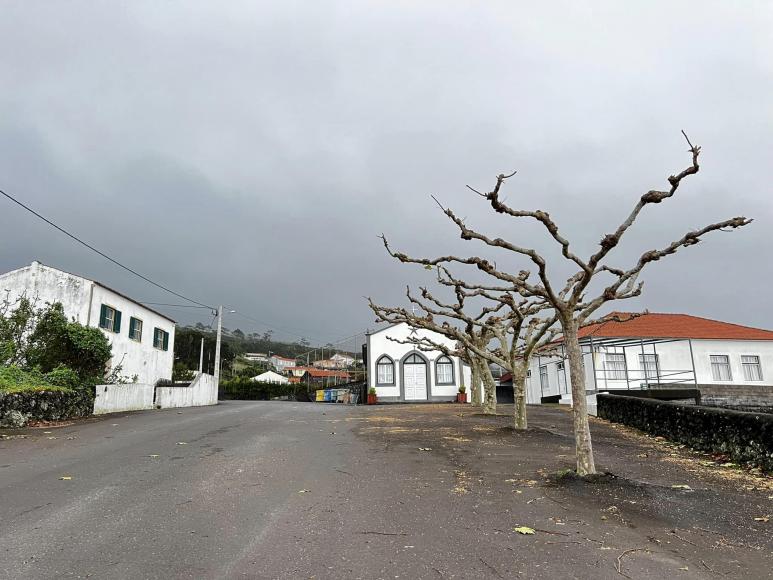
With small whitewashed houses.
Fig trees tucked away, creeping and pruned
They are poems of enchantment.
Cradle of people illustrated in the festivities of the beloved country
Celebrated in melodies.
Candelaria of vineyards, dances and revelry
Of the Lady of Candeias.”
Daniela Canha is a journalist for Correio dos Açores newspaper-Natalino Viveiros, director.
Translated to English as a community outreach program from the Portuguese Beyond Borders Institute (PBBI) and the Modern and Classical Languages and Literatures Department (MCLL) as part of Bruma Publication and ADMA (Azores-Diaspora Media Alliance) at California State University, Fresno, PBBI thanks Luso Financial for sponsoring NOVIDADES.

 Novidades - The Islands and the Diaspora