

The Azorean economy continues to grow, but it is still showing signs of slowing down and is below 2%.
According to the SREA, the EAI (Economic Activity Indicator) increased by 1.9% in November 2024 compared to the same month of the previous year.
This figure is slightly higher than the previous month’s, as seen in the table and graphs below.
When analyzing the results, it should be noted that the IAE is not intended to measure the infra-annual variation in GDP but rather to portray the general state of the economy. Therefore, information on the evolution in terms of accelerations, decelerations, and turning points should be retained above all rather than its value.
The revision of previous months’ figures is due to updating the values of some of the reference series and adjustments resulting from the treatment of seasonality.
Private consumption on the rise
In November 2024, the Private Consumption Indicator for the Azores (ICP-Açores) recorded a year-on-year increase of 4.6%, identical to the revised figure for the previous month.
The information available revealed positive year-on-year rates of change in almost all the series that make up the ICP-Açores, with greater intensity in the series of new passenger cars sold and food sold in the retail trade.
There were more significant negative year-on-year changes in the series of ATM services (payments for services at ATMs) and Medicines sold in pharmacies on prescription.
Government satisfied with region’s economic performance
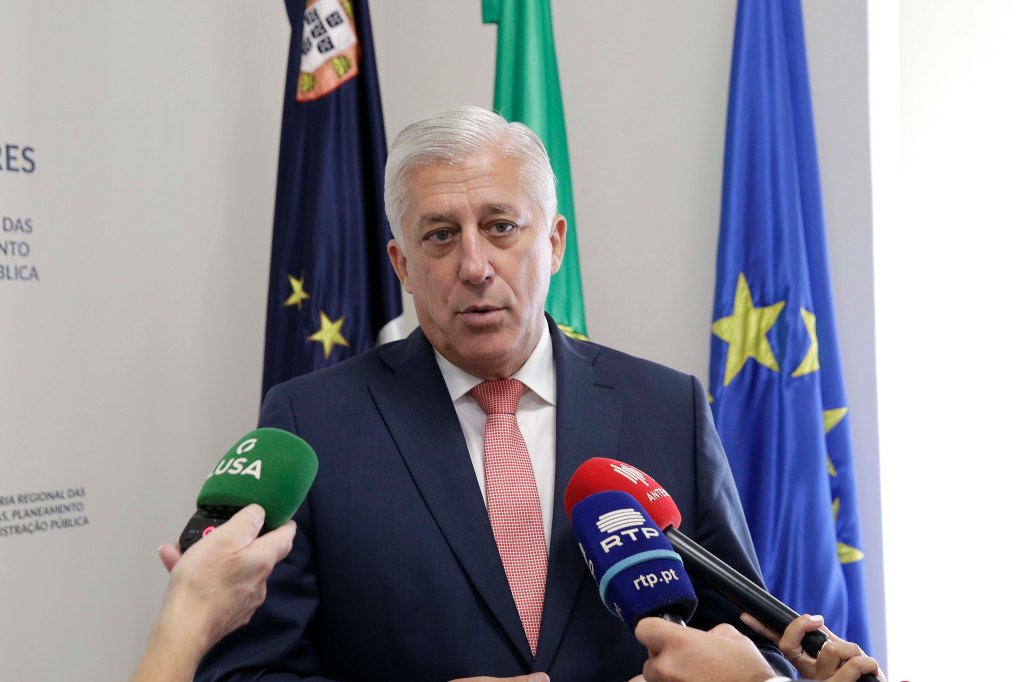
The Regional Secretary for Finance, Planning and Public Administration, Duarte Freitas, praised the Public Finance Council’s positive assessment of the region’s accounts, stressing that the entity attested to their “solidity” and “credibility”.
“Our GDP is growing more than the national average and the weight of debt in relation to GDP has started to fall, confirming what we had pointed out,” said Duarte Freitas.
The Public Finance Council points out that in 2023, in national accounts, the Regional Administration as a whole—the Azores and Madeira—returned to a balanced budget.
Duarte Freitas says the data “completely and utterly disproves” a “narrative” of some opposition on the subject—the international rating agencies and the Public Finance Council confirm the credibility of the public accounts.
The Azores and Madeira recorded economic growth above that of the country as a whole in 2023, which, according to the Portuguese Public Finance Council, contributed to their return to a balanced budget.
According to the Maastricht definition, the debt ratio in the Azores “broke for the first time the upward trajectory that had been maintained for a decade and a half,” dropping 3.5 percentage points to 59.6% of regional GDP.
“This improvement was driven by the economic climate, which translated into a strong favorable dynamic effect that more than offset the impact of the primary deficit of 2.2% of GDPR,” says the Public Finance Council.
In Diário dos Açores, Osvaldo Cabral, director
Translated to English as a community outreach program from the Portuguese Beyond Borders Institute (PBBI) and the Modern and Classical Languages and Literatures Department (MCLL) as part of Bruma Publication and ADMA (Azores-Diaspora Media Alliance) at California State University, Fresno, PBBI thanks Luso Financial for sponsoring NOVIDADES.

 Novidades - The Islands and the Diaspora