

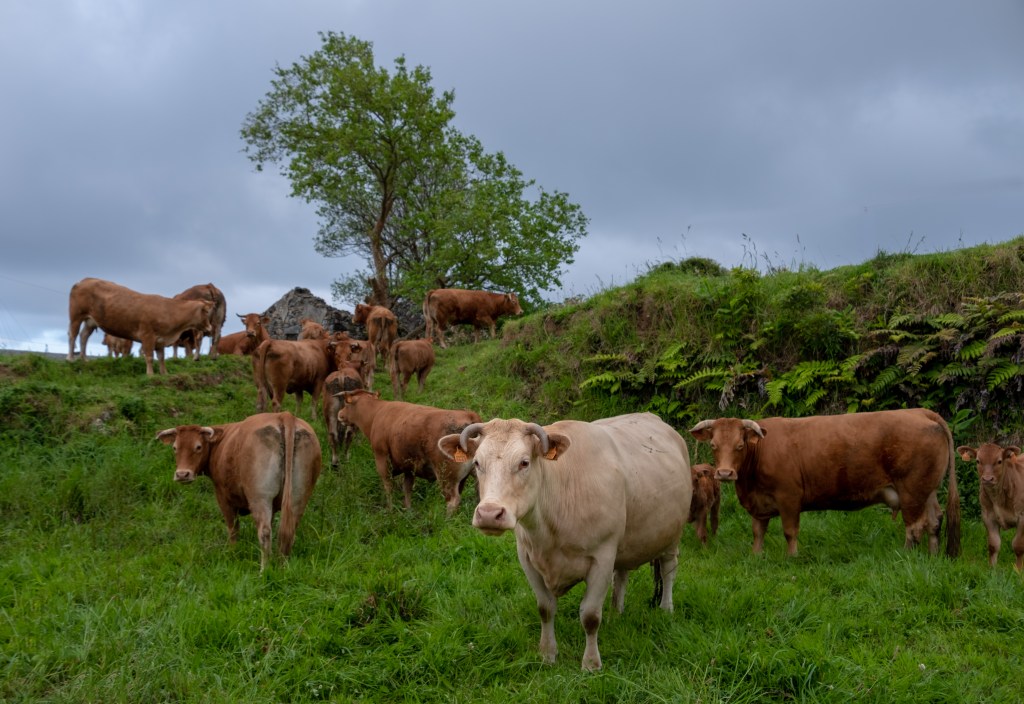
The Council of the Government of the Azores announced yesterday that 90 farms have switched from dairy farming to meat farming in the last three years. In 2021, 2022, and 2023, the value of meat exports paid to producers reached 87 million euros.
In the same period, the value of meat paid to producers for consumption in the region reached 29 million euros.
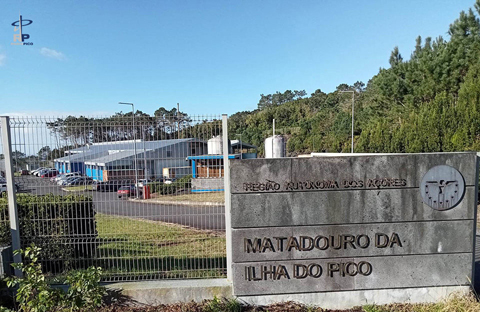
This announcement was made after the Regional Secretariat for Agriculture and Food was authorized to open the public works contract for the “Remodelling and Expansion of the Pico Slaughterhouse,” worth 5.4 million euros.
In addition to the public works, the contract for the “Remodeling and Expansion of the Pico Slaughterhouse” also includes the Cold and Isothermal Plant, with a base price of two million euros; process equipment, with a base price of 1.5 million euros and the power station, with a base price of 400 thousand euros. The overall investment is 9.3 million euros plus VAT, with an estimated execution period of 18 months.
With the aim of “ensuring the levels of food quality, safety and excellence that characterize regional production,” the Azorean government has been making “important” investments in slaughtering infrastructures, allowing it to “create the conditions to retain the added value resulting from the preparation and processing of carcasses in the region.”
To “permanently improve” the regional slaughtering network, the government feels it is “necessary” to make new investments aimed at building new slaughtering units or improving existing ones, whose design “accompanies, in addition to the evolution of market requirements, the legal constraints on the matter, including those relating to hygiene and food safety, the treatment of by-products, animal welfare, the pursuit of environmental objectives and climate change.”
“In view of the growth in slaughtering and the need to reduce the live transportation of animals, the Pico Slaughterhouse must be equipped with greater capacity for receiving, slaughtering and refrigerating carcasses,” the government justifies.
In Correio dos Açores – Natalino Viveiros, director.
Translated to English as a community outreach program from the Portuguese Beyond Borders Institute (PBBI) and the Modern and Classical Languages and Literatures Department (MCLL) as part of Bruma Publication and ADMA (Azores-Diaspora Media Alliance) at California State University, Fresno, PBBI thanks Luso Financial for sponsoring NOVIDADES.

 Novidades - The Islands and the Diaspora