

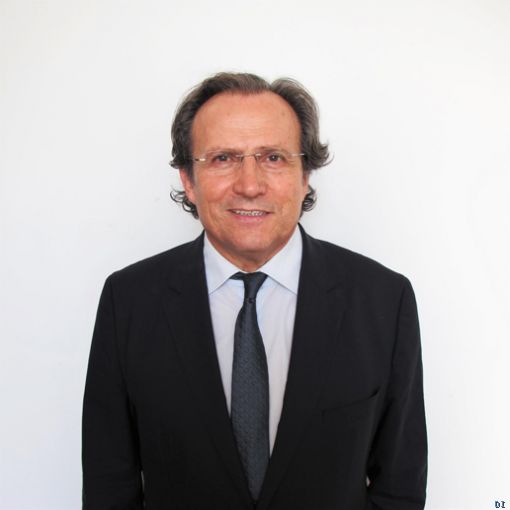
SEDES Açores announced yesterday that José Henrique Ornelas, a professor from Terceira and “an international reference in the areas of community psychology and the deinstitutionalization of the person”, is the coordinator of the recently created Observatory on Poverty and Human Development.
José Henrique Ornelas, according to a Press release from SEDES Açores (Association for Economic and Social Development) is “the author of a large body of work, earned his doctorate first in Boston and then in Porto, taught at the University of the Azores between 1984 and 1987, founded AEIPS-Associação para oEstudo e Integração Psicossocial and was a consultant to the Presidency of the Republic, having also worked with the Regional Government of the Azores”.
In 2024, he joined writers Joel Neto and João de Melo as co-author of the Manifesto for Human Development and for an Idea of the Future in the Autonomous Region of the Azores, signed by 21 Azorean intellectuals and artists and officially sent to Marcelo Rebelo de Sousa.
José Henrique Ornelas was publicly presented at the end of a debate on Education in the Azores at the Lar Doce Livro bookstore in Angra do Heroísmo.
The debate marked International Education Day and was moderated by Joel Neto, vice president of the regional branch of SEDES. Guests included psychologist Francisco Simões, teachers Arminda Magalhães and Paulo Matos, and José Henrique Ornelas.
According to SEDES, the Poverty and Human Development Observatory is one of four announced by SEDES Azores for the first term of its current regional coordinating council.
The other observatories will be established in health and well-being, innovation and sustainability, and autonomy and citizenship.

SEDES was founded in 1970 by “citizens from different academic backgrounds, social strata, professional activities and political orientations.”
It is one of the oldest Portuguese civic organizations in operation, “whose demands are humanism, socio-cultural development and democracy.”
SEDES is led by Vítor Fraga, former Regional Secretary for Tourism and Transport in the region.
Speaking to DI newspaper in December, Vítor Fraga said the new observatory aims to suggest public policies. “It’s about analyzing all the issues scientifically surrounding this problem, namely in terms of statistical data, debating them and proposing a set of public policies that can help solve the problems facing the region,” he said.
“In addition to rigorous data analysis and the formulation of policy recommendations, the Observatory will also have a participatory dimension, involving citizens, institutions and communities in a collaborative approach to solving the region’s social problems,” he said.
Last week, DI interviewed the coordinator of the Regional Plan for Social Inclusion and Citizenship (PRISC), José Manuel Mendes, president of the Faculty of Economics and researcher at the Center for Social Studies at the University of Coimbra, who argued that poverty in the region deserves an emergency plan.
“It has to be radical, there has to be political commitment. If they don’t want it, there are no miracles,” said José Manuel Mendes.
PRISC aims to reduce monetary poverty in the Azores by 40% by 2028.
“I’m confident because there’s no future without it. We are so supportive in the Azores, we have the Holy Spirit, etc. It’s not just talk. You’ll tell me I’m a utopian. No, I’m a realist. I believe in people,” he said.
In Diário Insular-José Lourenço, director.
Translated to English as a community outreach program from the Portuguese Beyond Borders Institute (PBBI) and the Modern and Classical Languages and Literatures Department (MCLL) as part of Bruma Publication and ADMA (Azores-Diaspora Media Alliance) at California State University, Fresno, PBBI thanks Luso Financial for sponsoring NOVIDADES.

 Novidades - The Islands and the Diaspora