

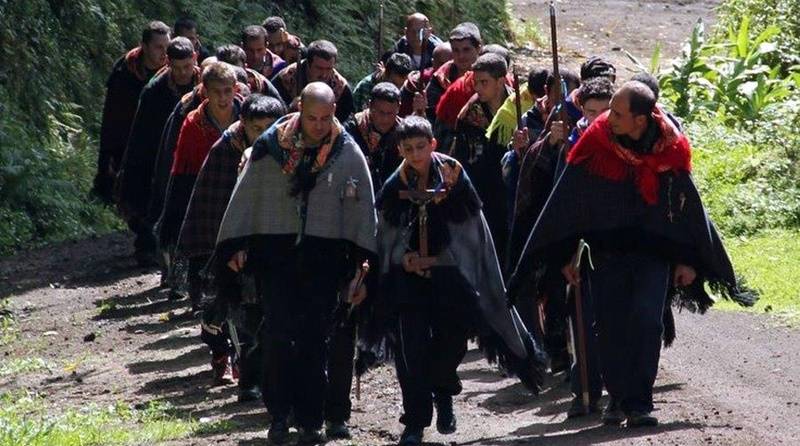
The pilgrims’ annual retreat, “The Pilgrimage: time and steps of hope,” is being held at the Lagoa Secondary School on the island of São Miguel.
In addition to the movement’s new spiritual director, Father Francisco Rodrigues, Father José Júlio Rocha, Episcopal Vicar for the Clergy, and Father André Grecki, a Polish priest and author of several studies on the Lenten pilgrimages of São Miguel, will lead the retreat.
“Lent is always a time to work on hope. This year even more so, since we are living the Jubilee of Hope. Everyone needs to know exactly why they’re doing the pilgrimage, how they want to do it, what’s required of them and what they need to do, making themselves available to live the pilgrimage according to what God has in store for them,” the new spiritual director of the Movement, which in 2022 celebrated the 500th anniversary of the Lenten Pilgrimages to São Miguel, told Sítio Igreja Açores.
This year, the pilgrimages will begin on March 8, the first Saturday of Lent, and will end on April 17, Holy Thursday.
Although the Bishop of Angra’s intentions for this year’s pilgrimages are not yet known, the Coordinating Group will propose at the Retreat that each day of the pilgrimage should follow its own outline, starting with the Our Father prayer.

“On each day of the pilgrimage, we would like each ranch to have an Our Father prayer related to hope: on the first day, it will be the Father and hope; on the second day, it will be the name and hope; on the third day, it will be the kingdom and hope; on the fourth, it will be God’s will and hope; on the fifth, it will be the day and hope; on the sixth, it will be temptation and hope and, on the last day, it will be evil and hope,” Father Francisco Rodrigues told Igreja Açores.
“Basically, we would like three or four questions to be raised and then, in the light of the catechism and the teachings of the Church, we can reflect together on what is our true hope, which is the risen Lord,” the priest added.
“The greatest joy I will have at the end of this year’s pilgrimages, as always, although now with other functions, will be to build on the testimonies and realize that each person has encountered Christ. More than assessing whether the rules and everything have been complied with, it’s important to understand whether this encounter has been achieved,” says the priest, who recognizes that it’s an asset not only for the preparation but also for the journey if the ranch has a priest among its brothers.
“The Church’s hierarchy is beginning to realize the importance that pilgrimages can have in parish life and it’s an added value when a priest takes part. It’s always easier to celebrate the sacrament of reconciliation, the Eucharist and the priest is also enriched by the faith experience of his brothers and sisters,” confesses the priest, who is also a pilgrim and has taken part in several pilgrimages.
“It’s beautiful to see when the priest goes on the ranch with the brothers, albeit with a different mission,” he adds.
There will be 55 groups this year, although not all the pilgrims will always participate in this annual retreat, which will be held next Sunday. It is more geared towards the brothers who lead each ranch, with specific missions.
“Let it be a moment of conviviality as brother pilgrims and, above all, an awakening in them of the desire to make the best pilgrimage ever,” says Father Francisco Rodrigues about this annual meeting, which always ends with the celebration of the Eucharist, after a moment of Adoration and reflection on two themes from the Gospel.
In Correio dos Açores, Natalino Viveiros, director
Information about this tradition
The practice of the “Romeiros de São Miguel” (St. Michael’s pilgrims), formerly known as the “visit to the little houses of Our Lady,” is a phenomenon of great ethnographic importance due to the originality of the elements used and also the persistence that this tradition has had in maintaining itself over the centuries.
It is believed that this tradition began during the earthquakes and volcanic eruptions of the 16th century in Vila Franca do Campo as a response by the population to calm the fury of these natural disasters.
Over the years, the parishes of the various parishes began to organize pilgrimages, which consisted of 8-day faith walks around the island.
During these walks, the groups of pilgrims—between 30 and 200 in each parish—stop at the various churches and hermitages—around 100 temples—to venerate the Virgin Mary and the Blessed Sacrament.
The pilgrims usually spend the night in the parish halls of the churches or in the homes of people who make themselves available to host them. At these stops, some of their relatives have the opportunity to visit and deliver more food and clothing to continue their journey. In addition, some people from the parishes offer dinner and lunch to the pilgrims.
During their journey, the pilgrims also pray the rosary and chant various prayers, such as the hymn of Our Lady (Hail Mary).
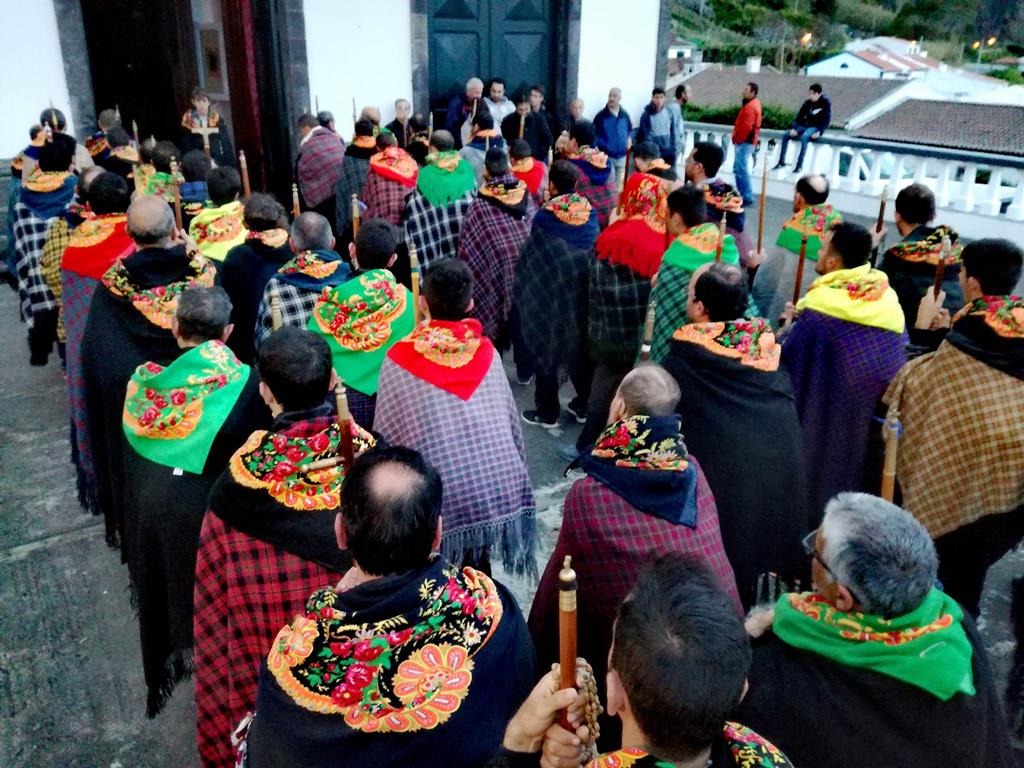
Each pilgrim wears a typical costume covered in elements such as a shawl around their shoulders, a scarf around their neck, a bag on their back, a rosary, and a staff in their hand.
When marching, the group adopts a formation with three wings. The wings on the sides are made up of pilgrims. At the head of each wing is a guide, and in the middle wing are the mestre, the contramestre, the labrador das Almas, the procurator das Almas, and the cruzado.
This tradition takes place from the beginning to the end of Lent.
From: https://pt.azoresguide.net/romarias-quaresmais/

Translated to English as a community outreach program from the Portuguese Beyond Borders Institute (PBBI) and the Modern and Classical Languages and Literatures Department (MCLL) as part of Bruma Publication and ADMA (Azores-Diaspora Media Alliance) at California State University, Fresno, PBBI thanks Luso Financial for sponsoring NOVIDADES.
 Novidades - The Islands and the Diaspora