

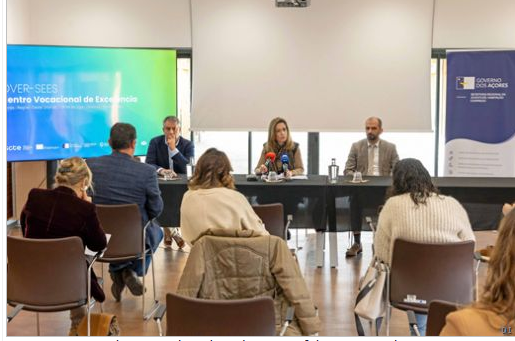
The Azores are part of a project to create a Vocational Center of Excellence for the islands of Europe. This center aims to create curricula in priority areas and better adapt the training offer to market needs.
“The central objective is to create a model of excellence in vocational education and training for the islands of the European Union, starting from four specific regions, with the intention of accelerating the activities of so-called intelligent specialization,” said psychologist Francisco Simões, a researcher at the University Institute of Lisbon (ISCTE), the entity coordinating the project, at a press conference in Angra do Heroísmo yesterday.
The OVER-SEES project, which kicks off on March 1st, involves four regions of the European Union: the Azores, Sicily in Italy, the west of Ireland, and the Aegean islands in Greece.
It will be developed over four years with a budget of around 4 million euros, 80% of which is financed by the Erasmus+ program.
According to the ISCTE researcher, professional retraining is focused on young people under 35 “who are looking to quickly gain other skills or update their skills to return to the job market.”
On the other hand, the project aims to ensure that the training proposal is “increasingly aligned with the needs of the job market that are appearing on the horizon.”

Four strategic areas
Four “priority areas for the development of each region’s economic sectors and associated with the green transition and digital transition” have been identified: sustainable agriculture, rural tourism, renewable energies, and digitalization.
In the first phase, over 18 to 24 months, a portfolio of training courses will be developed, and new strategies for collaboration between the private sector and the vocational education system will be developed.
“We’re talking about very intense, short courses of 300 hours, in collaboration with companies,” said the psychologist.
In the second phase, a pilot project for these curricula will be implemented, and an academy of excellence in entrepreneurship will be created. This academy will involve several international exchanges for young people who want to launch new businesses in these areas.
An online community of practice will also be created, which will continue after the project’s completion and may bring together partners from other European islands.
The initiative is expected to involve around 300 trainees from the four regions, but the aim is for the curricula to be used by vocational schools.
“Once this catalog is created and available, and is built with all these partners, it can be implemented within the resources, needs and priorities of each school,” explained Francisco Simões.
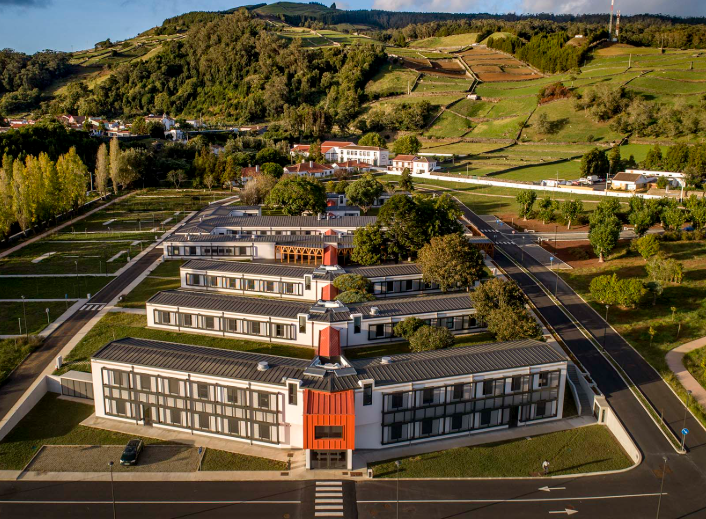
In the Azores, the project involves the Regional Directorate for Professional Qualification and Employment, the Terceira Island Science and Technology Park (Terinov), the Praia da Vitória Vocational School, and the Fruter cooperative. Still, it will also involve collaboration with other entities and companies.
Goals already achieved
The creation of the Vocational Center of Excellence is one of the central measures of the Regional Agenda for Professional Qualification in the region, published in 2022.
For the Azores’ Regional Secretary for Youth, Housing, and Employment, Maria João Carreiro, the OVER-SEES project is “an opportunity for the region to promote excellence in vocational education and training and accelerate economic activities” linked to the four areas identified.
“By training young adults with high skills in these areas, we are boosting employability and creating other opportunities,” she said.
According to the minister, the Regional Agenda for Professional Qualification set the goal of reducing the number of NEETs (young people who neither study nor work) in the Azores to 15% by 2025, but the number has already fallen to 12.6%.
Later this year, a mid-term agenda review, which runs until 2030, will be carried out, and the targets will be revisited.
Translated to English as a community outreach program from the Portuguese Beyond Borders Institute (PBBI) and the Modern and Classical Languages and Literatures Department (MCLL) as part of Bruma Publication and ADMA (Azores-Diaspora Media Alliance) at California State University, Fresno, PBBI thanks Luso Financial for sponsoring NOVIDADES.

 Novidades - The Islands and the Diaspora