

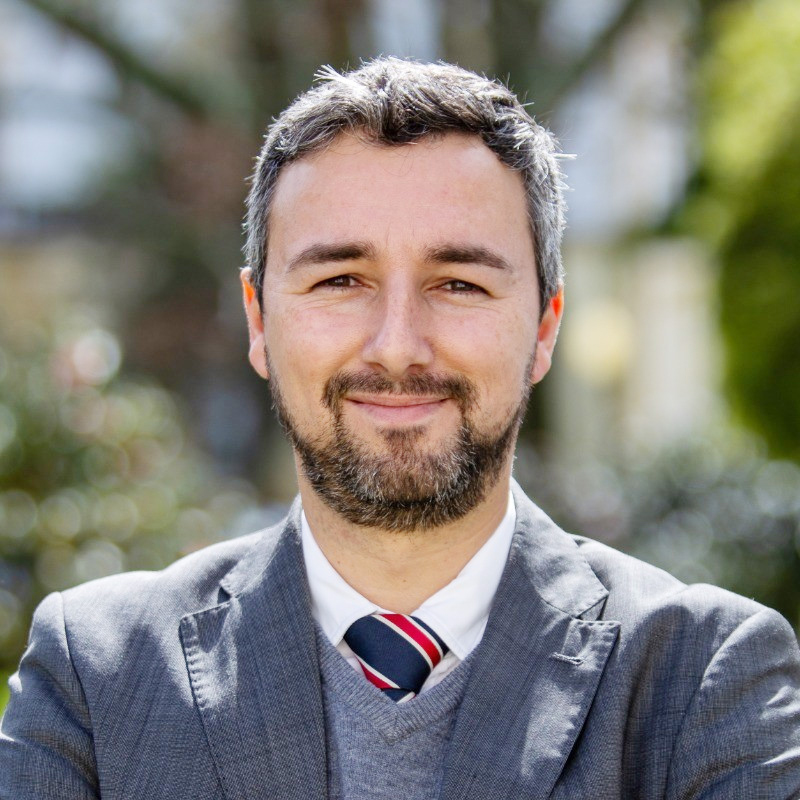
Gualter Câmara, assistant professor at the Faculty of Economics and Management at the University of the Azores, said vocational education in the region “is a stepping stone to higher education or another level of training.” In his opinion, the University of the Azores “guarantees a set of tools that can later be applied in the job market and which, combined with the practical component of vocational training, can represent great added value for the future of young people.” Gualter Câmara also appealed: “Young people have more tools at their disposal, and there are solutions. And the University of the Azores is attentive and open to welcome them.”
Correio dos Açores – How important was the seminar ‘Ensino 5.0 Bora pr’ó Futuro? for young people in vocational education to see that the University of the Azores is also attentive to their skills.
Gualter Câmara (Assistant Professor at the Faculty of Economics and Management of the University of the Azores) – This is an opportunity for us university lecturers to present first-hand and work “on recruitment” with young people. It also allows us to demystify the idea that vocational training is an end in itself, i.e., a path exclusively directed toward the job market. But it doesn’t have to be that way. It can act as a stepping stone or a means to higher education or another level of training.
In fact, the University of the Azores guarantees a set of tools that can later be applied in the job market and which, combined with the practical component of vocational training, can represent great added value for young people’s future. Vocational students are encouraged to continue their studies students at the university.
And would you say that vocational school students are increasingly qualified to enter higher education?
I would say yes. We’ve seen that the focus has changed; today, the reality is different. The truth is that vocational schools have always focused more on the job market.
Nowadays, vocational schools promote this type of event, and, as is the case with today’s event, they bring in the university itself so that we can debate, talk about, and reflect on the integration of the vocational side into higher education.
In other words, this connection is becoming increasingly valuable.
Young people have more tools at their disposal, whether digital, artificial intelligence, or information, as we’ve seen today.
There are solutions for young people, and, what’s more, the University of the Azores is attentive and open-minded to welcome them. There is also a portion of growth and every interest in getting this message across to students so that they acquire the necessary tools and invest in their education.
I’d also like to make a note. I want to do this exercise with the students, which consists of looking at education from the point of view of investment. As an economics teacher, I try to get them to understand that if they invest in their education and it costs X amount, what return will they get in 20, 30, or 40 years.
The truth is that when you do the math, there will always be a return. And, more than professional training, higher education is an asset that lasts a lifetime. You can lose your car and everything, but education is an asset that stays with you forever.
Frederico Figueiredo is a journalist for the Correio dos Açores newspaper-Natalino Viveiros, director.
Translated to English as a community outreach program from the Portuguese Beyond Borders Institute (PBBI) and the Modern and Classical Languages and Literatures Department (MCLL) as part of Bruma Publication and ADMA (Azores-Diaspora Media Alliance) at California State University, Fresno, PBBI thanks Luso Financial for sponsoring NOVIDADES.
 Novidades - The Islands and the Diaspora