


Promoting viticulture and wine tourism has led seven Azorean municipalities (members of the Association of Portuguese Wine Municipalities) to join forces to apply for the Azores to become the “European City of Wine2026”. In the words of Catarina Manito, Mayor of Madalena do Pico, “Azores, the best reason to toast” is the motto of this candidacy. Expectations are high, but the mayor’s promotion of this sector and its heritage are the main focus.
Correio dos Açores – The Azores want to be a European City of Wine in 2026. As spokesperson for the candidacy, tell us about the concept of this project.
Catarina Manito (Mayor of Madalena)—This application is being made within the framework of the Association of Portuguese Wine Municipalities, of which all these municipalities are members: the three municipalities on the island of Pico, the municipality of Santa Cruz da Graciosa, the two municipalities of Terceira, and the municipality of Vila do Porto, in Santa Maria.
All these municipalities are members of the AMPV, and, in this sense, we have come together to draw up the Azores’ application to become a “European City of Wine.” The European City of Wine project involves other European associations, namely the Italian and Spanish. As it works by rotation, the European City of Wine of 2026 will be Portuguese, and it is for this purpose that these municipalities have joined in this application.
The aim of these municipalities, far beyond the candidacy, is to be able to promote the Azores, its wine tourism, and its wine production – which is gaining increasing notoriety worldwide. It’s an application that was proposed to all the Azorean municipalities on the initiative of the city of Madalena – the Vine and Wine Capital of the Azores – and which was very well received by each of them. We intend to carry out work that will certainly go far beyond merely applying to become a European City of Wine. It will allow us to project the Azores in this environment, which will be extremely important in understanding all the groups of municipalities that are also applying (such as the Baixo Alentejo region and the Algarve).
What are the deadlines for applying?
The candidacy will be presented and voted on April 30th. On this day, at a General Assembly of the AMPV, the candidate municipalities will make their presentation “and then be voted on. A few days ago, at the Wine Territories Convention, which took place in Lagoa (Algarve) and which we attended, we were able to talk about our candidacy – along with the other two groups of candidate municipalities – and we gave a brief presentation of it. The presentation and vote will occur on April 30 in Alandroal (Évora).
How will you promote this candidacy? Are there any events scheduled?
For the purposes of the application, the technicians from the municipalities have been working hard on the program for a long time. In other words, this includes the entire cultural program of each of the municipalities. There are compulsory events, namely the opening gala, the closing gala, and two European events taking place in the year of the application (which are mandatory) – in addition to celebrating certain commemorative dates such as International Wine Tourism Day. There will also be events and programs that will make it possible to connect these islands with their own programs to promote wine production and tourism in the region.
What development have you seen in the wine sector in recent years?
The truth is that it’s up to public institutions to promote and collaborate with their local entrepreneurs to promote what they do.
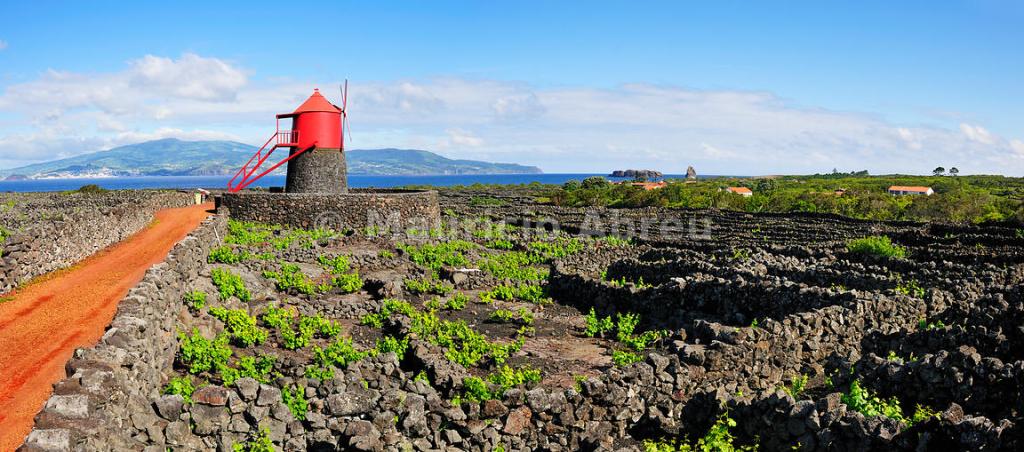
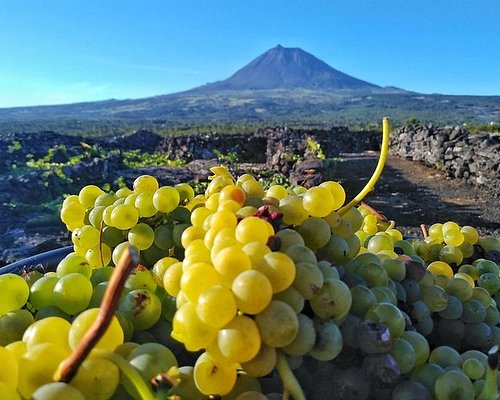
For some years now, Madalena do Pico has seen wine and wine production as its ex-libris – registering the brand “Vine and Wine Capital of the Azores.” It was also since it was awarded the title of “City of Wine” in 2017 that we saw a significant expansion in wine production. The municipality and the bid for the City of Wine only accompanied the work of wine producers in improving, expanding, and recovering the vineyards on the island of Pico. Many producers’ work, dedication, and pride in presenting their products represent the extreme quality we already know.
It’s up to the public institutions and the Madalena Town Council to work with the producers step by step, allowing for greater visibility and promotion of what they do so well.
What are your expectations for this candidacy?
I can say that we expect to win. This working group of municipalities has taught us that there is a great desire to work together. It was with great pleasure that the Municipality of Praia da Vitória hosted our first team meeting, where we got a real sense of how important it is to promote this sector in the archipelago.
I think this application goes much further than that: it shows that we know how to work together to promote wine tourism and wine production in the Azores, always within the standards of sustainability.
Not only do we expect to win, but we also want to continue this work that “the Azores are the best reason to toast” – this is the motto for our candidacy. Together, we will continue to promote what is ours and the best we can present to the world.
Can the wine sector be allied to tourism, sustainability, and the Azorean historical heritage?
Of course, it is. And it’s a sector with an identity. Wine production on the islands is intrinsically linked to the territory and its characteristics, as well as the characteristics of its people. Nowadays, promoting wine tourism and wine production also means promoting Azorean history, culture, and territory. This is what we all need to work on.
Is there a message you’d like to convey?
The promotion of wine is intrinsically linked to the promotion of the territory and its people. All these municipalities, together with tourism and wine tourism entrepreneurs, aim to promote the region in an area that has enormous potential for growth and significant economic and tourist interest.
José Henrique Andrade is a Correio dos Açores newspaper journalist, and Natalino Viveiros is the director.
Translated to English as a community outreach program from the Portuguese Beyond Borders Institute (PBBI) and the Modern and Classical Languages and Literatures Department (MCLL) as part of Bruma Publication and ADMA (Azores-Diaspora Media Alliance) at California State University, Fresno, PBBI thanks Luso Financial for sponsoring NOVIDADES.

 Novidades - The Islands and the Diaspora