


It’s not a recurring phenomenon, but sometimes it happens – and it’s always magical. The Portuguese Institute for the Sea and Atmosphere (IPMA) had already warned of the possibility of snow in the higher reaches of the Azores due to a mass of maritime polar air that caused a sharp drop in temperatures. And this forecast was confirmed.
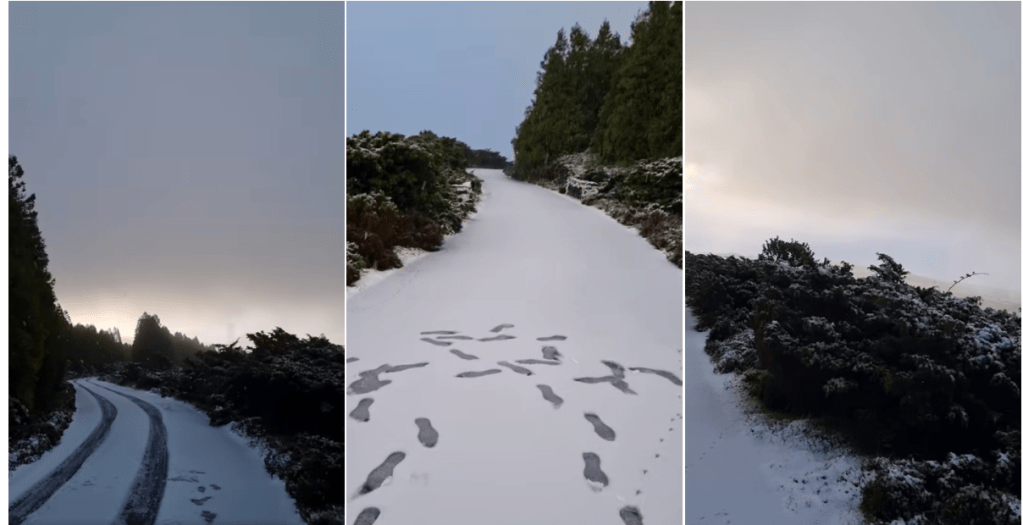
The low temperatures recorded in the archipelago this Friday, February 14, resulted in snow falling on several islands. The mountain of Pico, the highest point in the country at 2,351 meters, woke up covered in a white blanket, a sight customary during winter.
Images of the white blanket have already begun to be shared on social media. Renato Goulart, the mountain guide who has climbed Pico more than two thousand times, shared photos of the “first big snowfall” of the year. He warned on his Facebook page,“Be careful on the access road to Casa da Montanha, icy and snowy road; only vehicles with 4×4 traction or chains should drive. “
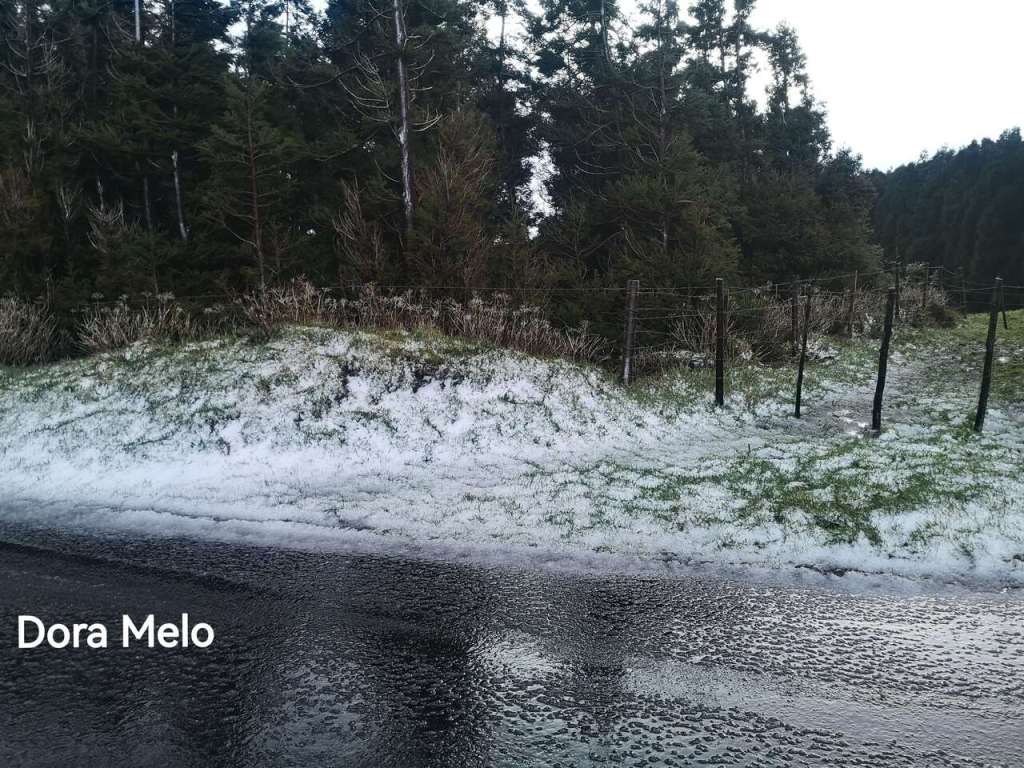
In addition to Pico, snow also fell in the Serra de Santa Bárbara, on Terceira island, and on Flores, an unusual occurrence. On Corvo, the smallest island in the archipelago, there were reports of inhabitants watching snowflakes fall.
“I saw a lot of hail, including in the village and in Caldeirão. At nine in the morning it was two degrees. I haven’t seen hail like this for a long time,” said the mayor, José Manuel Silva, quoted by ‘Renascença radio.’
Sara Lopes is a journalist for NiT News.
Translated to English as a community outreach program from the Portuguese Beyond Borders Institute (PBBI) and the Modern and Classical Languages and Literatures Department (MCLL) as part of Bruma Publication and ADMA (Azores-Diaspora Media Alliance) at California State University, Fresno, PBBI thanks Luso Financial for sponsoring NOVIDADES.
Pictures from Renato Goulart (Pico Island), Dora Melo (Flores Island) and Tá Bonito (Terceira Island)


 Novidades - The Islands and the Diaspora