

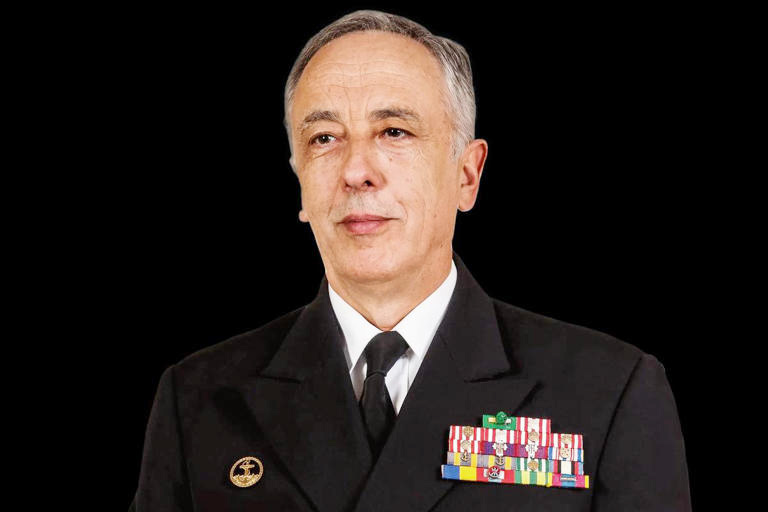
António Silva Ribeiro, a regular contributor to Correio dos Açores, says in his article for Expresso that the Azores “are emerging as a neuralgic area of world geoostrategy, because the intensification of Russia’s naval presence and growing Chinese influence, combined with the vulnerability of strategic routes and critical submarine infrastructures, put transatlantic security at risk.”
In these circumstances, he continues, for Portugal to “preserve sovereignty in its own sea, over the next decade, it must lead the collective effort needed to transform the Azores into a bastion of NATO and EU deterrence and aerial defense in the North Atlantic.” In his opinion, the Azores, “being located at the point of intersection of sea and air routes between Europe and America, are the natural guardian of one of the main arteries of global communication and transportation.”
Meanwhile, he continues, “the archipelago’s geostrategic importance has been accentuated by the fact that its maritime spaces are home to submarine cables that carry a large part of international communications.”
As he explains in the same Expresso article, these cables “transmit financial data, sensitive government information and civilian and military communications. They are therefore a prime target for hostile powers, and their interruption, whether accidental or deliberate, will have devastating consequences for the economy and security of allied countries.”
In his opinion, “the confluence of sea and air routes with the submarine cables in the Azores Sea is creating a neuralgic area of world geostrategy, where it will be essential to guarantee a military presence that deters and defends against threats to the free movement of people, goods and information.”
In this context,” he continues, ”and as part of the emerging competition for control of the North Atlantic, Russia has intensified its naval presence in areas increasingly close to the Azores.”
Thus, “it is important to highlight the existence in that country of a military unit called GUGI, whose mission is surveillance, espionage and sabotage in the deep sea. To do this, it uses the 2210 “Almaz” class ships, submarines capable of operating up to 2,500 meters deep and naval drones, which demonstrates Moscow’s ability and interest in exploiting NATO’s and the EU’s Atlantic vulnerabilities.”
For its part, China, “deeply involved in global maritime competition, has made investments in African, South American and European ports. In addition, it maintains a frequent naval presence in the North Atlantic, develops active diplomacy in countries in the region and owns submarine communications cable systems.”
Admiral António Silva Ribeiro states, “These facts reflect Beijing’s ambition to directly influence the political and economic dynamics of the Atlantic, which could jeopardize allied control over its strategic routes and increase competition for resources and influence.”
These ostentatious conducts by Russia and China, writes Admiral Silva Ribeiro in Expresso, “alert us to the need for aeronautical reinforcement of the Azores, with a view to guaranteeing transatlantic security. However, the existing military capabilities there are very limited and will not allow us to deal with emerging threats. Lajes Air Base has seen its US military assets progressively reduced with the end of the Cold War and its move to the Indo-Pacific, while the Portuguese air and naval assets committed to the region are very limited and require a significant complement to keep up with the growing complexity of these threats.”
The article explains that “the reinforcement of the Azores’ air force will increase national military spending. However, in this time of growing maritime competition, Portugal must lead the deterrent effect and defense in its own sea. This means contributing, with balance and proportionality, to keeping sea and air routes open, submarine cables secure and people, goods and information flowing with the normality necessary for the functioning of Western societies.”
In his opinion, “if Portugal does not assume these responsibilities, some allies will bear the burden. However, as has always happened when the country has made similar strategic mistakes, these partners will pay very generously with significant portions of national sovereignty, where the natural resources existing on the extension of the continental shelf in the Azores will be the most attractive asset!”
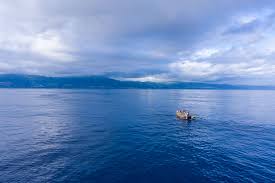
Thus, he continues, “in order to face emerging threats, avoiding the serious inconveniences mentioned above, the funds resulting from the increase in defense spending to 2% of GDP by 2029, plus the updates that may result from the NATO summit in June, are a good opportunity to carry out the progressive aeronautical reinforcement of the Azores over the next decade.”
In this context, said Admiral SilvaRibeiro, “the modernization of Lajes Air Base needs to be a priority, equipping it with state-of-the-art technologies, such as advanced air defence radar systems and maritime surveillance satellite control systems, which will increase the military’s monitoring, knowledge and response capacity in the North Atlantic. With these systems, the base will be able to operate combat aircraft, maritime patrol and anti-submarine warfare aircraft, as well as multifunctional drones.”
In the port of Praia da Vitória, the NATO pier and the current support infrastructures, in his opinion, “need to be adapted to receive and sustain the activity of submarines and frigates, as well as ocean patrol vessels with underwater surveillance capabilities, the future multifunctional drone ship, underwater drones, underwater vehicle detection systems and hydro-oceanographic vessels.”
He explains that “the presence of these systems and resources, combined with the modernization of the air base and the adaptation of the port, will increase the precision and speed of air and naval operations and transform the Azores into a valuable asset for the sustained and differentiating action of national and allied forces in the North Atlantic.”
However, he continues, “in order for these military effects to be optimized, it will also be necessary to review the status and mission of the Azores Operational Command (AOC), providing it with the appropriate resources, capabilities and competencies to perform the role of sub-regional command specializing in air and naval operations.”
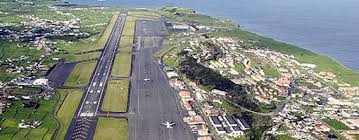
In the article published in Expresso, Admiral António Silva Ribeiro points out that “the increase in Russian and Chinese presence and activity in the North Atlantic could imply considerable aerial reinforcement in the Azores, which will only be possible with the contribution of several allies. Therefore, the modernization of the Lajes Air Base, the adaptation of the port of Praia da Vitória and the training of the AOC will not only be national needs, but a strategic requirement of NATO and the EU, indispensable for transatlantic security. In order to achieve this, it seems important to carry out high-level and highly qualified political, diplomatic and military initiatives with the allies, promoting the view that control of the North Atlantic from the Azores protects the vital links that unite continents and sustain the global order.”
In summary, Admiral António Silva Ribeiro concludes, “in an ocean marked by the intensification of Russian naval presence and Chinese influence, the Azores are becoming a neuralgic area of world geostrategy, due to their essentiality for the protection of strategic routes and critical underwater infrastructures in their vicinity. However, the military reinforcement needed to protect them is not just a national duty, but a shared responsibility among the allies.”
For Portugal to “preserve sovereignty in its own sea, over the next decade it must lead the collective effort needed to turn the Azores into a bastion of NATO and EU deterrence and aerial defense in the North Atlantic,” concludes the article published in Expresso.
In Correio dos Açores-Natlaino Viveiros-director
Translated to English as a community outreach program from the Portuguese Beyond Borders Institute (PBBI) and the Modern and Classical Languages and Literatures Department (MCLL) as part of Bruma Publication and ADMA (Azores-Diaspora Media Alliance) at California State University, Fresno, PBBI thanks Luso Financial for sponsoring NOVIDADES.

 Novidades - The Islands and the Diaspora