


The President of the CDS-PP/Açores, Artur Lima, was re-elected Sunday as leader of the Party’s regional structure with 97% of the votes, securing a new term at the head of the Azorean centrists.
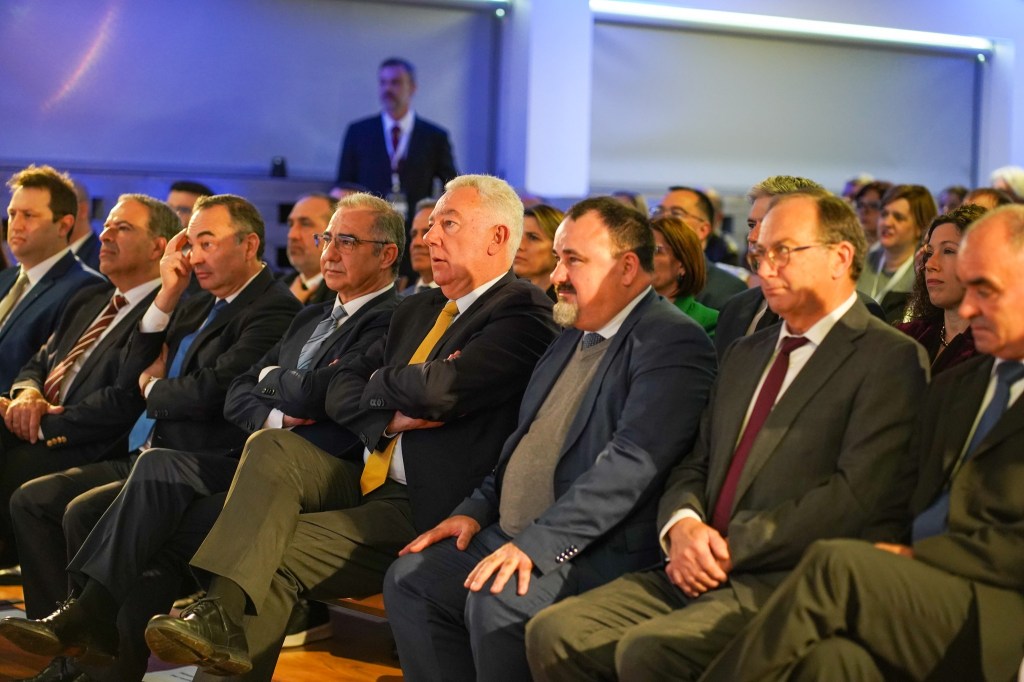
The election took place at the 11th Regional Congress of the CDS-PP/Açores, which took place on the 22nd and 23rd in Praia da Vitória. Around 70 congressmen, dozens of militants, observers, and guests effectively participated.
In his inauguration speech, Artur Lima declared that “50 years after Regional Autonomy, it’s time to structurally change our region” and that “the 11th Regional Congress is the starting point for establishing new commitments with the Azoreans, a set of new proposals that will guide our political activity over the next four years”.
“As a party that is part of a Government Coalition, it is our duty to take advantage of every opportunity to change the Azores, reforming what needs to be reformed, and also having the humility to correct what needs to be corrected”, because ‘limiting our political initiative to the management of conjunctures and day-to-day life is not doing the job well that the Azoreans have entrusted to us,’ considered the newly-elected leader.
Looking to the future, Artur Lima argued that “the Azores must position itself as a hub of innovation and science,” taking advantage of “our unique geostrategic position in the North Atlantic” and “our potential in the five dimensions: the underwater world, the sea, the land, the air and space,” with “the appropriate effective return for the people and the economy.”
In addition to these dimensions, the regional leader of the centrists noted that “the Azores have all the conditions to exploit the opportunities of the carbon economy” since “our vast pastures and our sea, recognized for their natural capacity to capture carbon, place us in a privileged position to enter this market, to reap the respective dividends and financial benefits”. What is required, however, is “a robust technical and scientific approach that allows us to calculate our carbon capture potential and its valuation on the international market,” he warned. In this regard, he referred to the increase in investment in the University of the Azores, carried out by the PSD/CDS/PPM Coalition Regional Government in the two legislatures: “In support of its tri-polar development alone, we went from 350,000 euros to 950,000 euros”, he recalled, adding that this money “should not be used for running costs,” but “to bring academic knowledge to each of our islands.”
The party leader was adamant that “the CDS will not give up its contribution, as it has always done in health, education, transport or any other area of governance.”
As such, he said that “the response capacity of the Regional Health Service needs to be continuously strengthened, so we cannot ignore the importance of the redundancy of certain health services in the region, especially after the tragedy we had with the fire that affected the Divino Espírito Santo Hospital (HDES)” and “without prejudice to the necessary investments in the HDES, which is structural in the Region.”
For the CDS-PP/Açores, “it is imperative to invest in other hospital units in the region, starting with the implementation of a Hemodynamics Unit in Angra do Heroísmo.”

Through the voice of their regional leader, the Azorean centrists advocated that “the Government should start preparing the implementation of a Long-Term Plan for Human Resources in the Regional Health Service, without forgetting the need to reform Public Health in the region.”
In this context, it was announced that “the CDS/Açores will propose the creation of a department for the provision of occupational health services for the regional public administration, to eliminate, for example, the scourge of waiting times for Medical Boards.”
Artur Lima also warned that “more than the digital transition, the energy transition and the climate transition, the Azores are facing another for which they must be prepared: the demographic transition.”
Concerning this issue, he recalled, “this government has already made a contribution” with the “New Elderly” Program. For Artur Lima, this program “is a source of pride and a national and European benchmark, which has already reached every municipality in the Azores,” with the merit of “creating jobs, making our communities stronger, preventing the desertification of parishes and the rural world and enhancing the concept of family.”
The undeniable success of the “New Elderly” Program means that it is now necessary to prepare for its future after the PRR in terms of funding. “The New Elderly Program won’t end in 2026,” said Artur Lima, guaranteeing that ”when the PRR ends, the Regional Government will be here.”
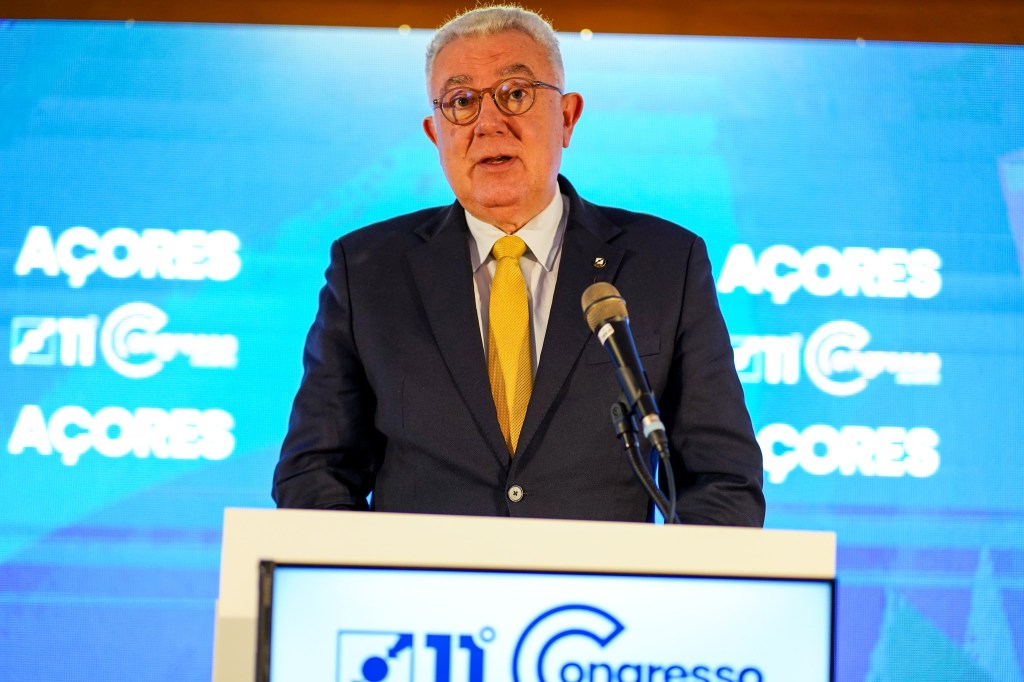
The President of the CDS-PP/Açores continued his inauguration speech by referring to “one of the main commitments that the Government and the Coalition want to fulfill with the Azoreans,” which involves “establishing, in our Region, the normal age of access to the old age pension due to the lower average life expectancy, for the sake of social justice.”
“It is undeniable that the Azoreans have a contributory career as long as a continental citizen, but live less time from the age of 65,” which, in Artur Lima’s view, justifies ”adapting the formula for access to the old-age pension, to correct an injustice of decades.”
Concerning economic growth, “we believe that increasing air accessibility is a vital development factor”. To that extent, “the Azores cannot be dependent on two gateways to absorb the new air routes that are emerging”, so Artur Lima defended the liberalization of the three missing Azorean gateways in order to improve the region’s connectivity and attract tourists and investors.
The President of the CDS-PP/Açores, Artur Lima, ended his speech by calling for a genuine reform of the political system based on a vision of “Autonomy [which] must be synonymous with development and responsibility”.
“First, we need to rethink the concept of Autonomy, including above all its functioning and financing,” he admitted, adding that ‘more than reviewing the Regional Finance Law, we need to make a fundamental change’ that ensures that fundamental areas such as Education and Health are ‘directly financed by the Central State, with the region remaining as a supplementary financier through its budget, should it decide to allocate complementary support’.
For Artur Lima, “this is how Autonomy would better serve our interests, without being pressured by having to maintain a kind of micro-state that is sometimes a drain on public money.” Furthermore, “our Autonomy must be built on a common basis of respect for the diversity of each island” because, according to the party leader, “unipolar models and the Locomotive Theory do not serve the interests of the Azores.”
“it’s time to change and bet on a multi-polar development model that is truly an economic and social engine for the Azores,” said Artur Lima, quoted in a press release.
In Correio dos Açores, Natalino Viveiros-director
Translated to English as a community outreach program from the Portuguese Beyond Borders Institute (PBBI) and the Modern and Classical Languages and Literatures Department (MCLL) as part of Bruma Publication and ADMA (Azores-Diaspora Media Alliance) at California State University, Fresno, PBBI thanks Luso Financial for sponsoring NOVIDADES.

 Novidades - The Islands and the Diaspora