


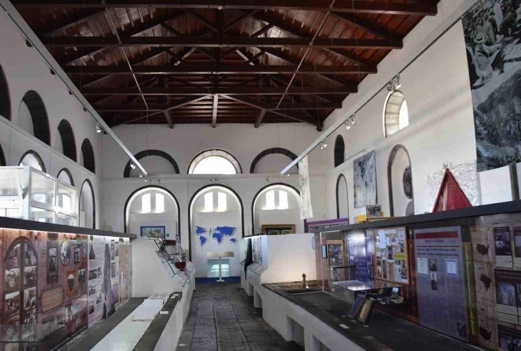
The Azorean Emigration Museum in the city of Ribeira Grande is today an increasingly popular place for Azoreans, both residents and emigrants, as well as tourists, both domestic and foreign.
Rui Faria is a senior Ribeira Grande Town Hall technician responsible for the Azorean Emigration Museum. Speaking to Açoriano Oriental, Rui Faria recalls that “Emigration, along with the Holy Spirit, is what most identifies the history of an Azorean since there isn’t an Azorean who doesn’t have, directly or indirectly, a connection with our emigration.”
When it opened 20 years ago, the Azorean Emigration Museum had no internet connection, had one staff member, and welcomed only a few hundred visitors a year.
Last year, the Azorean Emigration Museum welcomed around 6,000 paid visitors. It has three employees, more publicity on the internet, and a space that reopened in 2023 after a major exhibition refurbishment.
In addition to the many school-related activities, the Azorean Emigration Museum has two main groups of visitors: national and foreign tourists in the low season and Azorean emigrants and their descendants in the high season.

As Rui Faria explains, “The theme of emigration is very common in various European countries, in Latin countries, but also in Eastern European countries and even in Nordic countries, and many of them also share with us the destination of their emigrations to the United States of America and Canada.”
On the other hand, the head of the Azorean Emigration Museum revealed that there is also an interesting phenomenon with Azorean emigrants, which is the interest in returning to the origins of the new generations. “We often see people from the younger generations here crying with emotion, as they want to know more about their parents and grandparents” and are trying to recover their roots, even expressing the desire to return to the Azores, ‘because the bad times of their parents, who had to emigrate, are over’.
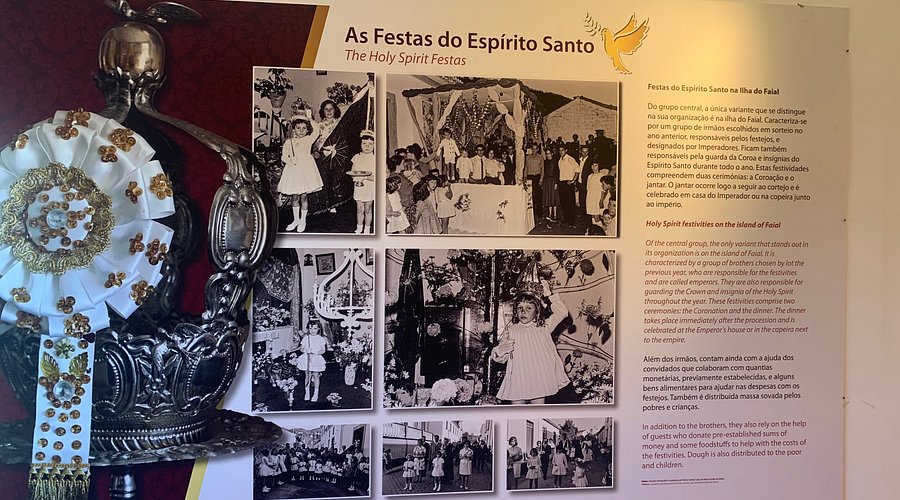
At the Azorean Emigration Museum, you can find much information about Azorean culture and traditions in the main destinations where Azoreans have searched for better living conditions over the last two centuries. But also various objects related to emigration, such as the old travel trunks, which evolved into modern suitcases, and the famous ‘barrels,’ large cylindrical containers that brought many new items by boat to the part of the family that had stayed in the Azores.
Children ‘build’ Santana Airport in a game.
Several activities will mark the 20th anniversary of the Azorean Emigration Museum in the city of Ribeira Grande. One of them, already underway and aimed at schoolchildren, is a fun activity about the old Santana Airport in Rabo de Peixe, which operated between 1939 and 1969 and from where many people from the Azores left to emigrate.
“Our role here is not to let the memory die,” explains Rui Faria, head of the Azorean Emigration Museum, and ”through a game in which the children assemble the old Santana Airport with a didactic lesson, we aim to get them to talk at home about these memories that some of their parents still remember.”
On the other hand, the 175 years of Azorean emigration to Bermuda will be highlighted in May and October. Rui Faria explains that this history is now well described in the work of researcher Eduardo Medeiros, with this emigration being very much centered on the island of São Miguel.
However, says the head of the Azorean Emigration Museum, “our presence is felt in Bermuda at various levels, whether in the economy, in the preservation of tradition and the Portuguese language, or through relevant politicians over several eras, with the Azorean presence in Bermuda accounting for almost a quarter of its population, in a fantastic story, but one that was also often terrible for our ancestors.”
This year, the Azorean Emigration Museum will also work with RTP-Azores to broadcast, starting in October, half-hour programs on the history of Azorean emigration and its experiences in the voices of the people who studied and disseminated it.
Rui Jorge Cabral is a journalist for Açoriano Oriental; Paula Gouveia is the director.
Translated to English as a community outreach program from the Portuguese Beyond Borders Institute (PBBI) and the Modern and Classical Languages and Literatures Department (MCLL) as part of Bruma Publication and ADMA (Azores-Diaspora Media Alliance) at California State University, Fresno, PBBI thanks Luso Financial for sponsoring NOVIDADES.


 Novidades - The Islands and the Diaspora