

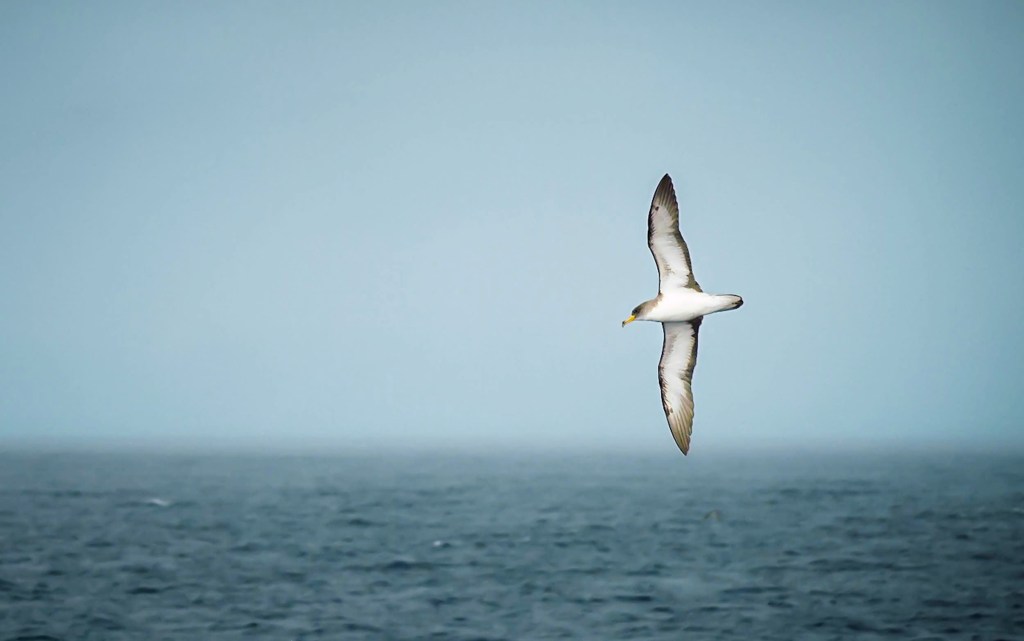
The Atlantic Ocean, the second-largest ocean in the world, plays a crucial role in regulating the global climate and the maritime economy. It is also an essential route for seabirds on their migrations. A study published in the journal “Global Ecology and Biogeography” revealed the main migratory routes of these birds. Birds use ocean currents and winds as “natural highways” to facilitate their journeys. The study analyzed data from 48 species over 34 years and identified six main global migratory corridors, reinforcing the urgent need for coordinated international action to protect these vital routes and preserve marine biodiversity.
The Atlantic Ocean, the world’s second-largest ocean, plays a key role in regulating the global climate, the maritime economy, and marine biodiversity. In addition to its vastness and ecological relevance, it is also home to one of the most important migratory routes for seabirds, which are essential for the balance of ecosystems.
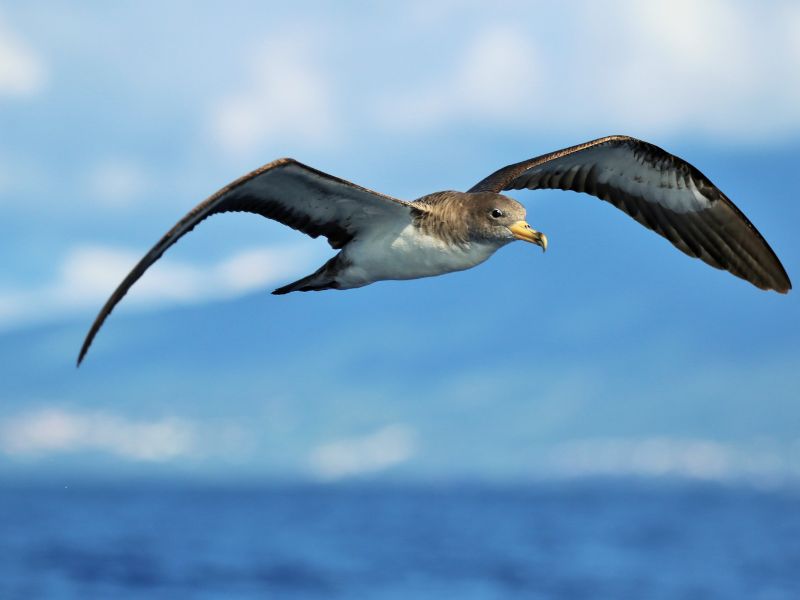
The Azores, strategically located in the North Atlantic, play a crucial role as a stopping point for many of these birds, providing resting and feeding places during their long journeys. Among the species that use the Azores as a migratory stopover is the Cory’s shearwater (Calonectris borealis), which finds the islands an essential refuge for refueling and protection.
The study, entitled ‘Global Marine Flyways Identified for Long-Distance Migrating Seabirds From Tracking Data’ and published in the journal Global Ecology and Biogeography, reveals the migratory routes of seabirds that cross the Atlantic, Indian, Pacific, and Antarctic oceans.

The major migratory routes
Recent studies have identified a complex system of aerial corridors used by multiple seabird species during their seasonal journeys between breeding and feeding grounds. Among these routes, the Atlantic Flyway stands out, an “eight” shaped trajectory used by birds such as the Arctic miller (Stercorarius longicaudus), the Arctic tern (Sterna paradisaea), and the white-browed albatross (Thalassarche melanophris).
This route connects the northern and southern hemispheres, covering areas such as the east coast of the Americas, Western Europe, West Africa, and the sub-Antarctic islands. During their journey, these birds cover thousands of kilometers, crossing borders and exclusive economic zones of various countries.
Studies indicate that seabird migration strongly correlates with ocean currents and prevailing winds. The Atlantic current system, such as the Gulf Stream, the Canary Current, and the Benguela Current, directly influences the movement patterns of birds, who use these masses of air and water as “natural highways” to reduce energy effort during their journey.
Threats and challenges for conservation
Despite the importance of these migratory routes, several seabird species are in decline. Industrial fishing, plastic pollution, and climate change have significantly impacted these populations. Fishing nets and longlines represent one of the main threats, leading many birds to drown accidentally.
In addition, marine pollution directly affects birds’ diets. Studies show that many of them mistake floating plastic for food, which can lead to death by starvation or poisoning. As global temperatures rise, the distribution patterns of fish and other prey change, forcing birds to travel even greater distances to find food.
Analysis of migratory routes
By analyzing tracking data from 48 seabird species over 34 years, the researchers identified six main marine corridors that are consistently used during migrations. These results provide a new benchmark for global seabird conservation, highlighting the need for international cooperation to protect these essential routes.
“Understanding seabird migration is fundamental to conservation planning,” co-authored the study and researcher at OKEANOS-UAc, quoting the article published in OKEANOS. “These birds travel thousands of kilometers in international waters, facing threats such as habitat loss and accidental capture in fisheries. Recognizing these corridors will allow us to better coordinate conservation efforts on a global scale,” he added.
The studies’ findings include the identification of six global marine corridors used by seabirds, the discovery of figure-of-eight and circumnavigation routes influenced by ocean currents, and the urgent need for international conservation efforts to mitigate threats.
The results highlight the ecological connectivity of seabirds across vast ocean basins and reinforce the importance of protecting migratory species across national borders. The study provides a scientific basis for conservation policies and international agreements protecting marine biodiversity.
In Correio dos Açores-Natalino Viveiros, director
Translated to English as a community outreach program from the Portuguese Beyond Borders Institute (PBBI) and the Modern and Classical Languages and Literatures Department (MCLL) as part of Bruma Publication and ADMA (Azores-Diaspora Media Alliance) at California State University, Fresno, PBBI thanks Luso Financial for sponsoring NOVIDADES.

 Novidades - The Islands and the Diaspora