

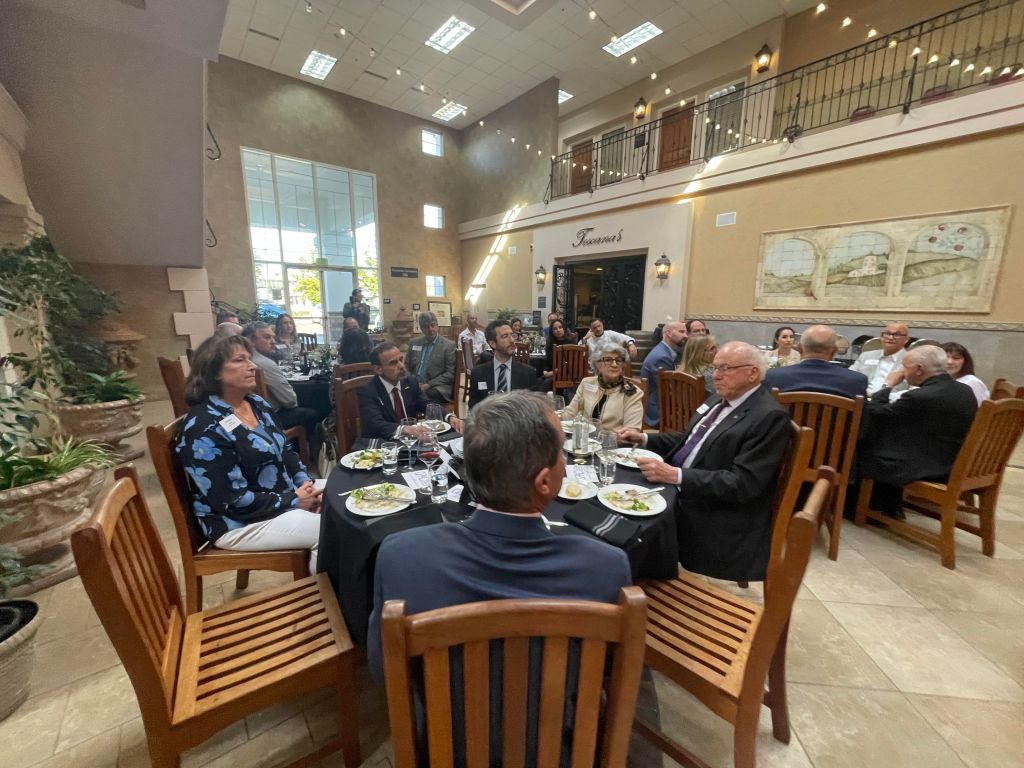
The California Portuguese-American Coalition (CPAC), from my perspective and the members of our board, continues to be a vital organization that unites Portuguese-American elected officials and civic leaders across California. Its mission is to foster collaboration and advance Portuguese-American communities’ interests, ensuring their voices are heard in local, state, and national affairs. By bringing together leaders with shared heritage and common goals, CPAC creates a network that strengthens political representation, social advocacy, and cultural engagement. As the Portuguese-American community grows, CPAC provides an essential platform for addressing its unique concerns and promoting civic participation.
One of CPAC’s core goals is encouraging Portuguese-Americans to serve their communities in political and civic roles. Despite being a well-established community with deep roots in California, Portuguese-Americans have historically been underrepresented in government and policymaking. CPAC works to change this by motivating individuals to run for office, participate in local government, and engage with civic organizations. By increasing representation, the community gains a stronger voice in decisions that affect education, business, agriculture, and immigration policies—key issues for many Portuguese-American families in this State.

Beyond representation, CPAC advocates for policies that directly impact the Portuguese-American community. This includes recognizing Portuguese heritage in state affairs, supporting economic initiatives that benefit Portuguese-owned businesses, and ensuring that cultural traditions are preserved in an evolving society. CPAC strives to bridge the community and policymakers, addressing language education, immigrant services, heritage programs, and a better understanding of the potential connections for business, industry, and culture between Portugal and the US. Through advocacy efforts, the coalition with the community can shape policies that safeguard and enhance Portuguese-Americans’ well-being.
To achieve long-term success, CPAC proposes a five-step program to make the community more active and engaged. This program includes increasing voter registration and participation, mentoring young leaders, strengthening ties with Portugal and the Azores, fostering media presence, and promoting year-round civic involvement. While festas and traditional celebrations remain integral to Portuguese-American identity, CPAC urges the community to look beyond cultural festivities and actively shape California’s political and social landscape. By following this structured approach, Portuguese-Americans can ensure their influence extends beyond heritage celebrations and into meaningful leadership roles.
With FLAD’s support and community engagement, the California Portuguese-American Coalition can play a crucial role in uniting and empowering the Portuguese-American community in California. Through its commitment to civic engagement, political advocacy, and leadership development, CPAC works to amplify Portuguese-Americans’ voices and ensure they have a seat at the table in state and local governance. As the community metamorphoses, CPAC’s mission remains essential: fostering a dynamic, engaged, and politically active Portuguese-American presence that extends far beyond the festa and into the heart of California’s civic life.
We believe it is time to bring back our Leadership Academy and the need to proceed with a statewide serious and open reflection on the Portuguese-American experience in Califórnia. This reflection would end in a strategic plan for our presence in this state in the 21st century, similar to the elaborated statewide plan for teaching the Portuguese Language and Culture, elaborated by the community, with FLAD’s support, in 2016.
The Portuguese-American diaspora in California faces several challenges that have hindered its full integration into the political and cultural mainstream while maintaining a distinct identity. One of the primary challenges is the lack of recent immigration, as the last major wave of Portuguese immigration largely ended around 45 years ago. Unlike other immigrant groups that continue to receive new arrivals who replenish language and cultural traditions, Portuguese Americans have had to rely on their existing communities to sustain their heritage. This has led to a gradual fading of cultural identity among younger generations, as assimilation into American society has taken precedence over maintaining Portuguese traditions. Without a continuous influx of new immigrants, sustaining cultural institutions, Portuguese heritage media, and organizations that advocate for the community’s interests becomes more difficult.

Another major obstacle is the decline of the Portuguese language, which has led to limited mainstream recognition of Portuguese-American culture. As newer generations have been raised speaking primarily English, fewer Portuguese-Americans are fluent in Portuguese or the regional dialects of their ancestors. This loss of linguistic heritage makes it harder to connect with Portugal and the Azores, weakening transatlantic ties and diminishing the sense of cultural continuity. Additionally, because Portuguese is not widely spoken in California outside a few pockets of the community, it does not receive the same institutional support as other languages. As a result, Portuguese-language education is limited, and there are fewer opportunities for Portuguese Americans to see their culture reflected in mainstream media and education systems.
Compounding these challenges is the community’s historically limited political presence and advocacy. Despite being one of the oldest immigrant groups in California, Portuguese-Americans have not been as politically active as other ethnic communities. While there are Portuguese-American elected officials, they have not always prioritized increasing resources for the community, nor have they worked aggressively to create spaces for Portuguese-Americans to register their stories and narratives. This has resulted in a lack of representation in policymaking, minimal access to funding for cultural and historical initiatives, and a community that struggles to make its voice heard on issues that matter. Without strong advocacy, the history, contributions, and needs of Portuguese-Americans risk being overlooked in broader discussions of California’s multicultural identity. For example, very shortly after graduation, high school students must take an ethnic studies course. We must continuously try to have the California Portuguese experience in this.
However, these challenges present opportunities for revitalization and engagement. The lack of new immigration means that Portuguese Americans must actively work to preserve their culture through education, storytelling, and community programs. Efforts should be made to strengthen Portuguese-language instruction in schools and universities, expand cultural events beyond traditional festas, and encourage younger generations to reconnect with their heritage. Additionally, community leaders should focus on securing resources for historic preservation projects, oral history initiatives, and Portuguese-language media, ensuring that future generations can access their roots.
Politically, Portuguese-Americans can turn their limited representation into an opportunity for greater mobilization. By increasing voter registration, encouraging young Portuguese-Americans to pursue leadership roles, and forming advocacy groups and coalitions with other ethnicities, the community can strengthen its presence in California’s political landscape. Elected officials of Portuguese descent should be held accountable for supporting initiatives that benefit the community, while grassroots movements should work to bring Portuguese-American narratives into public discussions. Through a more engaged and proactive approach, we Portuguese Americans can overcome our historical challenges and transform them into opportunities for growth, visibility, and empowerment in California.
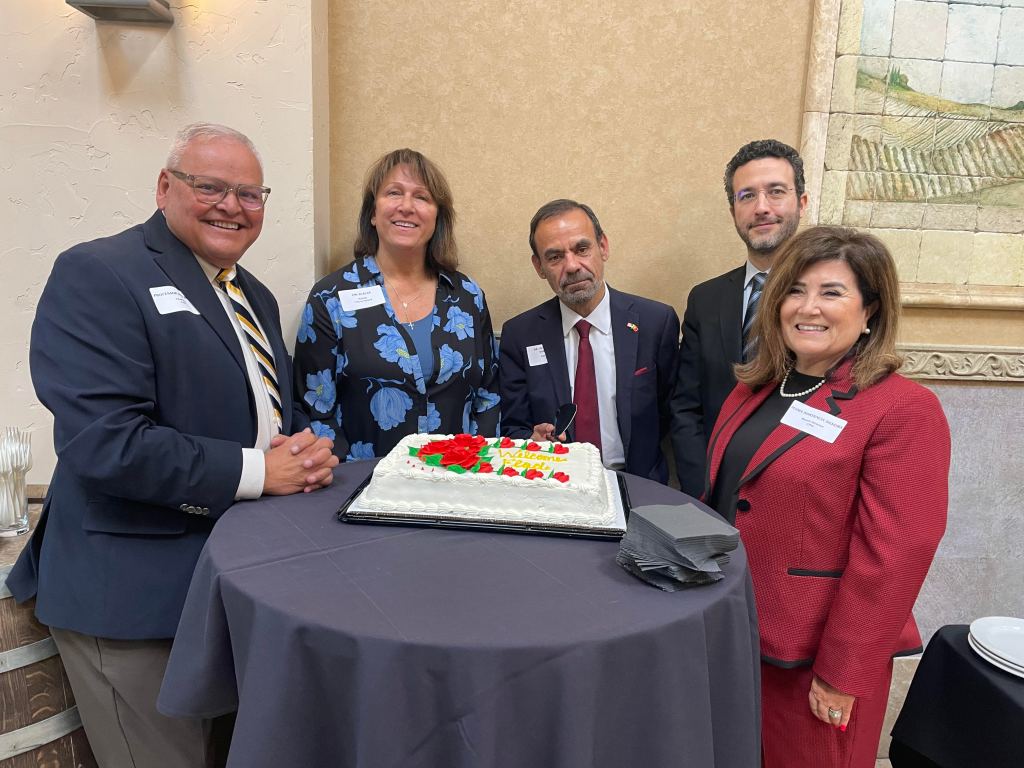
From the California Portuguese-American Coalition (Photos from a lunch meeting in Turlock)
 Novidades - The Islands and the Diaspora