

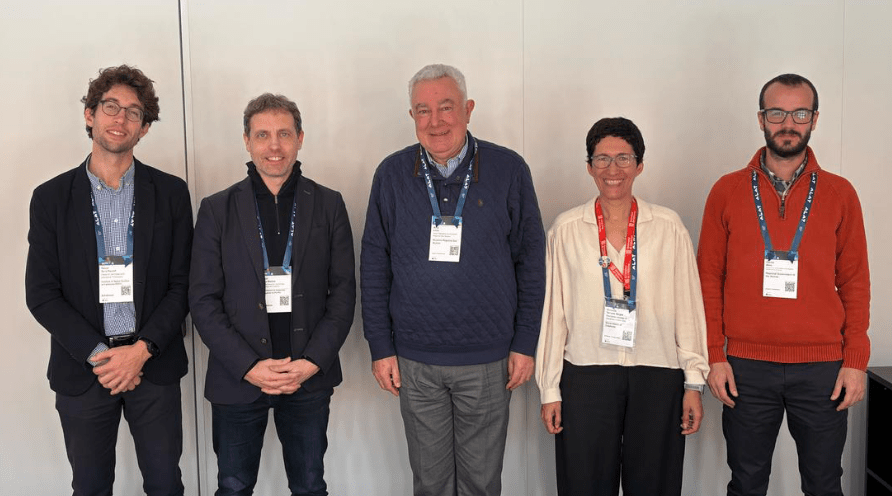
The Autonomous Region of the Azores has become the 18th DETA – Disruptive & Emerging Technology Alliance member.
This international coalition brings together national and regional governments from five continents to advance the debate and adaptation of public policies to technological innovation and disruption.
“This is another decisive step in the international positioning of the Azores,” said the Vice-President of the Regional Government, Artur Lima.
He continued that in the current context of constant technological advancement with global ramifications, “it is essential to be present in technological governance forums such as this one” to “establish a commitment to balanced, shared and inclusive technological development.”
Artur Lima concluded that DETA is an opportunity for the Azores “to be at the forefront of the discussion on technologies that will shape the future.”
The public announcement of this membership took place at the Mobile World Congress 2025, which ends today in Barcelona, on the occasion of a bilateral meeting between the Vice-President of the Government and the Secretary for Digital Policy of the Government of Catalonia, Maria Galindo.
On the sidelines of the meeting, Artur Lima stressed that the region “wants to be prosperous and digital, but in line with the best international practices.”
For her part, Maria Galindo congratulated the Azores, stressing that their membership “strengthens the alliance.”
Led by the Government of Catalonia, DETA focuses on deepening the areas of Artificial Intelligence, Cybersecurity, New Space, Digital Rights, and Quantum Technologies. The initiative establishes a collaborative framework to assess the technological impact on citizens’ daily lives and the necessary adaptation of public policies to these new realities.
Another of its objectives is to project the positions of its members in the ongoing global debates on technological governance. To this end, DETA is organized into five groups corresponding to its areas of work and holds an annual summit.
On the national scene, the Azores were the first to join this coalition. They participate in four of its five disruptive areas: Artificial Intelligence, Cybersecurity, New Space, and Digital Rights.
For the Vice-President of the Government, the Region “has been asserting itself as an Atlantic center for science and technology.”
Joining DETA and participating in Mobile World Congress 2025, the world’s largest meeting of the mobile and connectivity sectors, are “examples of this same path and of the Regional Government’s action in this direction,” said Artur Lima.
DETA brings together national and regional governments from Spain, Italy, Belgium, Germany, France, the UK, Canada, the USA, Costa Rica, Argentina, South Korea, Japan, Australia, South Africa, and Portugal, with the Azores joining.
From Press Release
Translated to English as a community outreach program from the Portuguese Beyond Borders Institute (PBBI) and the Modern and Classical Languages and Literatures Department (MCLL) as part of Bruma Publication and ADMA (Azores-Diaspora Media Alliance) at California State University, Fresno, PBBI thanks Luso Financial for sponsoring NOVIDADES.
 Novidades - The Islands and the Diaspora