

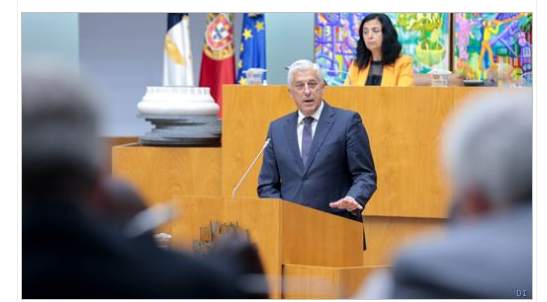
Yesterday, the Regional Government admitted the possibility of merging, extinguishing, selling, or transferring all or part of public companies such as Atlânticoline, Portos dos Açores, Lotaçor, IROA, IAMA, or Teatro Micaelense.
“The region has a theater. Does it need a theater? Atlânticoline, the Pico speedboat company that became Transmaçor, was profitable for dozens and dozens of years. Is the service it provides ready to be privatized, or at least part of it?” asked the regional finance secretary, Duarte Freitas, in the Azorean parliament.
In a debate on privatizations promoted by Chega, he said that the region is finalizing the contracting of a two-month study with the consulting firm Delloite on the best method to adopt, whether divestment, extinction, merger, or transfer.
This study will assess “IROA, IAMA, Portos dos Açores, and Lotaçor” among other companies.
“This is the time to give private initiative what it has the appetite for, the dynamics and the capacity for. The way in which it will be handed over to the private sector will be analyzed over the next few months and certainly within six months we will be able to give an account of what happened with SATA, golf and this study,” said Duarte Freitas.
According to the government official, “the overall decision has been taken,” and the study will only help decide how these companies will be transferred to the private sector.
As for SATA, Duarte Freitas reaffirmed his commitment to sell more than 50% of Azores Airlines and 100% of Handling by the end of this year.
“This is not an ideological issue or a matter of choice. It’s a state obligation, which the region is responsible for enforcing,” he said, recalling what had been agreed with the European Commission.
According to the head of the Finance portfolio, the privatization process for Azores Airlines “is on a path of open dialogue,” and the executive hopes to have “clarifications of what is going to happen” by the end of March.
“When the government says that there is an increase in the value of the asset and there is only room to talk to the consortium in the future if the consortium accompanies the increase in the value of this asset, in the defense of the public interest that is what will have to happen,” he said.
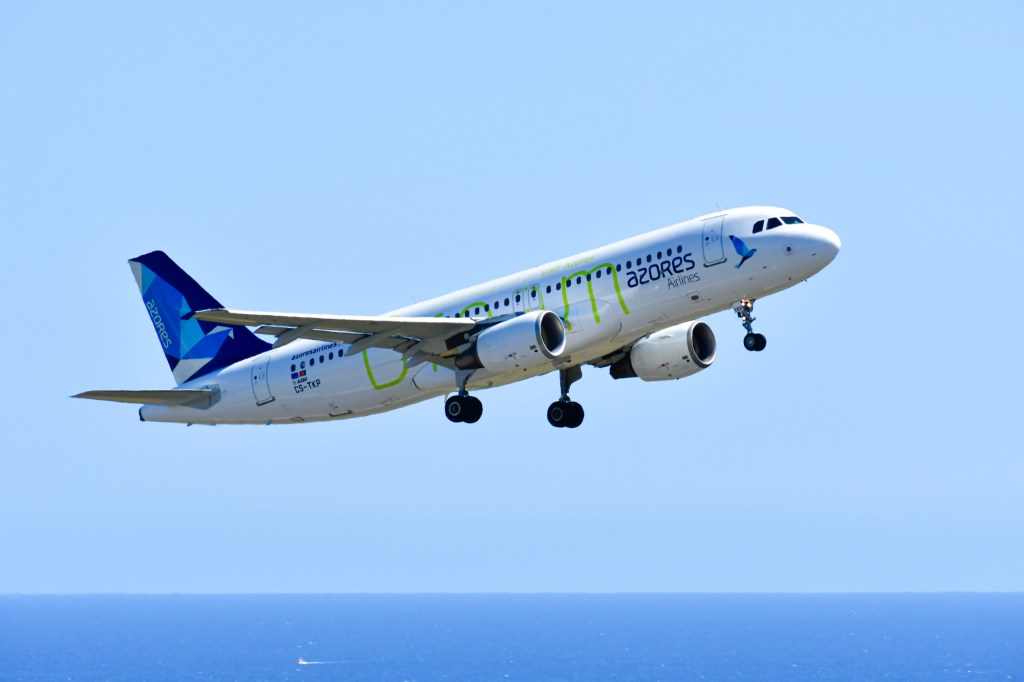
With regard to Handling, Duarte Freitas revealed that “the work of separating the business is done” and admitted that compensatory allowances may be necessary to provide this service on certain islands.
As for the golf courses, he said that the executive has already requested prior information from São Miguel local authorities about the Batalha golf course to gain the right to build, which will allow the asset to be valued.
Once this process has been completed, the executive will look for entities that can help with the sale of Ilhas de Valor’s three golf courses.
“At a snail’s pace.”
The regional finance secretary’s announcements came in the context of a debate sparked by Chega, who accused the executive of moving “at a snail’s pace” in privatizing the public business sector.
In addition to the privatization of the golf courses, Francisco Lima, from Chega, defended the privatization “with the utmost urgency” of the entire share capital of Azores Airlines and SATA Handling and the privatization of “the entire capital of the companies in the EDA group.”
“This peregrine idea of only privatizing the loss-making companies of the EDA group is unfeasible, it’s better to extinguish them, because no one will want to buy them,” he explained.
He also advocated “concessions with or without compensation” for the fish auction services on all the islands, the slaughterhouses on Terceira and São Miguel, and all the thermal baths.
He also proposed the sale of “all rustic land, except that which is of specific interest in terms of environmental protection or other public interest, urban land, vacant properties, underused properties or properties in a high state of disrepair”.
Francisco Lima also said that the government should “extinguish all companies that are not interested in buying them, do not provide any essential services and are economically loss-making.”
“The region could make a very substantial financial contribution. Chega proposes that 50% of this money be used to repay debt and the remaining 50% be used to boost economic activity and to maintain and upgrade public infrastructure,” he said.
EDA left out
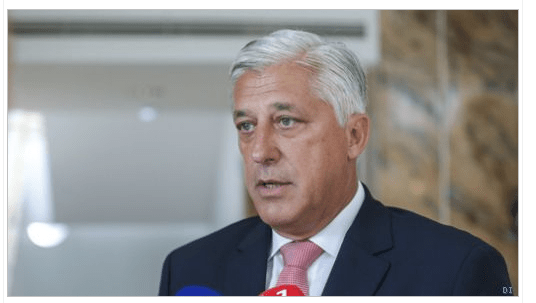
In response, Duarte Freitas said, “It is not the Regional Government’s intention to sell more capital in the EDA holding company but to sell the SEGMA and GLOBALEDA businesses.”
“By the end of March, EDA’s board of directors has agreed to present the options for selling the SEGMA and GLOBALEDA businesses to the financial and sectoral authorities,” he said.
Carlos Silva, from the PS, accused the regional government of taking “one-off measures, without a concrete plan,” and warned that “the eagerness to privatize companies like Lotaçor, IROA and IAMA” could result in “an increase in taxes and tariffs on farmers and fishermen.”
As for Azores Airlines, he considered the process “a failure” and that the region is condemned “to a single interested party, whose credibility is questioned by the jury itself.”
“It’s not possible to proclaim transparency and continue two years later without knowing which paths we’re going to follow and without knowing what’s going to happen with SATA Internacional’s debt,” he pointed out.
Nuno Barata, from the political party IL, accused the executive of continuing to postpone the privatization of Azores Airlines but warned that if the company is not sold, “it is not an asset to be valued”; on the contrary, it is worth “much less today than it was three years ago.”
As for the direct air links from Lisbon to Pico, Faial, and Santa Maria, the MP said, “there is no public service at some gateways, there is party-political interest in keeping votes at some gateways.”
Nuno Barata also accused the executive of “inconsistency and irresponsibility” for proposing the privatization of IROA and IAMA when the parties that supported it rejected an IL proposal to merge the two entities.
António Lima, from the BE, said that “Chega’s big proposal was to hand over profits to two private groups, which need them much less than the Region’s budget,” referring to the suggestion to privatize EDA, which distributed 6 million euros in dividends in 2023.

As for the Regional Government’s privatization announcements, he warned that “hundreds of workers are left in limbo without knowing what will happen to them” and “fishermen, farmers, maritime-tourism operators and shipping companies who are left without knowing what the future of the region will be in these sectors.”
For Pedro Neves, from PAN, “there has to be harmonious development,” privatizing companies that make a loss, but not those that profit.
“The government took advantage of the Chega emergency debate to say that the Azores are on sale. If it were Friday, I’d say it was BlackFriday Azores, where we’re going to sell everything we can,” he criticized.
Pedro Pinto, from the CDS-PP, accused the PS of creating public companies “to compete with private companies” and “hide a colossal debt” but argued that the coalition “is on the right track.”
“Public entities have already been privatized and the government, without any ideological bias, is going to commission a study so that, based on rigorous technical criteria, politicians and this parliament can make a decision in good conscience,” he stressed.
According to Joaquim Machado, from the PSD, the extinction of SDEA, SINAGA, and Azorina, the transfer of the Santa Catarina factory, and the reduction of the boards of Teatro Micaelense and Ilhas de Valor made it possible to save “more than 800 thousand euros a year.”
“They’ll say it’s not much. I think it’s a lot and it’s good that this burden has been lifted from the Azoreans,” he stressed.
Paulo Margato, from the PPM, said he understood that the privatization process should be swift but argued that the political decision should be made “on the basis of reliable financial and economic opinions.”
“This government, with all the changes it has made at this level, has managed to save 800,000 euros, but that’s not enough to pay the 800 million euros left by Saudaçor,” he said.
in Diário Insular-José Lourenço, director
Translated to English as a community outreach program from the Portuguese Beyond Borders Institute (PBBI) and the Modern and Classical Languages and Literatures Department (MCLL) as part of Bruma Publication and ADMA (Azores-Diaspora Media Alliance) at California State University, Fresno, PBBI thanks Luso Financial for sponsoring NOVIDADES.

 Novidades - The Islands and the Diaspora