

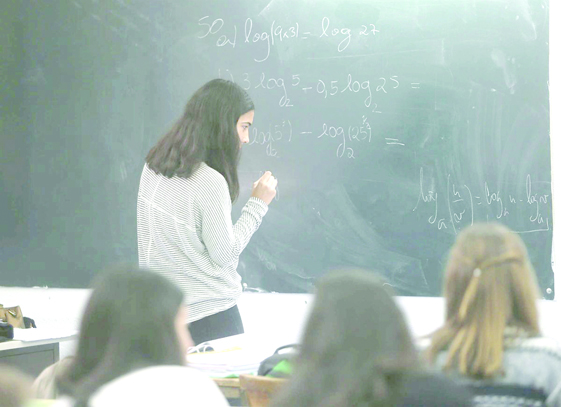
The Regional Secretary for Education, Culture and Sport, Sofia Ribeiro, and the Regional Secretary for Youth, Housing and Employment, Maria João Carreiro, yesterday welcomed the historic drop in the rate of early school leavers in the Azores in 2024, from 22.9% to 19.8%
According to Sofia Ribeiro, when the first coalition government took office, “this rate was 26.3%”, registering “stagnant figures during the five years prior to 2020”.
She recalled that, in the Azores 2030 Education Strategy, “the government committed itself to drawing up an Integrated Plan to Combat Early Leaving from Education and Training” based on “three levels of action,” which was debated at the last meeting of the Regional Education System Coordinating Council.

“The figures now recorded are also the result of the coordinated work of the Government of the Azores which, for the first time, through the departments of Education and Professional Qualification, began to individually monitor each student who is in a situation of early abandonment,” added the head of the Education portfolio.
It should be remembered that the Government of the Azores, through the Azores 2030 Education Strategy and the Regional Agenda for Professional Qualification, has set a target of 15% by 2030 for the rate of early school leavers.
Against this backdrop, Maria João Carreiro explains that the reduction in early leaving from education and training to a historic low in the region “confirms a trend that needs to be consolidated” and would have been difficult to achieve with the public policies implemented in the area by 2020.

The head of the Professional Qualification portfolio also highlights the coordinated work that has been done to prevent cases of early abandonment and promote differentiated responses for young people to return to the training and qualification system.
“Young Azoreans now have more opportunities for education, training and qualification, including vocational training in a real work context, with the benefits that this brings for strengthening their schooling and bringing them closer to the job market,” said Maria João Carreiro.
A government statement concludes that the rate of early leavers from education and training identifies the percentage of young people aged 18 to 24 who have not completed secondary education or are attending any form of education and training.
In Diário dos Açores-Osvaldo Cabral, director
Translated to English as a community outreach program from the Portuguese Beyond Borders Institute (PBBI) and the Modern and Classical Languages and Literatures Department (MCLL) as part of Bruma Publication and ADMA (Azores-Diaspora Media Alliance) at California State University, Fresno, PBBI thanks Luso Financial for sponsoring NOVIDADES.


 Novidades - The Islands and the Diaspora