

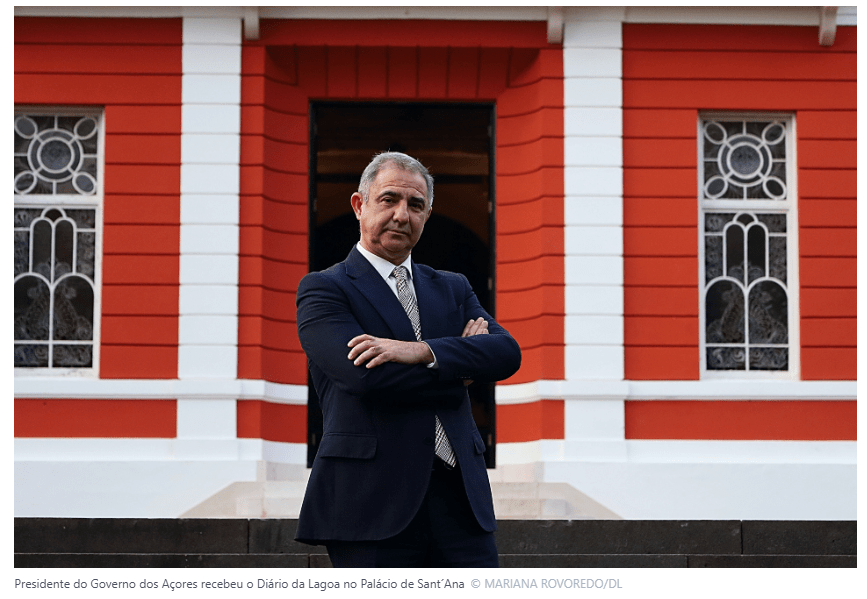
José Manuel Bolieiro welcomed Diário da Lagoa to Sant’Ana Palace for a long and relaxed interview. For an hour, he spoke about his career and the challenges the region has faced and is currently facing. We thank Diário da Lagoa, through its director, the journalist Clife Botelho, for always allowing us to translate their stories and interviews and share them with the Diaspora through Novidades by Bruma Publications at PBBI-California State University, Fresno.
It was in Lomba do Loução, Nossa Senhora dos Remédios, in the municipality of Povoação, that he grew up until the age of 14. He had “a childhood in a very remote, peripheral rural environment,” he points out while assuring that he never lacked the “warmth” and “love” of the family where he was born on June 23, 1965. At 14, he went to Ponta Delgada to continue his studies at the Antero de Quental Secondary School. At the home of one of his sisters in Calheta, he stayed until he finished 12th grade in 1983. He entered the Faculty of Law at the University of Coimbra as a scholarship student. “I got a scholarship; it was the first time I’d been on a plane in my life, the first time I’d been on a train,” recalls José Manuel Bolieiro. “Fortunately, I took on this challenge with great enthusiasm,” and he adds, ” I really enjoyed it.”
He then finished his law degree in 1988, where he tried to be a student who wanted to “know and understand” until he decided to return to the Azores, where he began working as a legal advisor in the presidency of the Government of the Azores.
In politics, he says he started with friends’ encouragement, highlighting Vítor Cruz’s influence. He started out as an independent, then became a member of the Social Democratic Youth and then of the PSD. Initially in the town he grew up in, Povoação, and later as Mayor of Ponta Delgada until he became President of the Government of the Azores.
He told our newspaper that he doesn’t have much free time these days but likes riding his motorcycle. He currently spends practically all his time “on public affairs,” but he stresses that what counts is the “awareness” that he is dedicating himself to serving the Azoreans well.
DL: How did you decide to run for PSD/Azores leader in 2019?
It was difficult because I was mayor of Ponta Delgada, and I was focused on my performance as mayor. But, on the other hand, I felt I could make my contribution in the face of so many incentives. These were the circumstances, and it was my duty, given the call and the opportunity, to restore a certain unity to the PSD. So, I had to dedicate myself to the difficult job of projecting the party to assert itself as an alternative for governance.
I felt it was important, possible, and the result of my ideological convictions.
A party that had just suffered a leadership crisis, was relatively disintegrated and had been in opposition for 24 years, creates reserves of confidence. It was difficult to bring people together with the conviction and some courage to expose their differences and affirm our collective alternative, but it was achieved little by little.
DL: Some people doubted your ability to keep the government. What has been the secret?
A lot of democratic patience, humility, and the ability to accept differences, as long as they don’t detract from the main matrix of our path, can be absorbed. It’s that spirit that we’re not electioneering here because having the responsibility of the essence of your doctrine, your message, your project that must be fulfilled, you can and must have the flexibility to introduce other ideas within a framework of common denominators. These are not always new ideas but relatively different and more catalyzing and, in one case or another, even disruptive angles of vision. When I talk about the ability to involve people, it’s not just on the side of the decision-maker; it’s on the side of the decision-maker and the recipient of the decisions. The decision is more likely to be successful and effective when they are involved.
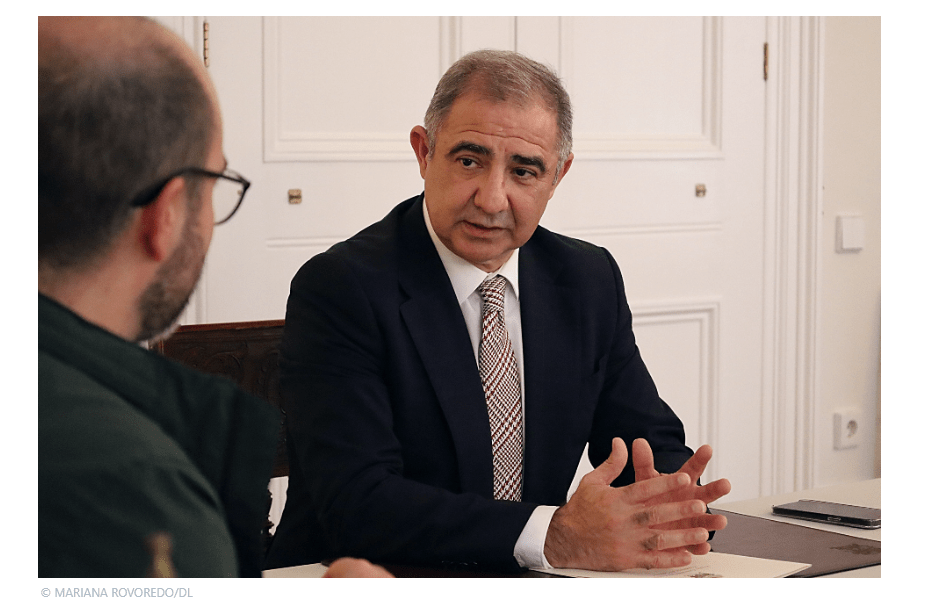
DL: Do you consider yourself a president of consensus?
I try to do that. And I’ll say yes, I like consensus.
For me, consensus is the best way for a decision-maker to find fulfillment in the recipient of the decision. So when I talk about consensus, or the ability of ideology to involve people, it’s not just on the side of the decision-maker; it’s on the side of the decision-maker and the recipient of the decisions. If they’re not involved, the decision is more likely to be successful and effective than if it’s an authoritarian exercise and then hits the wall due to resistance and even repudiation from the recipients of the decisions.
DL: How do you find time for yourself, and what do you do in your spare time?
Unfortunately, I’ve devoted much of my time to the mission. I like riding my motorcycle. Obviously, I want my family, but just so you know, I’m divorced, I have two grown-up daughters, so I live alone. And that has allowed me to be more dedicated to the public cause. I don’t have any vices. I like riding my motorcycle, but I don’t go out much. And I haven’t taken any long-term vacations; there are very few, so I’ve had little rest.
But what counts for me is my state of mind and my conscience. So I’ve had little time for myself, but I’m also aware that in this spirit of mission, I’ve done and dedicated my best to serving the Azores and the Azoreans well.
DL: During your office, what was the most difficult moment?
There have been several. We had to be innovative pioneers in this democratic process of party plurality in governance. In the beginning, there was fear, prohibition, conditioning people’s lives, and taking epidemiological control into account. At the same time, there was the risk of SATA closing its doors, which is a decisive company for the mobility of the Azoreans. Also, there are financial difficulties and all the expenditures during the pandemic. Having to safeguard jobs, the sustainability and security of companies, all of this was very painful. Many people thought the government wouldn’t last six months, but we gradually built solutions. There was also the seismic crisis in São Jorge, which we managed very well. Then, it became clear that the language had to be equally truthful and scientific. Then there was the budget failure, the six months without a budget, and the new elections in which I think there was a dose of irresponsibility because I can’t deny the evidence that the Socialist Party (PS) believed that it would return to power with new elections. The coalition was tested, and we won again. In fact, more than that, the PS lost the polls again.

DL: What about the criticism of the modular hospital? Do you think it’s the best option?
On issues requiring great technical expertise, I prefer to listen to those who know and not those who have an opinion without knowledge. Intuitions and perspectives from a certain angle are possible and even respectable, but the essential breadth of the solution is another thing.
Concerning everything I’ve already reported here, the fire in the HDES was missing. It’s the verification of the impacts, which isn’t civil construction; it’s the system, the equipment, the redundancies, the certification, and all the logistics needed to treat people because having patients with highly sensitive care with building work next to them is absurd. We’re discussing safety guarantees; you don’t have to be a scientist to understand that. The very concern that I felt in the testimonies of the clinicians, among those of the clinical management, with the majority consensus that the priority was patient safety. Not the penny, not the million, but safety. The clinical structure was assessed, and this was the best solution. The modular will do because it has a quality guarantee and, on the other hand, it can be relocated and used in the future in different places on São Miguel or other islands. I’m convinced we did the right thing.
DL: The PS often accuses you of being hostage to Chega. Do you feel like a hostage?
I’ve become accustomed, unfortunately, and to a certain extent, to these accusations. But it was Chega who said he was available to make the stability of the mandate possible, and he has been loyal. This doesn’t mean that he’s confused with the government but thinks like the government thinks. They even discuss many differences, more with the CDS and PPM. This is a difficult job, but I must recognize that dialogue has allowed for stability in government. There are some things in which they are absolutely different because they manifest themselves as an anti-regime party. I don’t feel like a hostage because I’ve felt the responsibility and the realization of an effort on the part of Chega, which is decisive in supporting government stability, whether in approving or enabling the government program, in approving the medium-term guidelines or the annual budget plans.
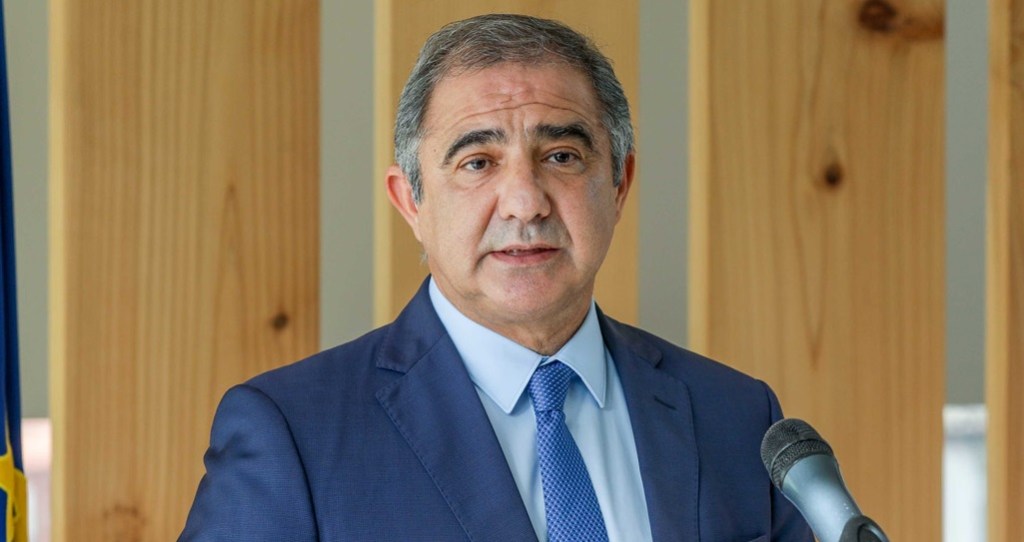
DL: In Lagoa, we already have a health center, and recently, the issue of creating a firefighter’s association was raised. Will this government resolve this shortcoming?
I’ve never seen a big demand for a health center in Lagoa. It was me, out of my conviction, with the idea of changing paradigms, because it doesn’t make sense, on the island of São Miguel, to have six municipalities, one of them not having a Health Center. Taking advantage of the facilities and capacities installed in the health center, we invested in refurbishing the building and reconfiguring the management of differentiated technical human resources. This government has done what was always refused by previous governments in 24 years of PS rule.
Whether or not to set up a firefighters’ association is a matter of private initiative. I believe it must have strong funding from the local authorities to be sustainable. Therefore, I think it is important to have a local civil protection strategy, but I leave that to the civic impulse of the population of Lagoa. What I can guarantee is that there will have to be support from the government. This involves a lot of expense, but I think we can optimize the capacities we have in place and even reinforce them.I look forward to it if there is this impetus and a guarantee of sustainability. If there is, the government will be here to contribute, as it has done with all the other firefighters’ associations.
DL: How do you imagine the Azores in four years?
In Diário da Lagoa, Clife Botelho, director.
Translated to English as a community outreach program from the Portuguese Beyond Borders Institute (PBBI) and the Modern and Classical Languages and Literatures Department (MCLL) as part of Bruma Publication and ADMA (Azores-Diaspora Media Alliance) at California State University, Fresno, PBBI thanks Luso Financial for sponsoring NOVIDADES.

 Novidades - The Islands and the Diaspora