

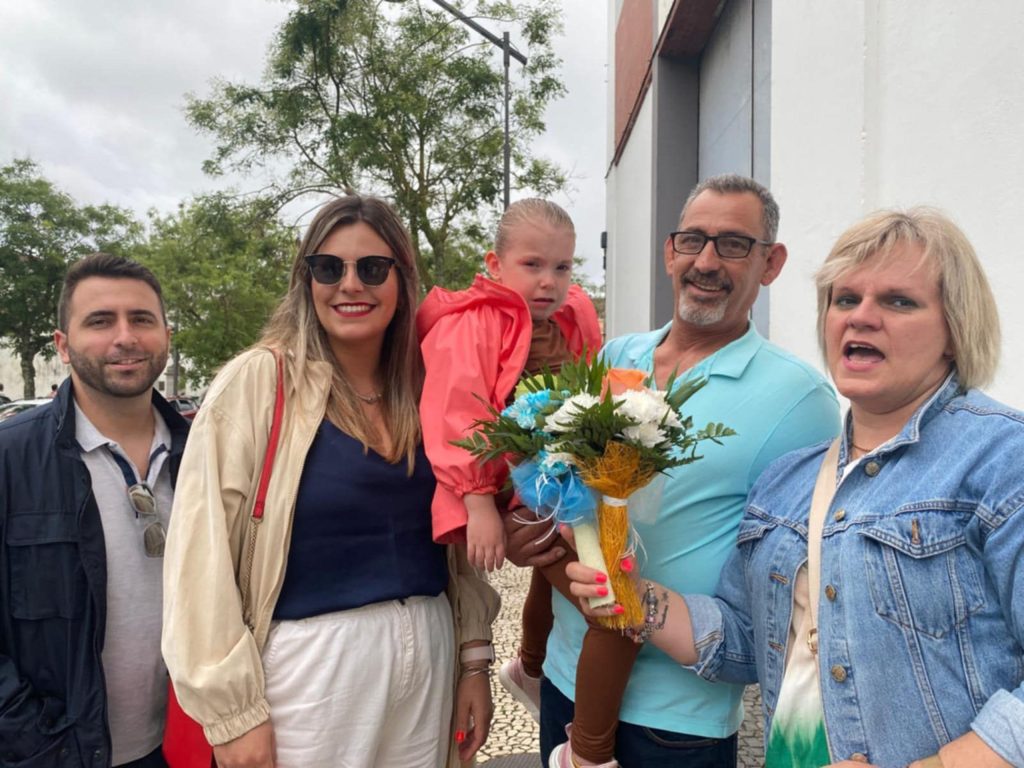
Pedro Rodrigues personifies what it means to be a father of two daughters and grandfather to four grandchildren. With a childhood that was “very different from today,” but where he was given a good education, he always tried to do the best for his family, even if that meant going abroad in search of better conditions. To ‘Correio dos Açores,’ he explains the main differences between his childhood and today, what values were passed on to him, and says with some sadness: “Nowadays we don’t see anyone playing in the street anymore.
Correio dos Açores – How would you describe your childhood?
Pedro Rodrigues (Son, father, and grandfather): As a little boy, I loved to play. My childhood was spent playing, but I also worked since I started working very young. I started helping my grandfather with the pigs when I was six or seven. I didn’t play much during my childhood. In my day, it was different from today.
What values and principles did your father pass on to you?
My father never gave me a bad upbringing; he always gave me a good one. For example, he never told me to go to work; I went because I wanted to. He also wanted me to continue studying, and I didn’t want to either.
What are the main differences between your childhood and that of your daughters?
It’s a big difference. When I was a child, there wasn’t what there was when I raised my daughters. And there’s an even bigger difference if we compare it to today. There was no television or computers, but I think my childhood was happier because there was more play between the children. When I was little, we used to play a lot in the street, and you don’t see that nowadays. Now, you don’t see anyone playing in the street, whether riding a bike or playing with tops or marbles. You just don’t see anything like you used to. Times are different, and today’s childhood is very different from mine.
What influence did your father have on the education you gave your daughters?
I always tried to give them the education I received from my father. Unfortunately, my father passed away when my daughter was two years old. I’ve always wanted to provide them with the best possible upbringing and told them not to misbehave because that’s what my father passed on to me. Also, as I was away working, my wife had to take over that part of their lives. When I went away, my daughters were very small.
Do you still remember your first day as a father?
Unfortunately, I can’t remember anymore. It was quite a few years ago.
Can you explain the feeling of being a father?
Being a father is a very strong joy—a joy beyond compare. I was already prepared for it, but it’s still a feeling that’s hard to describe. Only those who are fathers know.
And today, what are your main concerns as a father?
Above all, I want them to be always healthy and have a good life. That’s what worries me about my daughters.
Can you compare the feeling between being a father and being a grandfather? Is it the same for you?
The feeling of love is different, but both are very big feelings that I have. It’s not the same. Since my daughters are already grown up, I now feel more attached to my grandchildren (laughs). No one can touch them in a bad way, and I feel very protective of them.
How do you see and follow your grandchildren’s childhood?
Now, if we compare, for example, the time I raised my daughters with the time I raised my grandchildren, there’s a very big difference. My grandchildren have everything they want, and it wasn’t like that in the past. So, if you compare it to when I was a child, the differences are even greater.
Nowadays, children are made to do what they want, and in my day, that simply wasn’t the case. For example, we ate whatever was available and didn’t throw a tantrum if we didn’t like it. Nowadays, if they don’t like it, food is ordered, or something else is done. In my day, for example, we ate soup and bread and butter, which was fine (laughs). It’s not like that today; I’m glad things have changed.
What advice would you give to young people planning to become parents?
Above all, to be responsible. Having a child is a big responsibility. And try to bring them up as well as you can.
Frederico Figueiredo is a journalist for the newspaper Correio dos Açores-Natalino Viveiros, director.
Translated to English as a community outreach program from the Portuguese Beyond Borders Institute (PBBI) and the Modern and Classical Languages and Literatures Department (MCLL) as part of Bruma Publication and ADMA (Azores-Diaspora Media Alliance) at California State University, Fresno, PBBI thanks Luso Financial for sponsoring NOVIDADES.


 Novidades - The Islands and the Diaspora