

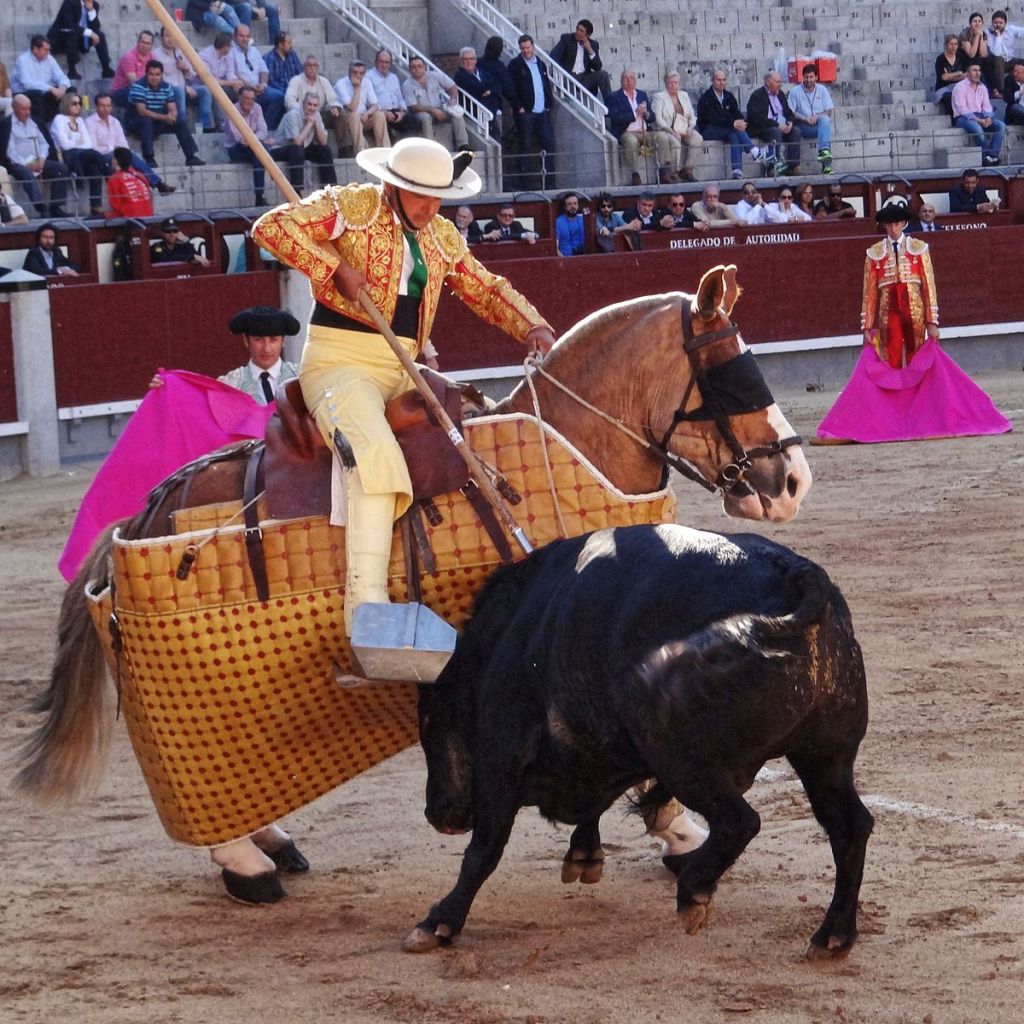
For those who don’t know, “sorte de varas” is a barbaric act, in which the bull is bitten quite violently, causing quite a lot of damage, from a muscular and neurological point of view,” warned Jéssica Pacheco, the first signatory of the petition, during a hearing held in the Parliamentary Affairs, Environment and Sustainable Development Committee of the regional parliament, which met in Ponta Delgada.
At the end of January, at the IV World Forum of Bullfighting Culture, the former president of the Tertúlia Tauromáquica José Parreira defended the legalization in the region of the sorte de varas, in which bulls are bitten. The regional secretary for Agriculture and Food (PSD/CDS/PPM), António Ventura, challenged the Tertúlia to try to get the sorte de varas discussed in parliament, claiming that its current composition, with eight parties and without an absolute majority, “could be an advantage”.
“The regional ombudsman for animals has already said, in statements to journalists, that the drawing of lots is clearly an act of mistreatment of animals and represents a civilizational step backward,” recalled Jéssica Pacheco, adding that ‘more than personal opinions’, the deputies should take into account the position of ‘independent and renowned entities’ that can analyze the possible return of the drawing of lots in the Azores.

For the representative, it would also be “nonsense” if regional legislation were changed to allow it, as it would have “negative effects” on the region’s international image since it is not in keeping with the islands’ natural destination.
The “sorte de varas” (a spectacle in which the bull is stabbed by a spear) was already approved by the Azores Legislative Assembly in 2002. Still, the diploma was eventually vetoed by the then Minister of the Republic, Sampaio da Nóvoa, and sent to the Constitutional Court, which rejected it.

In 2009, a group of MPs led by the Social Democrat José Manuel Bolieiro (current President of the Regional Government of the Azores) tried to restore the luck of the sticks to the regional parliament, with the support of several other MPs from the PSD, PS, CDS, and PPM.
The argument at the time was that “slides cicadas” would improve the “artistic quality” of bullfighting on Terceira Island, attracting and satisfying the demands of the world’s great bullfighting figures. However, the bill was rejected by just one vote.
Translated to English as a community outreach program from the Portuguese Beyond Borders Institute (PBBI) and the Modern and Classical Languages and Literatures Department (MCLL) as part of Bruma Publication and ADMA (Azores-Diaspora Media Alliance) at California State University, Fresno, PBBI thanks Luso Financial for sponsoring NOVIDADES.

 Novidades - The Islands and the Diaspora