

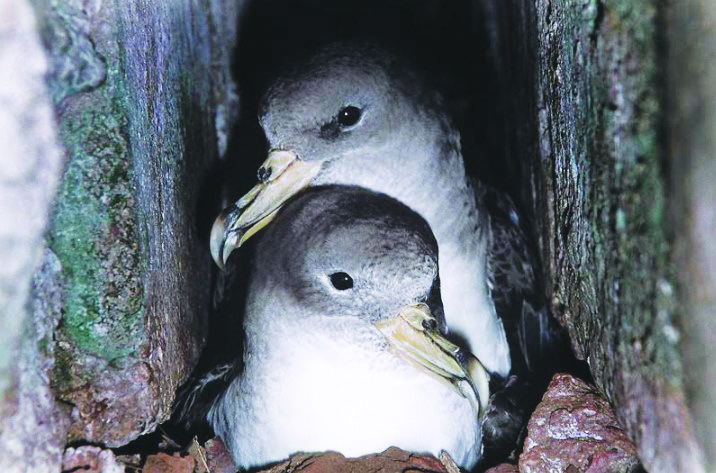
A few days ago, an international group of scientists discovered that small, healthy-looking seabirds may already show tissue deterioration due to plastic ingestion.
This is one of the conclusions of a study in Science Advances, quoted by the newspaper Público. The study analyzes the presence of “molecular signatures” of 745 proteins associated with organ failure and neurodegeneration in the blood of a species of wild shearwater (Ardenna carneipes).
“The ingestion of plastic by wild animals is not just a digestive problem. The health consequences are far-reaching, affect the whole body and probably have major implications for their survival,” explains Alix de Jersey, first author of the study and a researcher at the University of Tasmania in Australia.
The scientists went to Lord Howe Island in Australia in April last year to study juvenile shearwaters, which are known to consume large quantities of plastic.
The aim was to learn more about the invisible impacts of plastic consumption on young seabirds that, to the naked eye, appeared healthy and were ready to begin a long migration of 7,000 kilometers, reports Público.
During their fieldwork on Lord Howe Island, the researchers took samples of blood and plastic inside the stomachs of the “baby” seabirds.
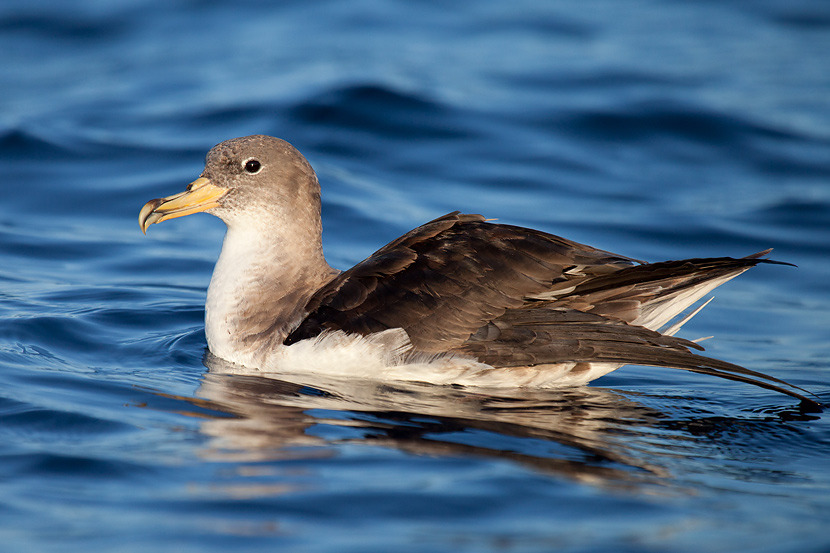
The hematological material collected was sent to the laboratory, where scientists analyzed the birds’ blood proteins.
The “molecular signatures” found during this proteomic analysis provided information about the shearwaters’ state of health.
The researchers identified proteins circulating in the blood that indicate cell degradation, deterioration of the stomach lining, and neurodegeneration.
These findings suggest plastic pollution can harm wildlife at a molecular level, wearing down the stomach walls and seeping into the birds’ bodies.
University of the Azores scientist Yasmina Rodríguez, who was not involved in the Science Advances study, believes that the work suggests that the metrics used to assess the state of wildlife may not offer an accurate picture of animal health.
“By applying medical techniques used to assess human health, the study demonstrates that factors we normally use to assess the effects of plastic ingestion, such as body condition, may not be sufficient to determine whether or not there are impacts on species,” Yasmina Rodríguez, a researcher at the Okeanos Institute at the University of the Azores, told Público.
A study by Yasmina Rodríguez and colleagues, published in the scientific journal Environment International in 2024, showed that more than 90% of the young of the seabird Calonectris borealis already had plastic in their stomachs when they left their nests, both in Portugal and Spain.
The article proposed using this shearwater species as a bioindicator of plastic pollution in the North Atlantic.
Calonectris borealis also belongs to the group of shearwaters (or cagarros, in the Azores), i.e. it is a “close relative” of Ardenna carneipes, the species targeted in the Science Advances study.
These birds belong to the Procellariiformes order, and due to the morphology of their stomachs, they tend to accumulate in this digestive cavity.

Shearwaters are unable to regurgitate undigested matter—unlike seagulls, for example—so they accumulate plastic in that organ.
“Although shearwaters in Portugal ingest lower concentrations and smaller sizes of plastic than the species studied in Australia, the number of plastics ingested by juveniles born in Portugal has been increasing over the years. This new study shows that our birds may also be experiencing harmful sublethal effects caused by the ingestion of marine plastics,” the scientist told the newspaper.
Yasmina Rodríguez’s research group also studied the impact of polymers on the microbiome of Azorean shearwaters, confirming that those that ingested more plastics had more pathogenic microorganisms.
“These findings lead us to think that we need greater investment in science in Portugal and measures to combat precariousness in the sector. It’s also essential to rethink our choices and adopt concrete policies to reduce plastic consumption,” argues the University of the Azores scientist.
in Diário dos Açores-Osvaldo Cabral, director

Translated to English as a community outreach program from the Portuguese Beyond Borders Institute (PBBI) and the Modern and Classical Languages and Literatures Department (MCLL) as part of Bruma Publication and ADMA (Azores-Diaspora Media Alliance) at California State University, Fresno, PBBI thanks Luso Financial for sponsoring NOVIDADES.

 Novidades - The Islands and the Diaspora