

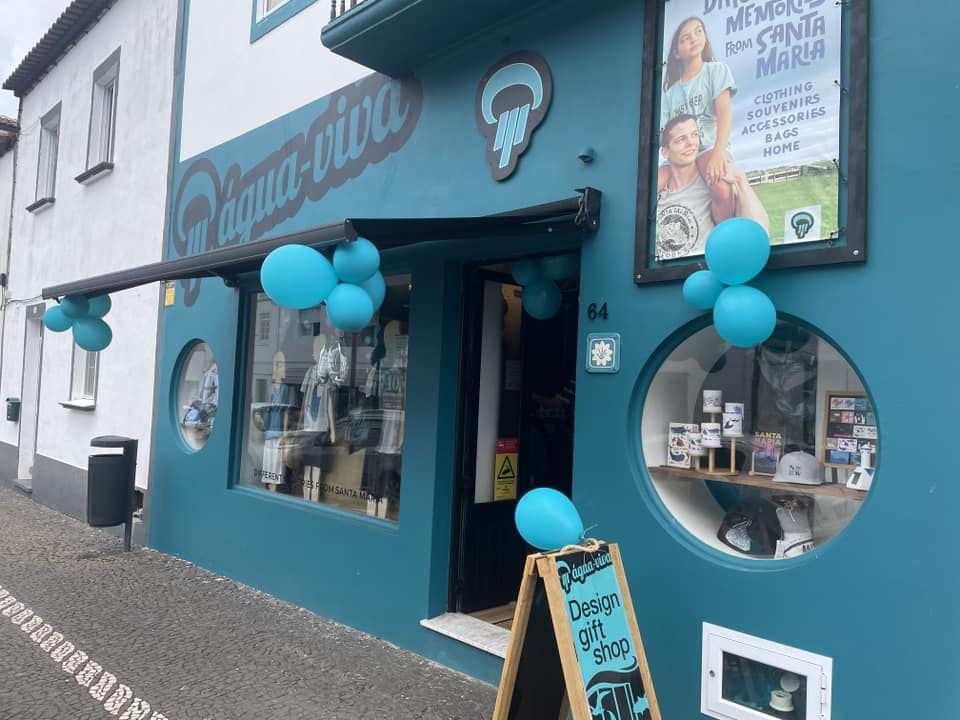
Ten years old, Água-viva is a souvenir store located in the center of Vila do Porto, in Santa Maria, dedicated to producing minimalist and functional souvenirs, with an exclusive design and the possibility of personalization. The founder, Carolina Roman, originally from Barcelona, moved to the region after falling in love with an Azorean and, as she says, “since then, I’ve fallen in love with the islands, their cultural richness, their stunning landscapes and the warm hospitality of the Azorean people, which has made me want to stay forever”. This emotional connection to the archipelago was born from this brand, combining local identity and national production.
Correio dos Açores – Can you tell us about yourself and what brought you to the Azores?
Carolina Roman (owner of the Água-viva store) – I was born in Barcelona, where I graduated in Advertising and Communication. Throughout my career, I have worked in various advertising agencies in Spain and Mexico City, where I lived for five years. Love brought me to the Azores, as my husband is Azorean. That was the main reason I decided to move here. Since then, I’ve fallen in love with the islands, their rich culture, stunning landscapes, and the warm hospitality of the Azorean people, which has made me want to stay forever.
How did the Água Viva store come about?
The idea for the Água-viva brand arose from my passion for the islands, their landscapes, and their people, combined with the desire to create a new style of souvenir from the Azores based on minimalist design and to develop products that could be used in everyday life and that were 100% Portuguese. To make this project a reality, I already had the basics of graphic design from my studies and work experience, but I lacked the management and production skills. That’s why I took an entrepreneurship course in Santa Maria and also took part in screen-printing workshops in Barcelona, where I could explore the possibilities of this printing technique.

How would you describe the concept of the store?
Our concept is to create a souvenir that can be used daily and in your usual residence, as its minimalist design allows this. The aim was to launch a product that would meet the expectations of tourists and residents alike, allowing them to buy items that are representative of the archipelago, different from traditional souvenirs – linked to gastronomy or handicrafts – and with added value, given by the quality of the materials and the exclusive design of the illustrations.
What were the biggest difficulties in launching the store 10 years ago in Santa Maria?
The main difficulties we faced were logistical. We had to transport all the screen-printing equipment to Santa Maria, including the carousel and the frame-developing machine, and find a suitable space to integrate our studio with the physical store to display the products and serve the public. Fortunately, we had the valuable support of suppliers, friends, and acquaintances from Santa Maria, who joined us in this endeavor.
Another challenge was textile production, which we carried out in northern Portugal. I visited several factories until I found a partner that matched our quality standards. We worked together on every detail – from the design of the T-shirts, such as the shape of the neckline, the length of the sleeves and the style, adapted to the men’s, women’s and children’s lines, to the choice of brand colors, deliberately selected to have a vintage feel, with a slightly worn finish, without compromising the quality of the fabric.
How do you choose the pieces and products you sell? Can you tell us a bit about your original pieces?
On the one hand, we have our textile line, which we developed from scratch and covers the entire process—from making the T-shirts to printing, labeling, and displaying. On the other hand, we also offer customization of items already produced, such as sweatshirts, jackets, and baby clothes, including bodysuits and jumpsuits. We also provide various home textile products, ranging from aprons to table runners.
In addition, we have a selection of products that are not screen-printed but reflect the store’s concept, maintaining a minimalist and modern style. This includes ceramic crafts and more informal souvenirs, such as magnets and postcards, all with the same designs we apply to our textile items.
To offer this diversity of products, we work with suppliers from Portugal, Spain, France, and the UK.
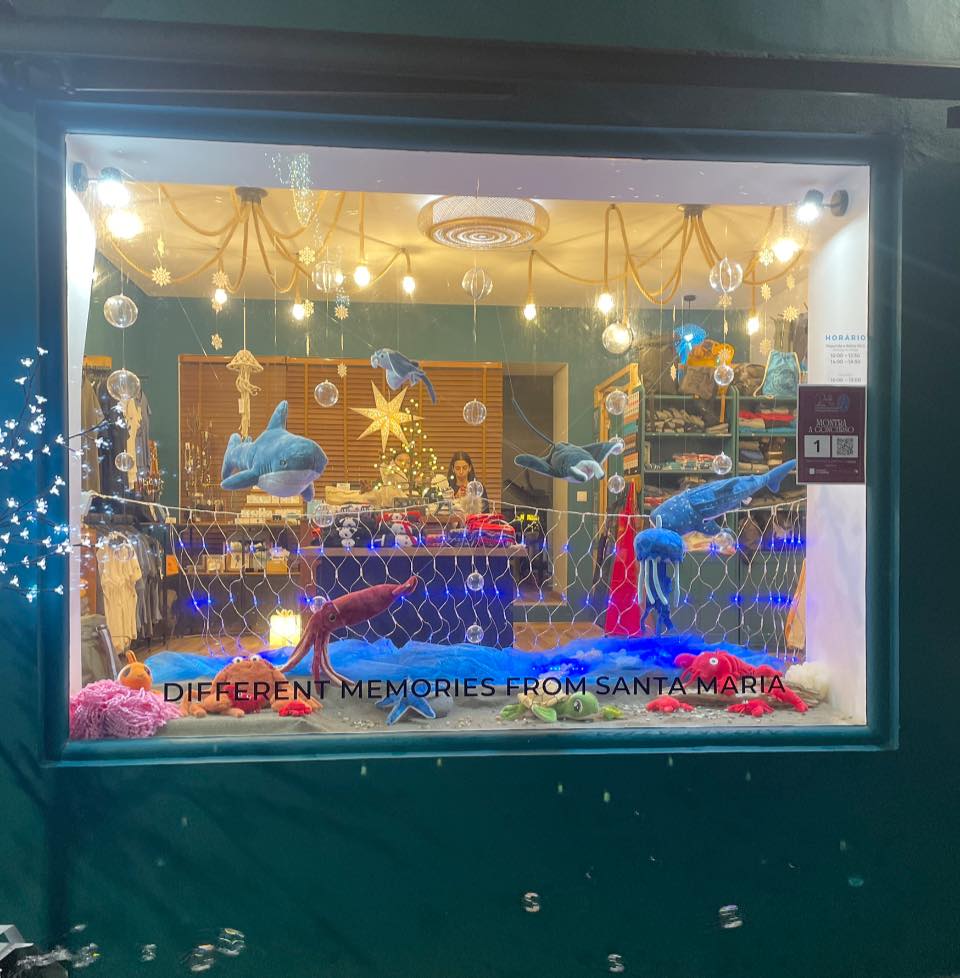
Which items are your best sellers?
The best-selling items include textiles such as T-shirts, sweatshirts, jackets, and bags. Other products that also stand out are notebooks made from recycled materials, key rings, caps, and decorative pieces that celebrate our island.
Who are your biggest customers?
Fortunately, we have excellent acceptance among the local population and the Azoreans. During the summer, tourists become Água-viva’s main customers. Often, even those who live on the mainland or abroad become regular customers, and we are happy to send orders directly to their places of residence.
How would you describe the store’s evolution over the years?
The evolution of our store has been extremely positive, often exceeding our expectations—not only in sales but also in strengthening brand recognition. We have made significant progress, changing locations three times until we found the ideal space, which we believe is the definitive one, located on the main street of Vila do Porto.
What plans do you have for the future of the store?
We aim to remain dedicated to what we love, creating unique designs that better represent Santa Maria than the competition. We want to continue to receive positive and exciting feedback from customers who visit our store, giving those who come to our island the opportunity to take away a special souvenir. We hope these souvenirs are useful every day and convey our care and dedication to each piece.
Daniela Canha is a journalist for the newspaper Correio dos Açores-Natalino Viveiros, director.
Photos from the store’s Facebook Page
Translated to English as a community outreach program from the Portuguese Beyond Borders Institute (PBBI) and the Modern and Classical Languages and Literatures Department (MCLL) as part of Bruma Publication and ADMA (Azores-Diaspora Media Alliance) at California State University, Fresno, PBBI thanks Luso Financial for sponsoring NOVIDADES.

 Novidades - The Islands and the Diaspora