

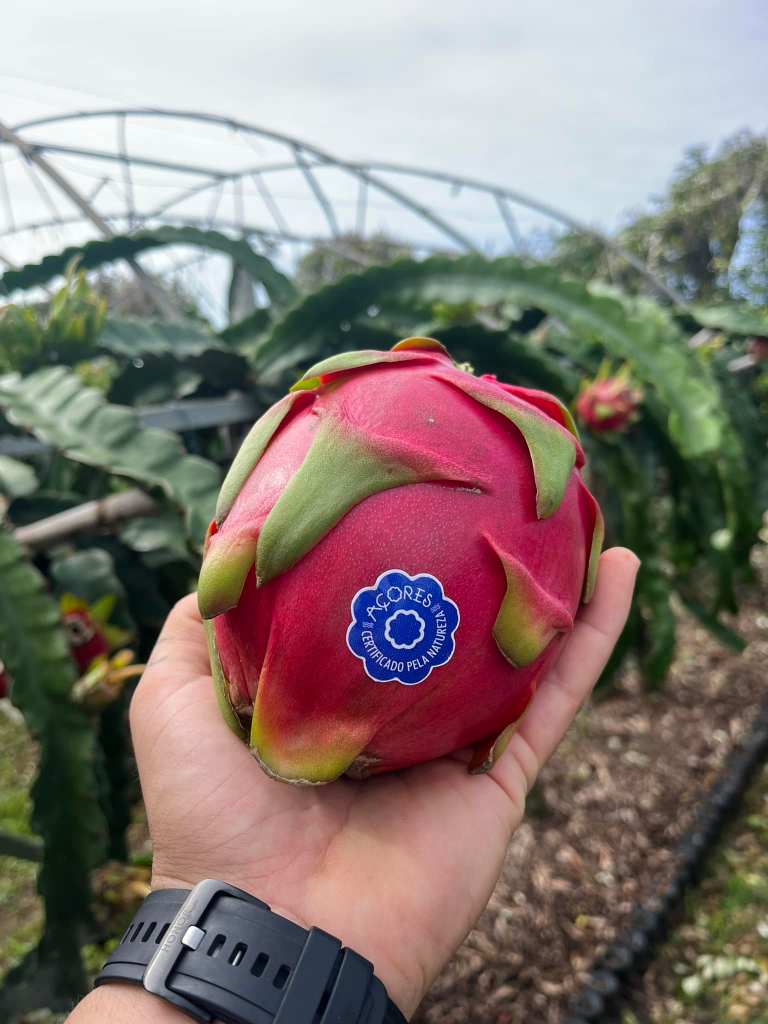
On the island of Santa Maria, entrepreneur Filipe Loura has created the “Pitaya Ilha do Sol” brand. With local planting and production of pitaya – also known as dragon fruit – this exotic fruit is increasingly sought by Azoreans. Its sweet taste, natural properties, and distinctive appearance are among the characteristics that make it popular. For the Mariense producer, “the goals for the future are to keep our fruit of sufficient quality and quantity to supply the Azores all year round”.
About three years ago, on the island of Santa Maria, a small agricultural project began taking shape in Filipe Loura’s hands. The idea came about accidentally, with no initial intentions. After receiving some pitaya trees from a colleague, the father of the creator of the Pitaya Ilha do Sol brand found himself producing large quantities of the fruit. It was practically overloaded with this exotic fruit. He then realized that there was a growing demand for the product and, at the same time, good conditions for its production. From this realization, the entrepreneur saw a great business opportunity. And so, in 2022, Pitaya Ilha do Sol was born to bring pitaya, a colorful and exotic fruit, to all Azoreans.

Characteristics of pitaya
According to Filipe Loura, the choice of pitaya was a “right decision at the right time”. Pitaya, also known as “dragon fruit”, is a fruit that has several varieties, each with unique characteristics and flavors. It is a sweet, fresh fruit that can be adapted to different recipes and offers great health benefits thanks to its antioxidant properties. However, what makes pitaya even more special is its potential on the island of Santa Maria, thanks to the fertile and rich soil that provides the perfect base for growing pitaya, resulting in an extremely high-quality fruit.
The Santa Maria producer says that, to date, Pitaya Ilha do Sol is one of the few, if not the only, producers of this fruit in the region, which gives the product a unique identity and value.

The process of producing and marketing of pitaya
Growing pitaya is not simple. The plant requires specific care, and the fruit takes some time to grow. For Filipe Loura, it is “a time-consuming process” that “requires a lot of attention on our part.”
In addition, the production of Pitaya Ilha do Sol is committed to quality and sustainability.
“Instead of using chemical products, the cultivation process is natural, using organic methods to combat diseases and pests,” explains the Mariense producer.
“We want to ensure that our product is 100% organic,” he adds.
Since its creation, Pitaya Ilha do Sol has received growing demand, especially on the island of Santa Maria, where the local trade has been an important ally. Initially, the business was supported by island traders, who helped with the initial production phase. However, the demand for the fruit is so great that, for the time being, a large portion of the pitaya production is being shipped to the island of São Miguel.
Pitaya Ilha do Sol has managed to reach a loyal audience in local markets and stores in the Eastern Group. The brand seeks to guarantee the product’s availability all year round to satisfy the growing demand and give Azoreans the opportunity to consume pitaya at any time of the year.
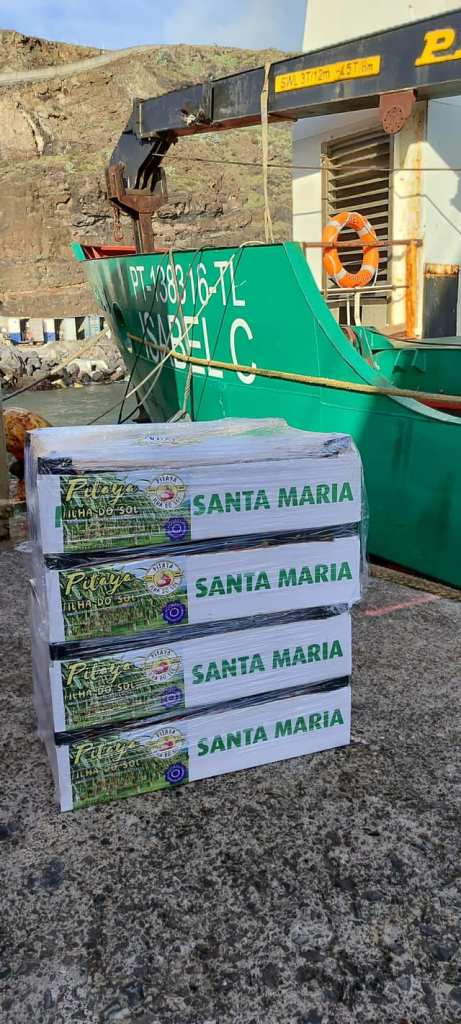
The association with Marca Açores was a natural step in developing the business.
“It was a personal ambition, but also the advice of close friends, who strongly supported us in the initial phase,” says the founder.
The Azores Brand is a seal of quality and authenticity that promotes the region’s products and highlights the best the Azores have to offer. Joining the brand has helped strengthen Pitaya Ilha do Sol’s identity, putting it on the map of Azorean products and giving it even more prestige.
The production of Pitaya Ilha do Sol is expanding. The business aims to produce 5,000 kg of pitaya annually, an ambitious milestone that should consolidate the brand’s presence in the Azorean market.
The future of Pitaya Ilha do Sol
The brand’s goals for the future are clear and ambitious. The brand intends to continue investing in the quality and production of pitayas, ensuring that the product is available all year round. The idea is for the fruit to become accessible to everyone while maintaining competitive prices and the quality that characterizes the brand. The commitment to organic and quality production, as well as the commitment to sustainability, places Pitaya Ilha do Sol in a privileged position for the future.
“The objectives for the future are to keep our fruit of sufficient quality and quantity to supply the Azores all year round and to be able to make the Azoreans aware of the fruit, guaranteeing prices that are affordable for everyone,” says Filipe Loura.
Pitaya Ilha do Sol is more than just an agricultural business. With its unique flavor and health benefits, pitaya will likely become one of the most popular fruits in the coming years. This is just the beginning of a story that promises to win over the taste buds of Azoreans.

José Henrique Andrade is a journalist for Correio dos Açores, and Natalino Viveiros is the director.

Translated to English as a community outreach program from the Portuguese Beyond Borders Institute (PBBI) and the Modern and Classical Languages and Literatures Department (MCLL) as part of Bruma Publication and ADMA (Azores-Diaspora Media Alliance) at California State University, Fresno, PBBI thanks Luso Financial for sponsoring NOVIDADES.

 Novidades - The Islands and the Diaspora