

We still don’t have a complete picture of the process that has taken place over the last few weeks regarding the fall of a student, which resulted in an obvious illness, a fractured collarbone, and other injuries to her body. The information that has been made public comes from the student’s mother, who did so with the natural anxiety and revolt of someone heartbroken at the surrealism of the situation. Little concrete has been heard from the competent authorities, and everything else has been just words of defense for the apparently indefensible.
As I don’t know all the facts, writing about this subject in detail won’t be possible. I’m not a mother, but I am a daughter, and I think I have enough empathy to be deeply sympathetic to those who have been through all this.
My sympathy goes first and foremost to the young woman, her mother, and the rest of the family, who have been afflicted not only by the apparent seriousness of the case but also by the flood of public opinions that have emerged in recent times. Living on an island isn’t always easy. I wish them tough skin to withstand the usual acts of faith that follow these episodes.
Solidarity also goes to those who work at the school, dedicated to the patron Vitorino Nemésio, a man of pedagogy and culture, who would certainly be embarrassed by the current reality plaguing the region where he was born. The case of the young student, a victim of this system, reflects the cruelty of the bureaucratic machine in treating the weakest and those in need. In an interview lasting just a few minutes, the reason was that, in the event of a problem in the process, the reasons had to do with the lack of funds, protocols, and strategies for the day-to-day management of an establishment such as an educational center.
Anyone who works in a school in the Autonomous Region of the Azores, will identify the seriousness of the current financial reality in education, because as much as we talk about the budget allocated to education, we can’t forget that a large slice is for school social action, a consequence of being a poor region. Teachers who prepare and print materials at home, at their own expense, deducted from their salary, and bring their own equipment to work in the common rooms. An ageing non-teaching staff who are physically and emotionally exhausted from fulfilling essential but increasingly demanding duties.
It gives me no pleasure to continue criticizing this secretary and her office, be it the officially appointed one or the decentralized one that has never stopped working there, even if it no longer has its own space to run things. There’s nothing personal in what I write. It’s only necessary because things still won’t change. As you can hear in the corridors of Palacete Silveira e Paulo and on the corners of Rua Carreira dos Cavalos, a system remains unable to define and execute a strategy.
I’m doing this because I still believe that education is the only social elevator, the only tool capable of breaking cycles of poverty in a region where social indicators show the greatest failure of our Autonomy. I do this because I believe that in an area with such social inequalities, where all their consequences are felt, education can change the future, which many young people tend to be born into.
I do this because school institutions, whether public, IPSS, or private, are not warehouses. They are levers for this region’s socio-economic development. However, the virus of bureaucratic cruelty, which has always affected part of the civil service, is fully installed in the Secretariat for Education and Cultural Affairs. When we talk about the oppression of disadvantaged people, we mustn’t forget the number of cultural agents who are waiting for results in 2025 to know what to do with their lives. It’s not enough to mention the walls of the old convent, falling to the ground with the weight of heavy machinery, next to the Santa Casa de Angra do Heroísmo, without anyone from the competent regional directorate apparently doing anything to prevent it. And we shouldn’t keep quiet about the museums, libraries, and offices where bits of the ceiling fall and where culture is consigned to the bottom drawer.
The current Secretary was chosen by José Manuel Bolieiro’s two executives as a representative of a lifetime as a trade unionist and militant politician in the archipelago, in the country, and in the European Parliament. She asserted herself as a defender of teachers and the education system. To her misfortune, she had to embrace culture. And the great result of her career, perhaps the greatest of her legacies, is a region full of schools with no money to make photocopies and museums with no money to buy toilet paper.
The apparatus she built and maintained, with former and current figures working simultaneously and with the weight of any decision taken away from the people with the training and capacity to do so, is nothing more than an act of metaphorically throwing an entire sector down the sector as an whole, where culture is lacking, good manners have been lost and it takes a lot of moral moral gymnastics to be able to sleep at night. You don’t have to go any further than a play to understand who the puppets in this story are.
With the legislative, municipal, and presidential elections coming up, Bolieiro should consider reshaping parts of his government and putting pressure on those who need it.
Your children deserve better. Our art deserves more. Universal heritage deserves respect. Non-teaching and teaching staff deserve dignity. We must demand more.
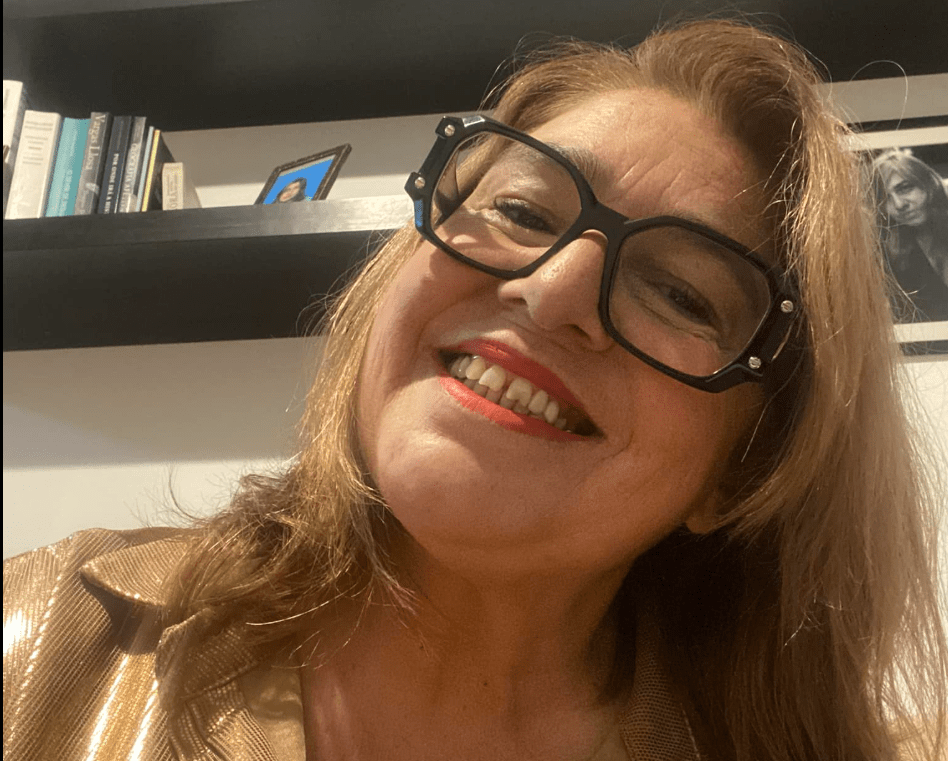
Alexandra Manes is from Flores Island but lives in Terceira Island, Azores. She is a regular contributing writer for several Azorean newspapers, a political and cultural activist, and has served in the Azorean Parliament.
NOVIDADES will feature occasional opinion pieces from various leading thinkers and writers from the Azores to give the diaspora and those interested in the current Azores a sense of the significant opinions on some of the archipelago’s issues.
Translated to English as a community outreach program from the Portuguese Beyond Borders Institute (PBBI) and the Modern and Classical Languages and Literatures Department (MCLL).
 Novidades - The Islands and the Diaspora