

Over the last few decades, the Azores have had enormous EU financial resources and various instruments to stimulate their economy, as no other region has managed to do in such a short time. Our neighbor Madeira, with less than us, has grown more and consolidated other wealth-generating activities than just tourism.
We are still looking for a direction in the Azores, which are now leveraged by tourism. Still, the pace of growth is slow, very dependent on state aid, and with unambitious political guidelines.
This is not just our problem. Over the years, we’ve seen widespread economic doldrums throughout the country, with meager growth and a strong focus on debt reduction.
Just a few days ago, the President of the Portuguese Business Confederation, Armindo Monteiro, hit the right note when he said, “we have no ambition to create more”. This is not a new issue. We had already heard Daniel Traça’s warning: “in Portugal, an aversion to failure and a lack of ambition still dominate”.
Speaking to ECO, the former director of NOVA SBE and current director-general of Spain’s ESADE called for more risk-taking, in other words, for companies to invest in gaining scale and exporting and for the state to focus on meritocracy, improving its functioning. The author of the book “Ambition. Preparing Portugal for the best-prepared generation”, the professor, also says that Portuguese companies must embrace the generational transition, putting an end to the eternalization of managers and taking advantage of the information and the world of young people leaving university.
The advice fits like a glove in our regional environment, which is increasingly aging, complacent, and lacking in ambition. This influences the entire economic and political structure of the region, leading the most talented to seek their wings outside the islands.
Wealth creation can only be achieved by investing more in human and material resources, allowing civil society, especially companies and investors, to move beyond our poor island folklore of always leaning on the public budget. But for this to happen, we need to create more ambitious conditions that facilitate the creation of wealth on the islands.
Who wants to invest in a region, especially in the productive sector, with an obsolete, inadequate, and oligarchic maritime transport system? How can we compete with economies of scale when we don’t even have an air freighter?
The very bureaucratic monster that is the region’s entire administrative system drives any investor away from our islands.
It’s no coincidence that foreign investment in the Azores is a real pittance (565 million euros last year) compared to other regions (more than 10 billion in Madeira).
Armindo Monteiro also warned of when we all wear ourselves out discussing useless things and dividing up what exists. Imagine here, with nine islands, some of them divided by internal trivialities…
“We don’t even have a medium-long term vision, when our great mission as a poor country with great growth potential should be to discuss the growth that is always below our potential, which is dramatic,” the businessman stresses. Adapting the thought to our island stronghold, one wonders what we’ve been doing all this time, with what results, and at what level of accountability.
We haven’t even managed to hold on to an airline, for example, which will be sold off precisely because of our incompetence and without any degree of responsibility from those who allowed us to get this far.
Many other examples of political failures are known to all of us, almost all of them with a common pattern, which is the irresponsibility of party life addicted to power games, everyone wanting their share, when we should be fighting, as the business leader says, for a cultural transformation, assuming our purpose of being more civically active and ambitious, instead of holding our hands out to Europe.
To make matters worse, it is disheartening that we are constantly in a climate of political instability and verbal tension between the main political leaders. It started in the Azores and moved to Madeira, and now it’s the country.
As someone once said, it’s difficult to exchange fear for ambition in a climate like this. No ambition can resist.
Will the next generation be bolder than ours?
April 2025
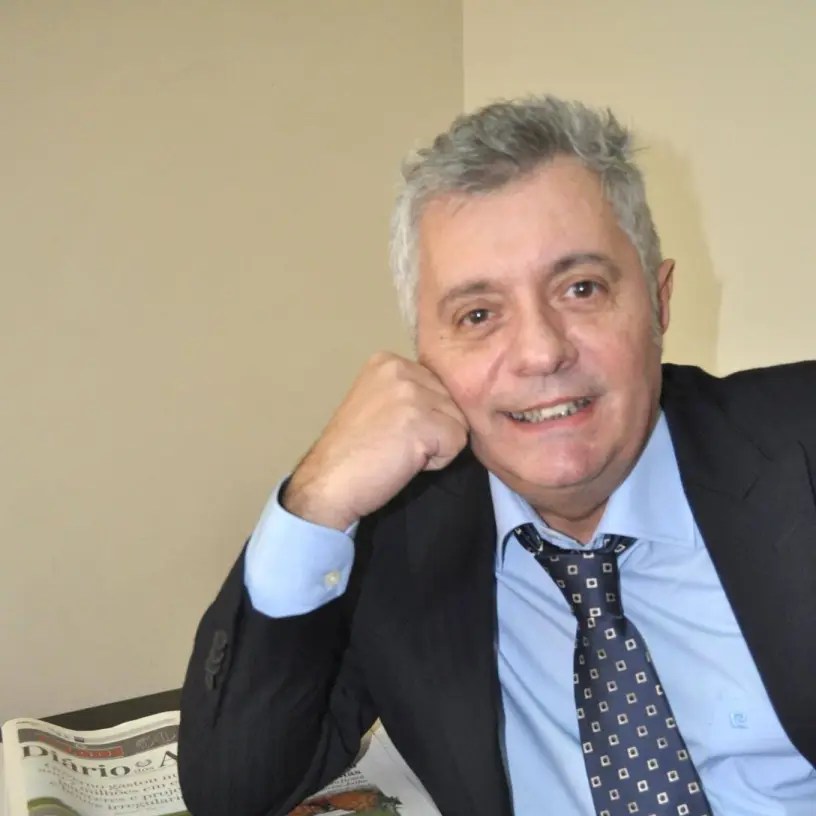
Osvaldo Cabral is the Executive Director of the newspaper Diário dos Açores.
NOVIDADES will feature occasional opinion pieces from various leading thinkers, writers, and editorial boards from the Azores to give the diaspora and those interested in the current Azores a sense of the significant opinions on some of the archipelago’s issues.
Translated to English as a community outreach program from the Portuguese Beyond Borders Institute (PBBI) and the Modern and Classical Languages and Literatures Department (MCLL).
 Novidades - The Islands and the Diaspora