


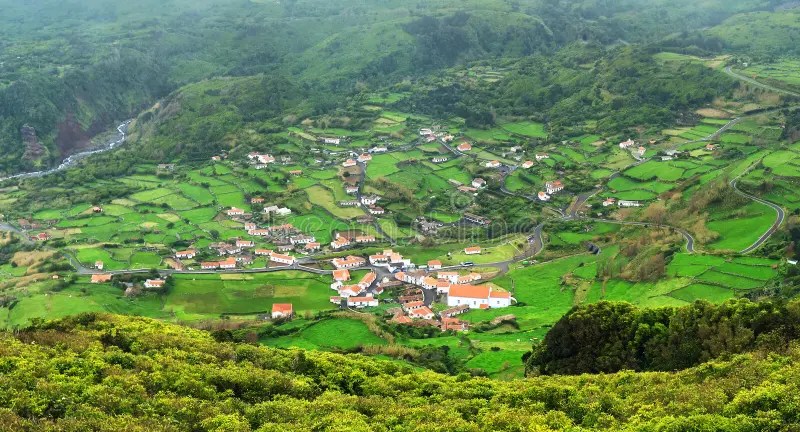
With around 65 inhabitants, Fajãzinha is today one of the least populated parishes on Flores. Located about 15 kilometers from Lajes, it is known for its natural landscape, especially the Poço da Ribeira do Ferreiro and the Ribeira Grande waterfall. The church of Nossa Senhora dos Remédios, one of the largest on the island, marks the center of religious and cultural life in the parish, which maintains traditions such as the Holy Spirit and patron saint festivals. It is also home to the Nossa Senhora dos Remédios da Fajãzinha Workers’ and Cultural Union Philharmonic, founded in 1953. However, as António Eduardo, president of the parish council since 2021, points out, the main challenge remains desertification, the ageing of the population, and the lack of services and infrastructure to respond to the growing tourist pressure – a reality that, as he says, extends to the whole island.
Correio dos Açores – How would you describe the parish of Fajãzinha?
António Eduardo (President of the Fajãzinha Parish Council) – Fajãzinha is a small parish located on the west coast of the island of Flores, about 15 kilometers from Lajes. Today, 65 people live here. When I was born in 1950, there were about 350 of us.
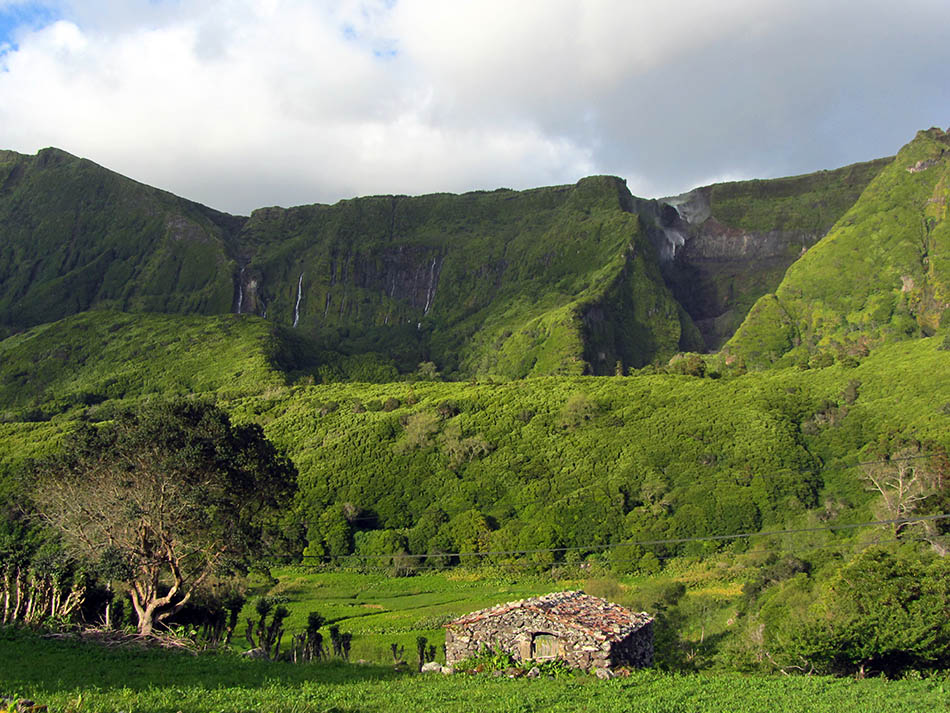
It’s a beautiful place. Right in front of us is the Poço da Ribeira do Ferreiro – also called Poço da Alagoinha – and the Ribeira Grande waterfalls, which are frequently visited by those who come to the island. As I often say, Fajãzinha is like a cauldron with a broken rim – round but open to the sea.
In the old days, people made a living from farming. There was a lot of corn, potatoes, and cattle. Today, hardly anyone sows corn, and potatoes are only for consumption. Some still have a small group of animals, but most work outside. Some work in the town halls, others on the buses—where I worked for 35 years—and others clean or work in houses.
For many years, there was a store here, with a café. But the man who owned it died, and it never opened again. Now we have to go to Santa Cruz for everything.
What are the main challenges currently facing the parish?
The biggest problem is the lack of people. The parish has been losing population, and most of those who live here are over 50. Young people go away to study or work and don’t come back.
It’s very difficult to find young couples. There are no jobs; even when houses are available, the owners don’t always want to sell. Others even want to buy but can’t. There are two or three girls who clean the local lodgings, but apart from that, there’s nothing else. Those who don’t have crops or livestock have to leave the parish to work.
Are the funds available enough to run the parish?
As the parish is small, the funds are enough for the essentials. We have an employee who works here and is also connected to the council—he’s been with us for about ten years. He cleans the paths and the stream that runs through the parish, paints the walls, and does the necessary repairs. As far as possible, the paths are kept clean and things in order.
Do you feel that tourism has increased? Is Fajãzinha prepared to receive it?
There is increasing tourism. People pass by every day. We have four or five local lodgings and the Pôr-do-Sol restaurant, which is run by a family.
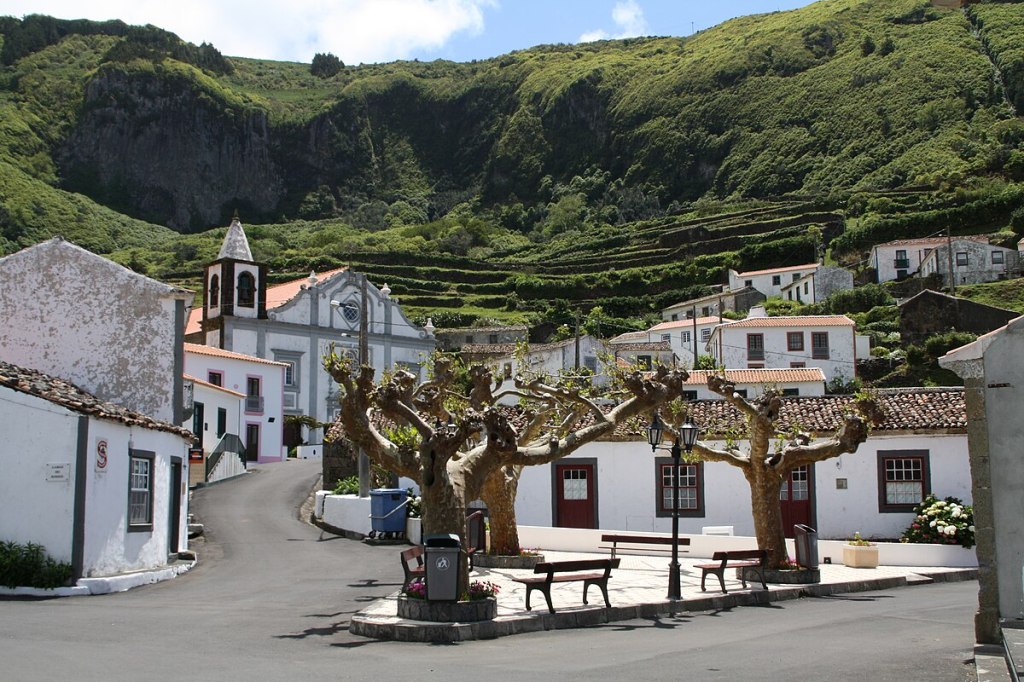
But there are no cafés or kiosks. Many tourists end up sitting in the square by the church, where there are some shady trees. They bring their seats and snacks, and that’s where they eat. If there was a proper café, it would be ideal for the parish. We have the waterfalls right before us, and more services could generate profit for the parish, but we need people who want to invest.
The truth is that the island of Flores, in general, is not prepared for much tourism, neither in accommodation nor in restaurants. Even in Santa Cruz or Lajes, you can feel this lack. And then there’s no workforce either.
What are the main cultural events in the parish?
We have the patron saint’s feast, Nossa Senhora dos Remédios, on the last weekend of August. We usually set up a kitchen and a barbecue in the Rossio, with dishes such as kid, lamb, chicken with beans… We have two large tents for around a hundred people. It’s a three-day festival and a lot of people usually come.
We also maintain the tradition of the Holy Spirit. Mass is said, the crown goes to the church, and then it goes to the house of the Holy Spirit. Each brother pays his share and takes meat home.
The children’s party isn’t always possible. There are only two children in the parish and two who come from outside, and it’s difficult to organize.
We also have our own philharmonic, which is the only one on the island: the Philharmonic União Operária e Cultural Nossa Senhora dos Remédios da Fajãzinha. It was founded in 1953 when I was three years old. Today, it has around thirty members. Twelve are from my family—sons, grandsons, and daughter-in-law—and there are also musicians from outside the parish.
Does Fajãzinha have the potential to develop? Under what conditions?
Fajãzinha has the potential to develop, but without people, we can’t do much. There are no jobs here, no services. The local lodgings still employ two or three people, but apart from that, there’s no work. When young people leave to study and get better jobs, they don’t come back.
Private investment is needed all over the island, not just here. Santa Cruz and Lajes, which are bigger, also have the same problems. If there were more companies and opportunities, maybe people would want to stay. This isn’t just here in Fajãzinha —it’s a general problem in Flores. Only here, because we’re smaller, it’s felt even more.
Daniela Canha is a journalist for the newspaper Correio dos Açores, Natalino Viveiros, director.
Translated to English as a community outreach program from the Portuguese Beyond Borders Institute (PBBI) and the Modern and Classical Languages and Literatures Department (MCLL) as part of Bruma Publication and ADMA (Azores-Diaspora Media Alliance) at California State University, Fresno, PBBI thanks Luso Financial for sponsoring NOVIDADES.

 Novidades - The Islands and the Diaspora