

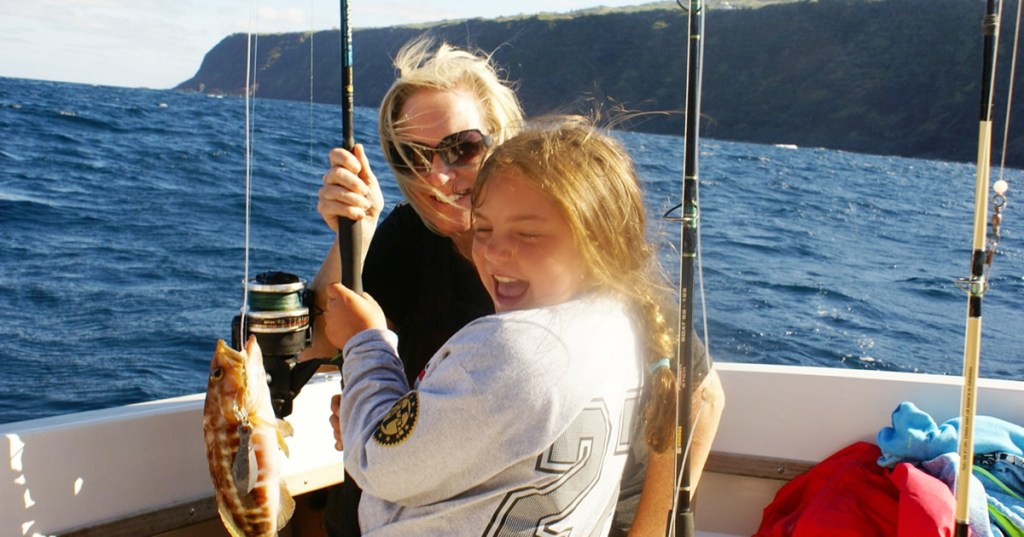
The Regional Directorate for Maritime Policy has licensed 61 tourist fishing operators, and 86 “duly licensed” vessels are used in the region’s seas. For sport fishing, 250 boats were licensed this year, and 1,324 licenses were granted in 2024. In sport fishing, holding any sport fishing competition “depends on prior authorization from the Regional Fisheries Directorate.
In leisure fishing, “any type of vessel is permitted, provided it is duly licensed by the Regional Fisheries Directorate. When a vessel authorized for maritime tourism activity is licensed for leisure fishing, it may not be used for any type of commercial activity.” Underwater fishing licenses were granted to 200 people in 2025, and were already 2,623 divers in 2024.
In underwater fishing, traditionally known as spearfishing, “underwater fishing licenses and boat use licenses are issued by the Regional Fisheries Directorate. Applications for underwater fishing licenses or licenses to use a vessel are formalized at the Regional Directorate for Fisheries or through RIAC, and in both cases interested parties may use the electronic forms available on the Internet.”
In response to a request submitted by CHEGA’s parliamentary representation, the Government of the Azores made it clear that “there is no register of foreign vessels licensed under the Maritime-Tourism activity to carry out ‘Tourist Fishing’ in the Autonomous Region of the Azores.”
“Tourist fishing”, explains the Azorean government, ‘is one of the types of recreational fishing that is practiced on any type of vessel within the scope and under the terms of the legal regime for maritime tourism activity, the licensing of which is the responsibility of the Regional Directorate for Maritime Policies’ and ”requires the prior opinion of the regional directorate with powers in the area of fisheries.” Applicants for maritime tourism licenses will have to delimit the areas where they intend to operate and the embarkation sites to be used, among other obligations.
They must have “authorization or prior opinion from the port authority or the entity with jurisdiction over the quays or embarkation sites or other infrastructures to be used regarding their availability and suitability for the activity that the operator proposes to carry out.” In addition to the insurance, they must present a copy of the safety capacity certificates of the vessels to be used, where applicable. When licensing, the operator, whether Portuguese or of any other nationality, pays a fee of 249.76 euros
The inspection of vessels engaged in tourist fishing, carried out by the Regional Inspectorate for Fisheries and Maritime Uses, is legally based on regional legislation. In the approach carried out, “there is no distinction as to the vessel’s port of registration – in other words, whether it is a regional vessel or a foreign vessel – and the registration model for inspection actions provides for the verification of licensing,” as well as other elements. The National Maritime Authority and the Regional Tourism Inspectorate may also conduct the inspections.
In Correio dos Açores- Natalino Viveiros, director

 Novidades - The Islands and the Diaspora