

From Terra Chã to California: The Quiet Resilience of an Azorean Heart
For the Azorean Oral History Project, our class was required to interview someone with Azorean history or ancestry. I chose to interview my mother, Teresa Pires Mancebo. She is an immigrant from the Azores and has an amazing story about growing up on the islands, immigrating to the United States, and adjusting to a new culture and way of life. In this essay, I will share her story and how it has shaped me as a first-generation Azorean-American.
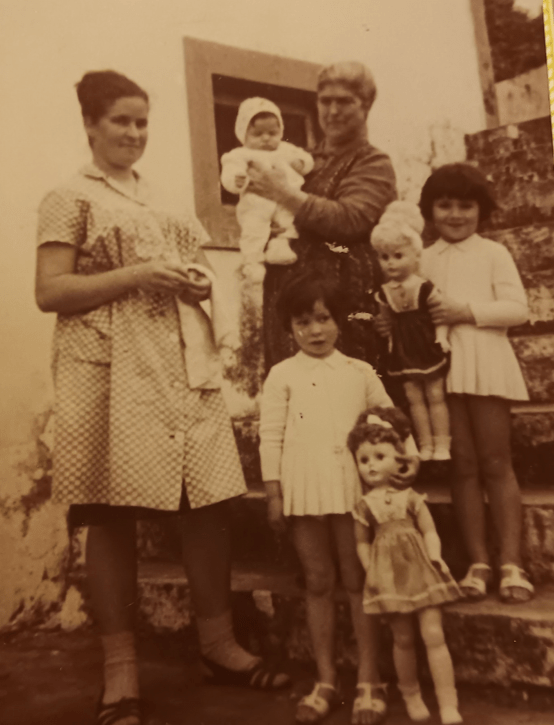
My mother was born on the island of Terceira in the town of Terra Chã on December 13, 1968. Her maiden name was Teresa Fátima Leonardo Pires. She was the third of four children—she had two older sisters and one younger brother. She lived with both her parents while in the Azores, although her father spent some time working in Canada during her early childhood. During that time, she lived with her mother only. Some of her earliest memories involve helping her father with chores around the property whenever he returned home. She attended a small school in Terra Chã for her primary education and later took some additional classes in Angra do Heroísmo when she wasn’t helping her parents. She lived in the Azores until she was thirteen.
In March of 1983, my mother immigrated to the United States with her father, younger brother, and one of her sisters. Her oldest sister remained in the Azores because she was engaged and had a stable job. Sadly, my mother’s mother didn’t join them, as she passed away from cancer while the family was still in the process of applying to immigrate. The family settled in Merced, California, where my mother’s aunt was already living. Being close to relatives who had already adapted to life in America helped ease the transition and introduced them to the customs and culture of their new home.
Since my mother was only thirteen at the time and had completed most of her schooling in the Azores, she was placed in high school. However, she didn’t know any English. Determined to succeed, she spent the entire summer before school began studying both an English and a Portuguese dictionary, teaching herself as much as she could. Her aunt also introduced her to a girl who was in the same classes and spoke English well. That girl helped my mother with her homework throughout the school year.
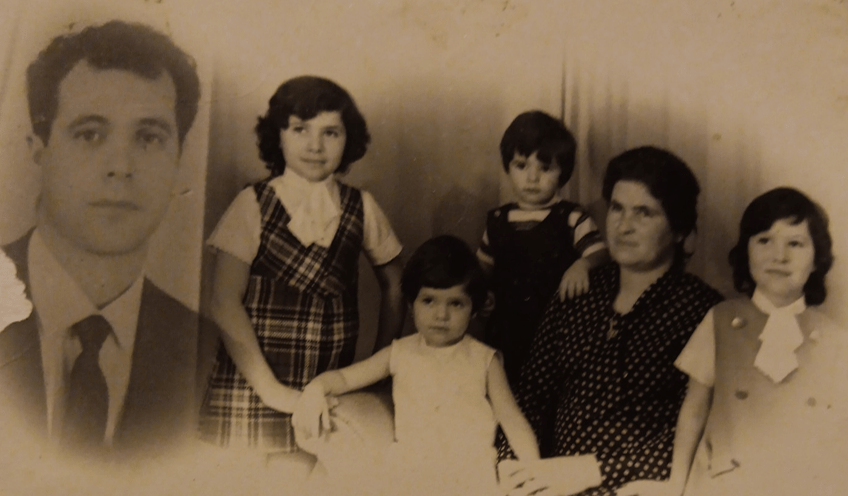
A few years after settling in the U.S., her father returned to the Azores for a visit. Tragically, while there, he died in a car accident. After his passing, my mother and her siblings moved in with their aunt and cousins. Her aunt had lived in the Azores for many years before immigrating, so she brought with her the habits and customs of the islands. My mother, already deeply shaped by Azorean culture, found comfort and familiarity in living with someone who shared and reinforced those traditions.
After high school, my mother worked as a house cleaner and continued building a life in the U.S. Eventually, she met my father, also of Azorean descent, at a festa, and they later married and started a family. My mother naturally passed down Azorean traditions to my siblings and me, creating a home environment that reflected the culture she grew up in. We attended festas, watched bullfights, and she would buy Portuguese products from local stores—anything that reminded her of the Azores. For example, she loved chestnuts, which reminded her of the chestnut festival held during harvest time in Terceira.
When I refer to “habits,” I’m talking about the cultural practices and customs that shaped our household, especially around food and self-sufficiency. My mother would cook traditional dishes such as alcatra, kale soup, sopas, massa sovada, queijadas, and filhós. Beyond food, she believed in being resourceful and self-reliant. If something tore, she sewed it. When we needed meat, the family would butcher and process cows or pigs ourselves, making use of almost the entire animal. Bones were saved for alcatra, other parts for torresmos, and some for making linguiça. These weren’t just recipes—they were traditions that connected us to the past.

My mother has been involved in the Azorean-American community in several ways. She regularly attended Portuguese events and, together with my father, even served as president of the Buhach Pentecost Hall in Atwater. These gatherings reminded her of home, and she loved seeing others keep Azorean traditions alive. She brought us to many of these events and often invited coworkers and friends to come experience them too. Whether it was a sopas dinner at a Portuguese hall or a local festa, she found joy in sharing her culture not only with her family but with the broader community.
When I asked my mother how she views the Azorean-American community, she said that, for the most part, Azoreans are like anyone else: they live their lives, work hard, and try to build a better future. But I believe that simple statement says a lot. The Azorean-American community is rooted in shared values—hard work, adaptability, and the courage to leave their island homes behind in search of opportunity. Although the Azores are nine small islands in the middle of the Atlantic, their people have carried their culture across the ocean. They’ve adapted to new environments while still holding on to their roots.

My mother’s story is a perfect example of what it means to be from the Azores. Her life embodies the saying, “Where there’s a will, there’s a way.” She faced hardship both in the Azores and in the United States, but she never gave up. Along with the traditions she passed down, she also taught us the values of hard work, determination, and self-reliance. These lessons, rooted in her own lived experience, have now become part of my identity too. I am incredibly proud to call her my mother and to be part of this heritage.
The struggle of Azorean immigrants in the United States is a story shared by many. My mother’s journey tells not just her own story, but the story of a people. From customs and cuisine to language and values, many elements connect Azorean immigrants and the Azorean-American community. Even though she may not be the most publicly involved member of the community today, her experiences and traditions continue to resonate, and they mirror the experiences of many others. The Portuguese community in the Central Valley may not be widely known, but it is very much alive. And through stories like my mother’s, we keep all of the memories and the Azorean spirit alive—one story at a time.
By Odete Mancebo, a student at California State University, Fresno.
This ongoing collection of oral history essays explores the Portuguese-American experience in California through the personal narratives of immigrants and their descendants. Centered on themes of belonging, adaptation, cultural preservation, and participation in the broader American story, these accounts offer a textured and often underrepresented perspective on immigrant identity in Central California, throughout the entire state, and the nation.
Drawing on interviews with individuals and families of Azorean, Madeiran, and mainland Portuguese heritage, these essays examine the intersection of private memory and collective history. They highlight how language, religious and social traditions, and community institutions served as anchors of cultural continuity, even as Portuguese-Americans integrated into and contributed to the mainstream fabric of American society.
Through farming, labor, business ownership, civic engagement, and cultural expression, Portuguese immigrants (mostly from the Azores) and their descendants have helped shape California’s Central Valley and beyond. Yet, their stories often remain absent from dominant historical narratives. This project aims to honor those experiences, preserve linguistic and cultural memories, and contribute to a deeper understanding of immigration, diaspora, and American identity.
PBBI-FLAB Fresno State Oral History Project: Documenting diaspora, culture, and contribution


 Novidades - The Islands and the Diaspora