

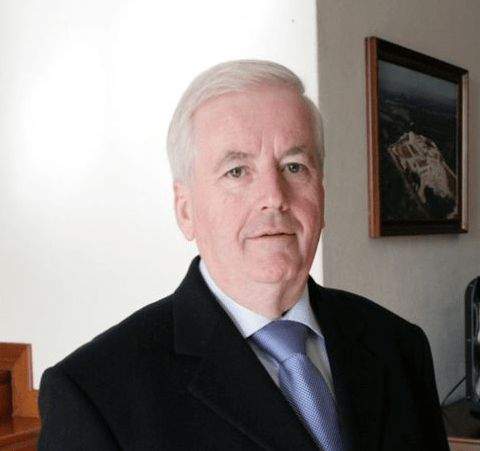
An international genealogy colloquium is taking place on the island of Terceira from May 8 to 10. What, in your opinion, should be discussed?
Unlike, for example, issues relating to the various branches of political science, where there are always new conditions and perspectives to be debated, genealogy can be compared, in all due proportion, to an exact science, focused on the past, in other words, on the ancestors of a particular person or family. If there are documents that can prove these ancestry lines, we are dealing with a serious and scientific investigation; if there are none, we are constructing false and mere fantasies.
Without being an expert on the subject, but merely an enthusiast for knowledge of the lineages of those who have lived, worked, and built what we are and have today, I believe that the discussion, or rather the understanding of what genealogy is, involves stating that it is not just a nobiliary issue. This confusion has persisted, but rather a knowledge of people from the most diverse professional sectors and their concrete involvement in the political, institutional, economic, labor, and other aspects of each era.
I think it’s important to distinguish between nobiliaries, which were very much in vogue in the past, and genealogies or lineages, which deal with all people, regardless of their origins or social conditions. Not all of us are spontaneous, as everyone has two parents, four grandparents, eight great-grandparents, sixteen great-great-grandparents, and so on. Genealogy deals with these ancestors that everyone has, who, more or less notoriously, existed and contributed to building the future.
We have to bear in mind that history is built by concrete people who lived at a certain time, and not just an abstraction, as certain trends have tried to impose. Without underestimating its importance, for example, economic history, institutional history, and industrial history cannot be dissociated from the specific people who built them, and from the chronological sequence of events.
In the specific case of the Azores, what can be gained from this international meeting, which you know from the program, will be attended by leading figures?
This is an initiative of the Portuguese Genealogical Association, in collaboration with the Historical Institute of Terceira Island, which will bring together a significant number of researchers in this specific area of history in Angra. It is always an asset to visit the city of Angra and Terceira Island, where a group of people is interested in the knowledge and research of families and their roles in each era.
We must also bear in mind that the Azorean people have been dispersed to the four corners of the world since the dawn of settlement, resulting in thousands of descendants living on every continent. It is well known that today there is a strong interest in learning about family roots, knowing where people were born, and where their ancestors came from. All of this means that our regional archives are sought out and consulted by those interested in learning about their ancestors and even travel to the Azores to find out where those ancestors were born.

What is your assessment of the current state of genealogy in Portugal? Have any important works appeared on the market? Are there any significant works in progress that you’re aware of?
As I said, I’m only an amateur in this field, and I don’t have extensive knowledge of this issue. However, I do know that over the centuries, genealogical works of great importance have appeared, some of which were only handwritten and others that were eventually printed.
For the Middle Ages, we have the important research of Prof. Dr. José Matoso.
On a national level, in addition to the many and varied monographs on certain families or individuals, I would like to mention the monumental work by D. António Caetano de Sousa (1674-1759) “História Genealógica da Casa Real Portuguesa”, in which he deals with the descendants of the Kings of Portugal, not only in the line of royal succession, but of all the legitimate and bastard lineages of the Portuguese Kings and Princes. To get a vague idea of this descent, it’s enough to mention that, in round figures, more than half a million people around the world, including a significant number in the Azores, are descendants of King Afonso Henriques. It should be noted that António Caetano de Sousa didn’t just make up fanciful lineages, but published what he called “Proofs of the Genealogical History of the Portuguese Royal House” with documents proving the different parental connections.
Still in the field of nobiliaries, there was the publication of the “Pedatura Lusitana” by Cristóvão Alão de Morais (1632-1693) and the “Nobiliário das Famílias de Portugal” by Felgueiras Gaio (1750-1831).
In the Azores, our chroniclers, starting with Dr. Gaspar Frutuoso, gave importance to genealogies, although with a strong focus on nobility. In our regional archive,s there are several genealogical manuscripts, which were never printed, but which make it possible to establish the links of many families to the first settlers of these islands, a fact that these same families, from the most varied social backgrounds, are unaware of.
The Azorean genealogical publishing scene is already remarkable, covering all the islands of the archipelago.
I can mention, among others, some titles published in the 20th and 19th centuries, in addition to the very important work by Dr. Jorge Forjaz listed below:
– Dr. João Chaves de Bairos – “Um Ramo dos Chaves – Um ensaio de pesquisa genealógica” (A branch of the Chaves – A genealogical research essay), about a family from Santa Maria.
There is a leading Azorean genealogist, Dr. Jorge Forjaz. Is the future of genealogy among us guaranteed?
He is undoubtedly the leading name in genealogical research at a national level and the author who has published the most works on this subject in Portugal.
Dr. Jorge Forjaz’s work focuses on both territorial and family aspects, as evident in his extensive published work, which is listed below, except for a few omissions.
He has published the following titles on the former empire:
– Macanese Families
-The Luso-descendants of Portuguese India
-Portuguese Families of Ceuta
– Families of São Tomé and Príncipe
– Genealogies of the Islands of Fogo, Brava, and Bissau
In terms of family genealogies, the following works have been published:
– My Book by Pereira Forjaz
– The Monjardinos
– The Teixeira de Sampaio of Terceira Island
– Os Colaço – A Portuguese family in Tangier
– DART – An Irish Family in the Azores and the World
– STOCKLER – A Hamburg family in Portugal, England, and Brazil
– Rodrigo Rodrigues – Genealogies of Santa Maria and São Miguel
– Dr. António Ornelas Mendes – The descendants of the 1st Viscount of Botelho
– Dr. José Guilherme Reis Leite – The Ficher family
– Prof. Dr. Vitorino Nemésio and his grandson Dr. Gonçalo Nemésio – A Family from Ramo Grande, Terceira Island
– Pedro de Merelim – The Hebrews on Terceira Island
– Dr. António Ornelas Mendes – The origin of some foreign families in Terceira and Faial
– Canon Father João de Brito – The Clerics Rocha de Borba
– Liduíno Borba – The Contente family in São Mateus da Calheta
– Luís Conde Pimentel – The Benevolent Viscount of Rosário (on the island of Graciosa)
– Frederico Maciel – Genealogical Notes (My cousins and relatives, from São Jorge and elsewhere)
– Fernando Gaspar Silva – The Gaspar Silvas, memories, family roots, and paths
– Dr. Gonçalo Nemésio – Azevedos from Pico Island
– Prof. Dr. Maria Norberta Amorim and Alberto Correia – Francisca Catarina (1846-1940) – Life and Roots in S. João do Pico
– Yolanda Corsépius – On the Routes of a Great-Grandfather (about a Faial family linked to a foreign one)
– Marcelino Lima – Famílias Faialenses
– Francisco Garcia do Rosário – Genealogical memory of Faial’s families
As can be seen from this short list of titles, Azorean genealogical production is vast, covering both the nobility and the lineages of families with no noble pretensions.

There is a leading Azorean genealogist, Dr. Jorge Forjaz. Is the future of genealogy among us guaranteed?
He is undoubtedly the leading name in genealogical research at a national level and the author who has published the most works on this subject in Portugal.
Dr. Jorge Forjaz’s work covers both territorial and family aspects, as evident in his extensive published work, which is listed below, barring any omissions.
He has published the following titles on the former empire:
– Macanese Families
-The Luso-descendants of Portuguese India
-Portuguese Families of Ceuta
– Families of São Tomé and Príncipe
– Genealogies of the Islands of Fogo, Brava, and Bissau
In terms of family genealogies, the following works have been published:
– My Book by Pereira Forjaz
– The Monjardinos
– The Teixeira de Sampaio of Terceira Island
– Os Colaço – A Portuguese family in Tangier
– DART – An Irish Family in the Azores and the World
– STOCKLER – A hamburger family in Portugal, England, and Brazil
Together with another important genealogical researcher, Dr. António Ornelas Mendes, he published:
– Genealogies of Terceira Island
-Genealogies of the Four Islands – Faial, Pico, Flores, and Corvo
I would also like to mention, without any detriment to so many other genealogists, the genealogical research into Terceira families that two doctors are carrying out: Dr. Phillipe Garnier, a Frenchman, who has already published the lineages of Terceira families, especially those linked to the town of S. Sebastião; and Dr. Jorge Brito, one of the speakers at the next Colloquium, who is carrying out a detailed investigation into the families of the parishes in the north of Terceira Island.
I regret that the great and thorough researcher of Graciosa families, Luís Conde Pimentel, due to illness, has not published some genealogies of Graciosa families.
In Diário Insular-José Lourenço, director
Translated to English as a community outreach program from the Portuguese Beyond Borders Institute (PBBI) and the Modern and Classical Languages and Literatures Department (MCLL) as part of Bruma Publication and ADMA (Azores-Diaspora Media Alliance) at California State University, Fresno, PBBI thanks Luso Financial for sponsoring NOVIDADES.

 Novidades - The Islands and the Diaspora