

Freedom Day isn’t just remembered – it’s celebrated with awareness, responsibility, and action. Regardless of age or direct experience of the 1974 events, the April Revolution is a milestone inscribed in the collective identity of all of us. A founding moment of Portuguese democracy that continues to shape the present and inspire the future.
Today, 51 years later, we remember the Carnation Revolution – a turning point in the collective history of our people and a milestone in the inauguration of Portuguese democracy. It was on that day in 1974 that Portugal regained its freedom, including the right to vote through universal suffrage, the right to speak, the right to participate, and the right to dignity. A moment that remains as relevant as it is necessary.
At a time when the world seems constantly plagued by uncertainty, it is urgent to reaffirm the strength of April’s legacy: freedom, social justice, human rights, and the country’s power over its destiny. Celebrating this milestone means making a commitment to the present and the future. It means ensuring that the ideals of April live on, especially among the youngest, who, like us, have inherited this freedom and have the mission of preserving and deepening it.
This year, we also commemorate the 50th anniversary of Portugal’s first free and democratic elections, held on April 25, 1975. For the first time, the Portuguese freely elected the members of the Constituent Assembly, who were responsible for drafting the Constitution that enshrined, among other historic milestones, the political and administrative autonomy of the Azores and Madeira. In the Azores, the high turnout and serenity of the electoral process were an example of democratic maturity. On that day, the Azorean people demonstrated their firm will to contribute to a fairer, more pluralistic, and democratic Portugal, where the autonomous regions have their own voice.
The courage and commitment of those elected from the three constituencies of the Azores – Mota Amaral, Jaime Gama, Américo Viveiros, José Manuel Bettencourt, Ruben Raposo, and Germano Domingos – were essential in asserting the rights of our islands. They represented the region’s wishes with courage and vision, contributing decisively to the autonomous model that today recognizes our identity and capacity for self-governance.
Today, this trajectory, spanning almost half a century, finds its highest and most consolidated expression in the Legislative Assembly of the Azores. This Parliament carries a historic, yet profoundly current, responsibility: defending the values of April and continuing to build our Autonomy with ambition and commitment.
Celebrating 25 April also means renewing our commitment to its ideals – freedom, justice, civic participation, and democratic decentralization. Deepening Autonomy, strengthening regional cohesion, and asserting our voice in the national context are therefore living expressions of this legacy. These are permanent challenges that require vision, courage, and commitment, and which fall first and foremost to the Legislative Assembly, as the institutional guarantor of the will of the people of the Azores. It is up to us to ensure that the Azores remain an active part of building a plural, democratic, and united country, where territorial diversity is valued as a strength, not a weakness.
It is in this spirit of continuity and commitment that today we celebrate not just one, but two great achievements in our collective history: April – the greatest symbol of freedom and democracy – and the 50th anniversary of an electoral act that gave the people the power to decide and laid the foundations for the Autonomy of the Azores.
This is the legacy we are celebrating today and which commits us to the future.
Horta, April 25, 2025
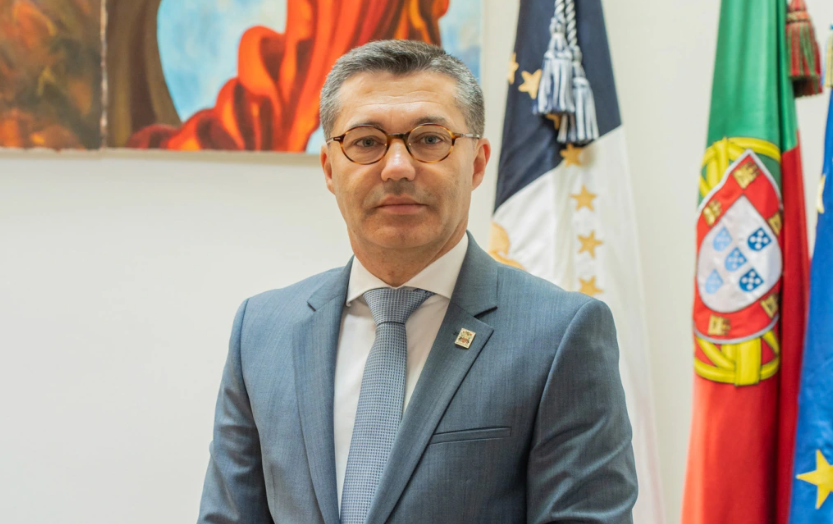
The President of the Legislative Assembly of the Autonomous Region of the Azores, Luís Carlos Correia Garcia
In Diário dos Açores-Osvaldo Cabral, director.
Translated to English as a community outreach program from the Portuguese Beyond Borders Institute (PBBI) and the Modern and Classical Languages and Literatures Department (MCLL) as part of Bruma Publication and ADMA (Azores-Diaspora Media Alliance) at California State University, Fresno, PBBI thanks Luso Financial for sponsoring NOVIDADES.

 Novidades - The Islands and the Diaspora