

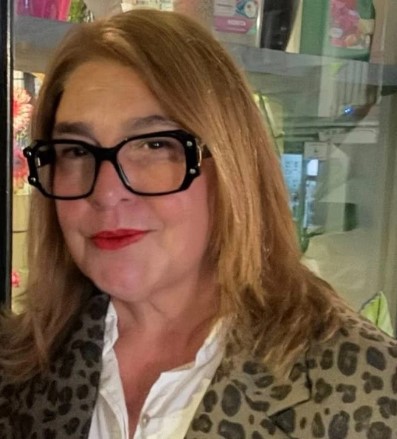
It will come as no surprise to my readers that I begin this text by stating that the Azores still have much work to combat prejudice and advance social and human thinking. Any Azorean will know that this harsh reality in no way invalidates our appreciation for these islands that have made us resilient. And, as a daughter of Flores, I like to believe that I am particularly resilient in the West.
I fondly remember this primordial resilience from my childhood, in the wrinkles and determination of the elderly figures who always helped shape my path. From the small rural paths of Lajes and Santa Cruz, to the corridors of educational establishments, and from there to the offices where I have worked, I have always believed in the value of life experience, in all its forms and personal abilities. Of course, because I hold my ideals so firmly, I am not always well accepted by the stuffy conservatism. But there are a thousand and one ways to grow old, just as there are a thousand and one ways to become who we are, and just as not all older people are prejudiced, not all paths should be traveled with prejudice.
I admit that I do not appreciate old age, nor do I romanticize it. I don’t like this process or its consequences, but I accept it as a stage of life in which we realize that we are no longer the same people, largely due to the physical and cognitive conditions of advancing age. I don’t like the concept of “old,” not even when it was fashionable in my youth to refer to fathers and mothers as “old men” and “old women.” It is not a question of taboo or prejudice. It is about keeping up with the innovation for which so many have fought, adapting terms, and ending the stigma associated with certain discourses. We do not celebrate “Old People’s Day,” but “International Day of Older Persons,” established by the United Nations in 1991.
In this sense, I recently revisited an initiative that I had already heard about and which was brought back to my attention by a recent event. I believe in social empathy as a tool for direct action with those most in need, providing social responses that the state does not. I am happy when I come across institutions and projects that promote caring effectively and directly. The Casa de Povo de Santa Bárbara, on Terceira Island, is a Private Social Solidarity Institution (IPSS) that works with an emphasis on its parish, but whose projects are spreading good practices to the rest of the archipelago. Of particular note is Durval Santos, president of the institution and a person with a unique and relevant social vision, who has promoted several initiatives of great importance for community sustainability and for combating prejudice and discrimination.
I would highlight the Envelhe(ser) 100 Preconceito (Aging 100 Prejudice) project. This initiative has recently emerged as one of the most important nationwide in combating outdated ideas and promoting the enrichment of our human dignity. Once again, it started at the Casa de Povo de Santa Bárbara, to talk to the population about prejudice against older people and the alternatives in a society that must properly recognize the value of its senior citizens and stimulate them appropriately.
Neglect or violence against older people, as well as domestic violence and other similar forms of abuse, are issues that still require a great deal of work in our lives. Due to their conservative nature, which I mentioned a few lines ago, the Azores remain clinging to academic concepts and a past deeply ingrained in their skin, where it is important to recount memories and remember other times. Evolving and improving often seem to take a back seat. How many people have read stories about children boasting that they never cried when they were little?
These prejudices, and many others, are deconstructed by the work of Durval Santos and his team, in a clearly commendable effort by the entire Casa do Povo, already widely celebrated at national level, with scientific support from Professor Alexandre Kalache, President of the International Longevity Center and head of the World Health Organization’s Global Aging Program, as well as a relationship with the National Association Against Ageism, through the technical support of Dr. José Carreira. I would like to point out that this institution in Terceira was the first and only one in the country to receive the Seal of Quality for Best Practices Against Ageism.
I remembered it a few days ago when I watched online the AgeingAzores, International Congress on Aging, organized by the National Association of Social Gerontology (ANGES), in Angra do Heroísmo, and which, for a reason I still cannot understand, had no reference to this project without prejudice. Not knowing the reasons, it is not worth discussing them. But I would just like to make a recommendation to the organization, because this was only the first AgeingAzores, so that in the future, they can look at what Durval Santos and his team promote with the recognition they deserve.
These events deserve my full recognition. They are moments for sharing knowledge, methodologies, and reflection. And that is exactly what ANGES provided us with. A wide range of national and international speakers presented and discussed what has been done and what remains to be done, comparing many situations that differ from country to country.
Without disregarding any of the contributions, which deserve my utmost respect, I would like to highlight the speeches by Ms. Regional Secretary for Health and Social Solidarity, Mónica Seidi, who highlighted what has been done in our region and what remains to be done; Father Júlio, who, with his smile and assertive words, led me to a state of reflection and emotion that is impossible to put into words; Ms. Psychologist Flávia Soares, who spoke from the heart about happiness, without imposing any ideas about the concept; and the Socio-Cultural Animator Paulo Freitas, who, dynamically and creatively, brought testimonies from elderly people, children, and teenagers about old age to the event. Amid smiles, words, walks, and songs, I was left with António Mourão’s “Oh tempo volta para trás” (Oh time, go back)…
I congratulate ANGES on the organization, Rodrigo Silva on his efforts to put Terceira on the map of these events, and all those honored. Still, I wonder why no woman deserves to be celebrated. On an island with 56,000 inhabitants, is there no woman who has distinguished herself through her work and taken the Azores to new heights? As an attentive and active citizen, my “medal” goes to thousands of generations of women who have cared for family members and acquaintances without any legal recognition of their work, and to Tatiana Ourique, who, six months pregnant, showed once again that a woman’s place is wherever she wants it to be.
Let us continue on our path, but aware of the importance of the work IPSS (Private Social Solidarity Institutions) do and the many obstacles they overcome daily to provide the best care. Let us continue to be aware that the social sector is one of the largest employers in our country and that, every day, poorly paid people work with enormous physical and emotional strain. Let us move forward with the certainty that fighting for wage increases is not about greed, but rights, especially when talking about people who have worked from sunrise to sunset and now have miserable pensions.
In a fast-paced world, living in a society increasingly afflicted by dementia and hatred, working to defend the most needy, giving them the stage they deserve, and encouraging them to regain the dignity they once had. We wish Durval Santos and those who work with him at ANGES all the best for the future. Not everything can be misfortune in this archipelago of resilient people. And if there are no elixirs for eternal youth, we must at least know how to age with ingenuity and art, as Sérgio Godinho would say.
Alexandra Manes is from Flores Island but lives on the island of Terceira in the Azores. She is a regular contributing writer for several Azorean newspapers, a political and cultural activist, and has served in the Azorean Parliament.
NOVIDADES will feature occasional opinion pieces from various leading thinkers and writers in the Azores, giving the diaspora and those interested in the current state of the Azores a sense of the significant opinions on some of the archipelago’s issues.
Translated to English as a community outreach program from the Portuguese Beyond Borders Institute (PBBI) and the Modern and Classical Languages and Literatures Department (MCLL).
 Novidades - The Islands and the Diaspora