

I usually write the articles I share with you during the week before they are published. With rare exceptions, this allows me to mature in framing issues and reflecting on solutions. However, this time, I waited for the election results. Although I voted early and in good conscience, I was anxious to see the people’s will this Sunday. Not because I wanted any particular result other than the will of democracy and the defeat of new fascisms, but what is wanted for the country.
The results were not what I wanted, but as a Democrat, and however hard it may be, I accept them. The people dictated the numbers and percentages. They determined their/our future and that of future generations. For that reason, I congratulate the deputies elected by the Azores, urging them not to forget those who remain here.
However, the fact that more than half of the voters registered on the electoral roll in the Azores did not vote calls for serious reflection on the reasons for this. Some, certainly, are because of disillusionment with politics, and others because of political illiteracy. And this is not to call anyone ignorant! It is a reality. Not all of us were born in the same environment, nor are we all interested in the same issues. There is a lot I don’t understand, and I accept that without any problem. Political illiteracy cannot continue to be a taboo. It exists. And we must work to give politics credibility and make people understand that politics determines the present and the future. I think this is essential.
I am concerned about the country’s future when I look at the particular circumstances we live in, and I cannot help but feel immense fear about what lies ahead. Like any European country, Portugal is greatly influenced by the United States. The Cold War between economic powers and totalitarian controls came with the end of the Second World War and the loss of freedoms. In between were the weakened countries, which lay in the shadow of the two powers and woke up in decline and fragility. Thanks to this new reality, the future that Portugal will build after the elections is predictable, if we know how to read the growing possibilities in the Americans’ cards.
Trump and his gang of new fascists have already been the subject of thousands of analyses by all kinds of people with the most varied ideologies and certainties. It is not the purpose of this text to recreate a personal interpretation of the subject. Anyone reading this text already knows what I think about the gang of criminals, thugs, and hacks that occupy the White House and its branches. However, it is important to understand how they got there. And that path was paved by the total failure of American centrism.
There was much talk of alliances between the two sides in the streets. Policies of convergence, led and embodied in the gentlemen’s agreement between Pedro Nuno Santos and Montenegro regarding the presidency of the Assembly of the Republic, which only served one side. In today’s politics, in moral decline, agreements tend to serve the interests of only one of the parties. The other ends up being harmed, directly or indirectly. This is another reason centrism cannot take root in Portugal, as it did not in the United States.
For the left of center, the problems that arise involve major internal divisions, often irreconcilable, for inexplicable reasons. Parties ideologically similar in almost every respect are united by hatred and quarrels that make dialogue difficult. The generations of statesmen, now advanced in age, continue to block people in their thirties who can speak the language of the contemporary electorate. The left remains plagued by itself and finds it difficult to get back on its feet. It is worth remembering the legacy of the famous pact that António Costa drew up with the Bloco and the PCP. No matter how much one wishes to whitewash history, the country has never been so prolific in the 21st century.
With Livre as a new vanguard of thought, it could combat the swelling of stale conservatism and the great forces of hatred, Nazism, and new fascism, financed by economic groups. In the United States, we are witnessing resistance organized by a 35-year-old woman, side by side with an 83-year-old man, in an alliance of forces desperate to change a nation drowning in anger and misunderstanding. The solution to escaping the fascist monsters will inevitably be a strong and united social left, capable of removing from its midst the false moralists and those who are only there for a position of power.
On the other hand, anyone who analyzes the political situation in the world impartially will know that humanity cannot live by the left alone. As in almost everything, a balance is needed to allow society to organize its thinking clearly, with all avenues open for reflection and growth. And for that, we need a right wing that gives us the alternative of at least saying that this is not the way forward.
The PSD is not that right-wing at present. The main outcome of the campaign, and what preceded it, was the certainty that Luís Montenegro is a leader in the image of his two great mentors: Cavaco and Coelho. He does not think for himself, read, or cultivate himself. He places little value on culture, believing that it is with the most popular of all the pimbalhadas that he will celebrate Labor Day, and taking advantage of the slightest opportunity to cancel April 25. The path he is following, flanked by fellow party members of all ages, is the most dangerous path for the right.
Here, too, we can draw inspiration from the US model. With Bush and his successors, the Republican Party moved away from traditional centrism, taking extreme positions on social issues and fueling hatred, scandals, and controversies. Montenegro is not Trump, but perhaps a kind of Mitt Romney, if Romney had won the election. He stands at the door, preventing the entry of people who think for themselves and are capable of reforming a party that once called itself social democratic but is now more neoliberal than the great neoliberals.
With Montenegro continuing, flanked by Hugo Soares, the PSD risks falling into Ventura’s web. This is an obvious issue, already executed quickly and effectively in Washington, which Portugal is replicating in a tenuous way.
Sadly, I warn that it is not necessary for the right to formally unite to cause damage. Two-thirds of the deputies needed are already there. And now, the PSD, IL, and CDS have enough to change the Constitution. The danger is no longer abstract but real, calculated, and imminent. The Constitution of the Portuguese Republic is not just any document. It is the hope for the continuity of many of our rights, which must not be glossed over, because later there will not be enough Botox to restore it.
With Sunday’s result, I fear for the end of public health, education, the right to strike, and decent work contracts and wages that make it possible to combat precariousness. I fear the possibility of the privatization of social security and a justice system forced to kneel before political power, because we already realize that April 25 will remain only a footnote or be rewritten to suit those who have always hated it.
All that remains for me is the victory of Sporting Clube de Portugal, which allowed Portugal and many places around the world (after all, we are a country of emigrants who hate immigrants) to dress in green and white, in a wave of joy and familiarity. But I must also not give up and surrender to what has happened. Yesterday, I fought, today I fight, and tomorrow I will fight even harder for the values and principles I believe in—for a better future.
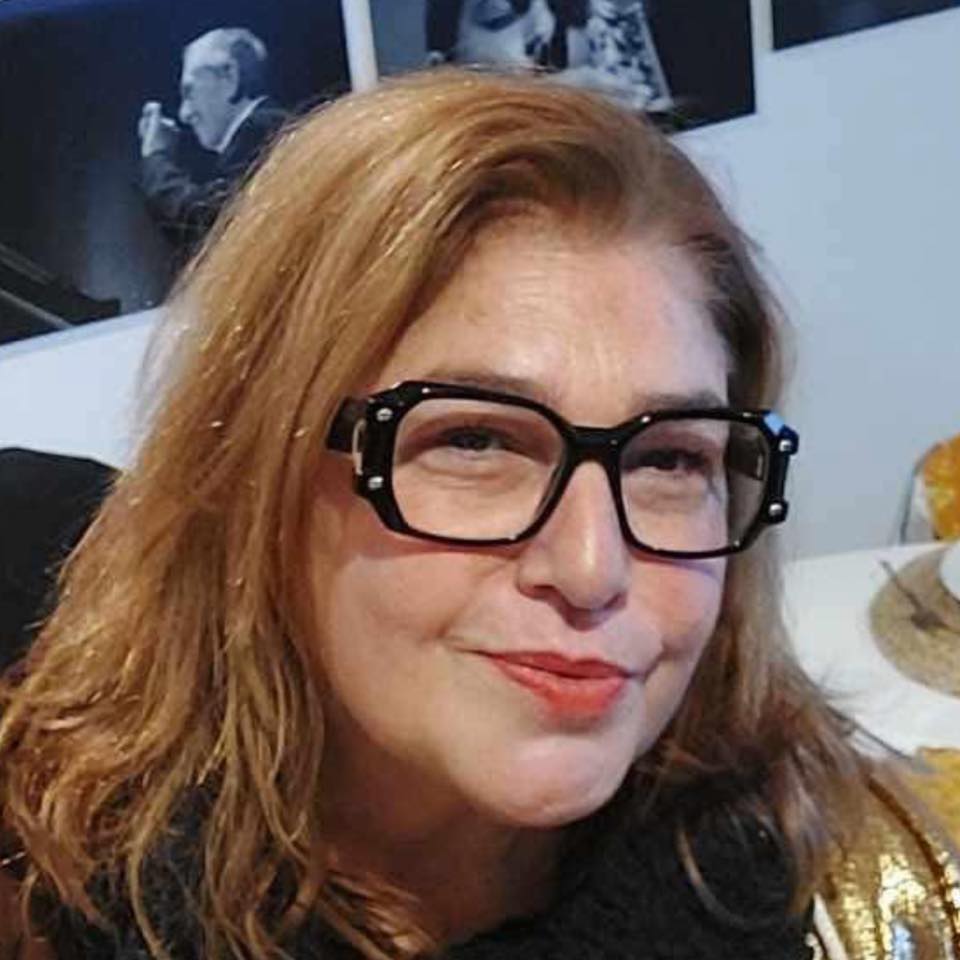
Alexandra Manes is from Flores Island but lives on the island of Terceira in the Azores. She is a regular contributing writer for several Azorean newspapers, a political and cultural activist, and has served in the Azorean Parliament.
NOVIDADES will feature occasional opinion pieces from various leading thinkers and writers in the Azores, giving the diaspora and those interested in the current state of the Azores a sense of the significant opinions on some of the archipelago’s issues.
Translated to English as a community outreach program from the Portuguese Beyond Borders Institute (PBBI) and the Modern and Classical Languages and Literatures Department (MCLL).
 Novidades - The Islands and the Diaspora