

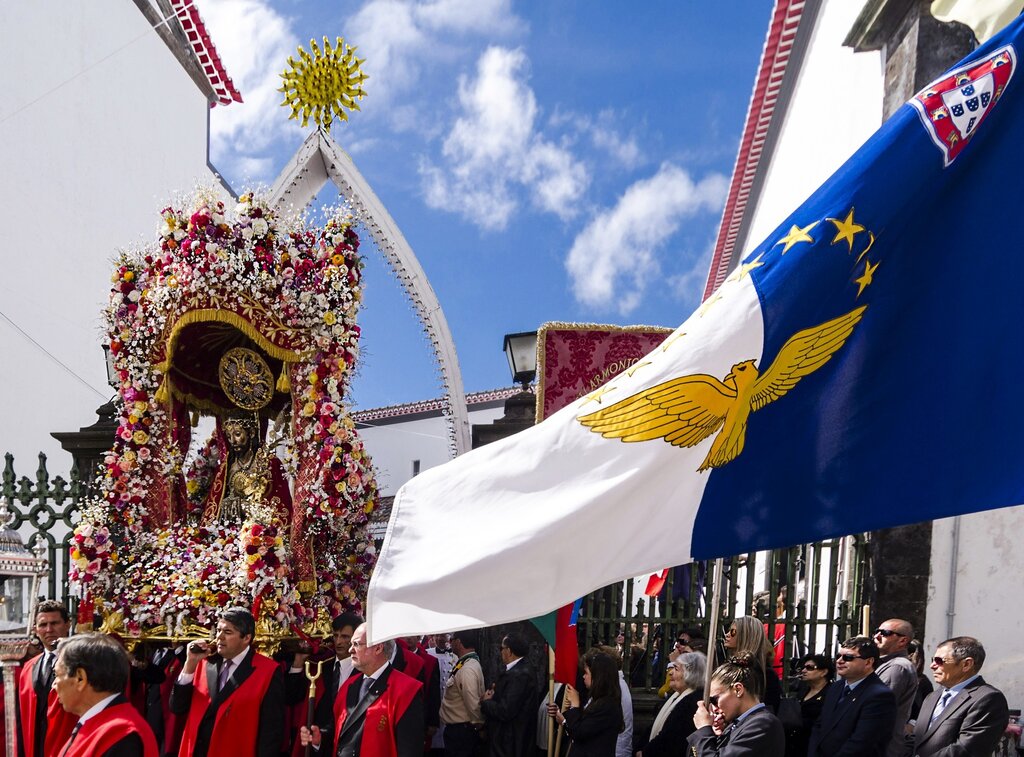
Ponta Delgada is transformed into a stage of faith and gratitude with the arrival of the Feasts of the Lord Saint Christ of Miracles. With their hands full of tapers and bouquets of flowers, the faithful express the devotion that moves them, bearing witness to the miracles and hope that this central figure of the Azorean cult represents in their lives. Correio dos Açores asked some of the faithful present to discover what the Lord Holy Christ means in their lives.
Campo de São Francisco, in Ponta Delgada, is filled with color, emotion, and spirituality at this time of year, when the biggest religious festival in the Azores is celebrated: the Festas do Senhor Santo Cristo dos Milagres. Coming from all the islands, the mainland, and the diaspora, thousands of faithful gather in Campo de São Francisco to give thanks for their graces and renew their faith.
Among the countless pilgrims crossing the city streets is Verónica, accompanied by Manuel from the parish of Covoada. With tapers in hand and an emotional look on their faces, the couple says that the Santo Cristo is a constant blessing in their lives.
“We have a lot of faith in the Lord and it’s he who helps us to combat the difficulties of everyday life,” they say.
Next to the Convent of Esperança (hope), we meet Lúcia and Beatriz, mother and daughter from the parish of São Roque. Beatriz is holding two tapers, which will be used to fulfill a promise they will make today. The young woman confesses that “it’s believing that drives us”, revealing the importance of this tradition and the figure of Santo Cristo in her religious life.
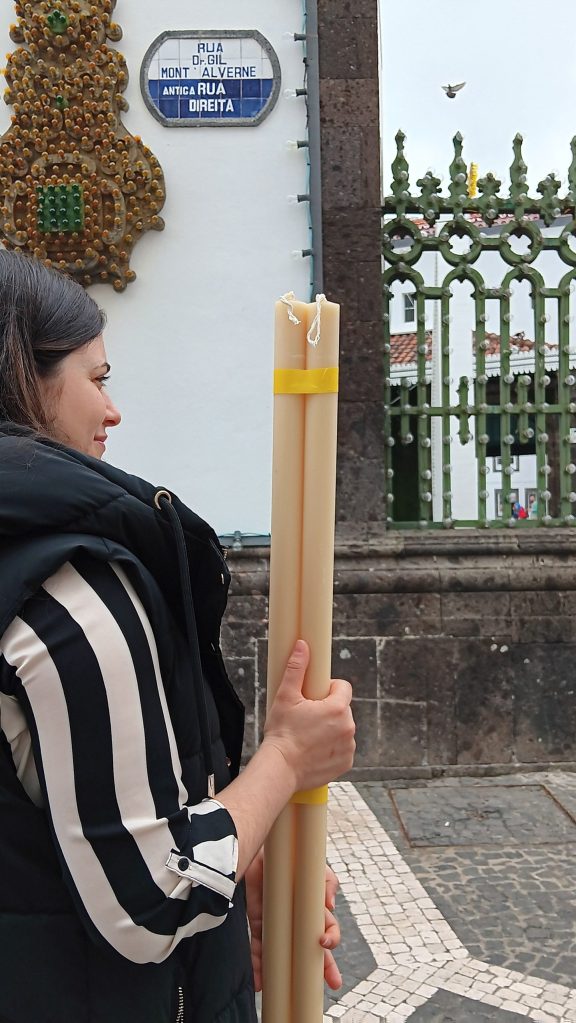
“Santo Cristo is my spiritual guide for life.”
Devotion reaches across the Atlantic and touches the hearts of many who are not even Azorean by origin. José, from mainland Portugal, has participated in this festival for almost thirty years. In addition to his faith, he brings music with him this year, as he is part of an Azorean band performing during the festivities.
“I come to the Festas do Senhor Santo Cristo because I’ve had a blessing and I come to pay a promise. He is my spiritual guide for life,” says the musician and believer.
Madalena arrives from the town of Lagoa with her granddaughter, Carolina. Early in the morning, they go to buy a candle and say a prayer in Campo de São Francisco. For Madalena, this celebration has “enormous significance in our hearts.” With emotion, she wants to “give thanks and ask for many graces” and appeals for “the hearts and minds of all young people to be enlightened.”
Inês, a university student living in Lisbon, never fails to return to her hometown, the parish of Fajã de Cima, at this time of year. She brings a bouquet of flowers with her to pay tribute. Despite the distance, he remains attached to his place and to the faith that has always been passed down.
“I come from an extremely religious family and, for me, the figure of reference has always been the Holy Christ,” she explains.
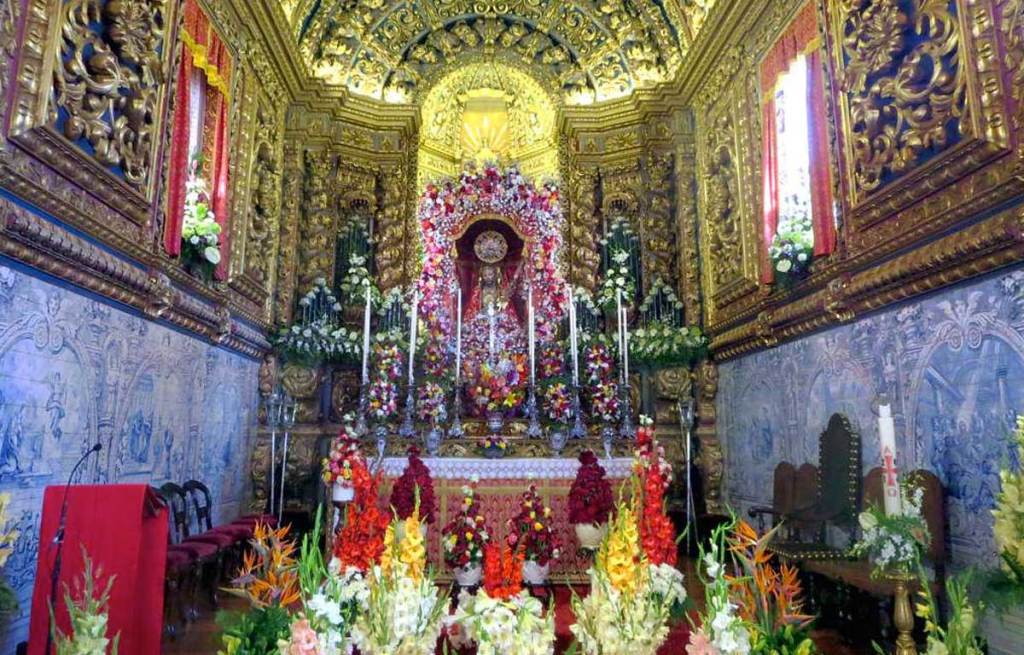
Flowers are a symbol of homage.
In the midst of the faithful’s constant movement, there is one figure who also bears witness to the intensity of these days: the florist at the kiosk in Largo 2 de Março. The shopkeeper has put a colorful display of fresh flowers on show.
“These are days that always go well for us florists. So far, I have no reason to complain,” says the shopkeeper.
The flowers largely honor Mother Teresa da Anunciada, a devotee of Santo Cristo dos Milagres. Her statue is located in the interior garden of the Convento da Esperança, where the flowers are placed.
The city of Ponta Delgada is transformed during these days. Faith takes over the streets, hearts, and promises. Every candle lit, flower left, and prayer murmured reflects the deep connection of a people to their Saint. Senhor Santo Cristo dos Milagres continues to be a “spiritual beacon” for thousands of believers, who gather here to give thanks, ask questions, and renew hope.
José Henrique Andrade is a journalist for the Correio dos Açores newspaper. Natalino Viveiros is the director.
Translated to English as a community outreach program from the Portuguese Beyond Borders Institute (PBBI) and the Modern and Classical Languages and Literatures Department (MCLL) as part of Bruma Publication and ADMA (Azores-Diaspora Media Alliance) at California State University, Fresno, PBBI thanks Luso Financial for sponsoring NOVIDADES

 Novidades - The Islands and the Diaspora