

AN INTERVIEW BY THE NEWSPAPER DIÁRIO INSULAR WITH GILBERTO VIEIRA, OWNER OF QUINTA DO MARTELO – LEADER IN THE TOURIST INDUSTRY ON TERCEIRA, AZORES

When you opened Quinta do Martelo, you aimed to create a tourist route in São Mateus. What did this project consist of?
Having an old family property, my idea when opening Quinta do Martelo as an Ethnographic and Gastronomic Center was never to create just one space, but also to involve the entire parish community, now the town of São Mateus da Calheta. The aim was to have a center here that would convey an appealing and attractive image to visitors to the island, where they could find a product that stood out for its genuineness, which extended from Quinta do Martelo (which would still be a piece of a puzzle), covering the whole village and its population. However, I soon realized that this idea would be a lot of work, that I would have to raise awareness and mobilize people, private and public entities, especially politicians. Still, as they say, “I got my hands dirty”, in other words, I started meeting in person with people who could see in my idea a tourism project that would add value to the few tourists who were visiting Terceira at the time.

Why create a route in the town of São Mateus da Calheta? What tourist potential does this town have?
The idea of creating a tourist route on the island that would pass through São Mateus came about because, after the great earthquake of 1980 in Terceira, the so-called “Azorean circuit” emerged, which passed through various islands of the Azores and in which tourists only stayed on the island for half a dozen hours, arriving in the morning and leaving for Faial at 16h00. The argument put forward by the operators promoting the tour and the Azorean authorities was that the island was destroyed, unfit, and uninteresting to visit. The island was recovering from the rubble with a tourist image that was in ruins and was expected to be very difficult to heal, so I thought we should “attack” what was essential, which was to give tourists who visited us – as I said, for just a few hours – the chance to see as much as we could at the time, to pique their interest in returning with more time. This is how the road to restoring tourism to Terceira Island was made, and I think that, modestly, Quinta do Martelo and I contributed. Quinta do Martelo was created to preserve the region’s cultural and environmental values. We tried to create a space that would be a showcase that would preserve the life of yesteryear for the future, that would show the living ethnographic and cultural history of our people, the old professions, the traditional arts and crafts, and their products. We’ve created a real Rural Interpretation Center that allows you to take an integrated tour from Angra, using old means of transport such as buses, cabs, wagons, etc.

Do you believe there is a tourist niche that would be interested in this type of product? Should Terceira invest in creating differentiated tourist offers?
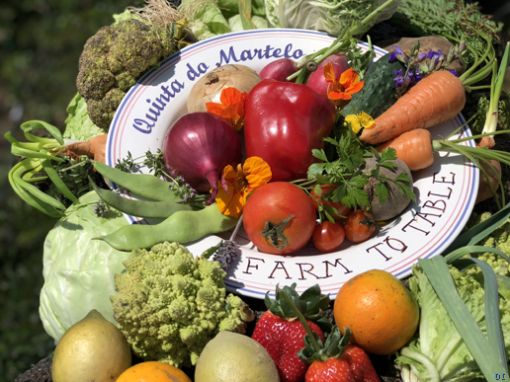
Of course, what was born to add to the tourist offer of what to see and do on our island, which at the time was going through difficult times, as I explained, makes even more sense today. Tourists who come to the Azores, and to Terceira Island, are looking for contact with nature, for the most genuine things we have to offer, as is the case with the cuisine we serve in our restaurant, where, as I often say, a lot of the food comes straight from the garden to the plate. They also seek out the cultural and ethnographic aspects of our interpretive center. That’s why I say that nowadays it makes perfect sense to add values like the Rural Interpretation Center we have at Quinta do Martelo to the island’s tourist offer. Just as it makes sense to create integrated tours departing from Angra do Heroísmo, which would pass through here, visit a cheese factory, a genuine handicraft site, an excellent seaside resort and other sites, such as religious sites, because we had the presence of the Jesuits and Franciscans, and historical sites such as forts and fortresses, where you can tell the story of whaling in the Azores, giving tourists time to make direct contact with the local population before returning to Angra do Heroísmo. Terceira Island must retain visitors who can be considered tourists for several nights. For this to happen, we must create more tourist products and offer complementary circuits to the existing ones.

This project never got off the ground. Why not? Do you believe that it could still come to fruition?
The project never went ahead for several reasons. Firstly, everyone wants to be important and have a say in any new idea. Many of these people sometimes don’t even know what they’re talking about; other times, because of their positions, they want to appear, making projects fail to materialize. Tourism has been creating new tourist products in the Azores, which will be welcomed. Still, we must continue to create an offer that meets the desires of tourists and specific itineraries for this or that island, which add value to the offer and increasingly involve the populations, as would be the case here, but without de-characterizing their habitat. That’s why I think it would make perfect sense for a circuit like the one I’ve been talking about to be implemented. To this end, I’m ready to talk to the regional tourism authorities, the Angra do Heroísmo local authority, and any partners who want to get involved in this project, because for Quinta do Martelo, without partners and support, it’s very difficult to get this idea off the ground.

Where would the route you have envisioned go?
Angra do Heroísmo didn’t live alone and was supplied by its surroundings, a complementary and fundamental culture. Because it’s a small city, it’s possible/easy to recreate all the accessories that the town had to involve, because the city needs supplies, but it also provides them. Tourist interest: big cities used to be like that, it reminds the old and teaches the young. Films that can be enjoyed even outside the stations, being shown in a space called the “Knowledge Center of the whole”, modernly known as the “auditorium”. Preserving the region’s cultural and environmental values. The recreation of life in the past allows you to understand our people’s ethnographic and cultural history (the old professions and traditional crafts working in the right places where you could buy traditional products). In a broader sense, this Rural Interpretation Center allows for the possibility of an integrated tour from Angra using old means of transport such as buses, cabs, carts, etc. The idea of this project is that it should be comprehensive, trying to show the work of island man over almost five centuries, with its positive and some negative aspects, but also to give an idea of what the island was like with its wild nature when the first settlers arrived and even to have a small sample of quasi-wilderness. Here’s a general description: Interpretation of the Azorean Rural Environment: “A Visit to the Recent Past”. The experience of the “Quinta do Martelo” Rural Interpretation Center allows for a broader understanding and the possibility of an integrated circuit with a visit from Angra, along the Caminho de Baixo, passing by some of the most beautiful manor houses in our land, such as Quinta da Oliveira (called the House of the Minister of the Republic), Quinta da Estrela (summer house of the Jesuit Fathers), Aberta (an area that opens up to São Jorge and Pico on days when visibility is easy), Vila Maria, Quinta do Carvão, with its crenellated chapel, Quinta das Mercês, one of the oldest on the Caminho de Baixo (former property of the Viscount of Agualva), and other farms which, due to their importance, even had a chapel, arriving at São Mateus, one of the main fishing parishes in the Azores, where you can still see the old coastal protection fort, one of many that can still be seen, with magnificent views of Monte Brasil, continuing to Negrito, with several detailed explanations from traditional fishing boats to whaling. Continuing through the town called “Pesqueiro”, since it has good fishing grounds for line fishing on its slopes, up the Ribeira das Duas, you come face to face with the Serra de Santa Bárbara (Terceira Island’s most recent volcanic formation and the highest point on the island), which provides a short volcanological description of the formation of the islands and makes it possible to understand the geology of the surrounding land, all the way to the center of São Bartolomeu. You can also see some rural buildings from various periods with curious architecture that defines the tradition of this area in terms of construction, such as a school from the Centenary Plan that withstood the earthquake of 1980, and an 18th-century farmhouse that belonged to Mestre Maduro Dias. Naturally, you’ll also pass by the Império do Espírito Santo de São Bartolomeu, which is also the same but different from all the others, and you’ll continue along the route towards Quinta do Martelo. After the visit and the gastronomic experience at the farm, you’ll return along the Caminho do Meio (Middle Way), an area with some of the best architecture in our land, which connects the orange cycle to Quinta do Martelo. Impérios do Espírito Santo (Holy Spirit Empires), a return to Angra with a view of São João Baptista Castle. This entire circuit has the raw material/arguments for a guide to describe the best of our tradition and history, satisfying any customer’s curiosity. From religion – the presence of the Jesuits and Franciscans, forts and fortresses, fishing, whaling, volcanism, traditional arts and crafts, gastronomy, genuine handicrafts, contact with native and farm animals, fauna and flora, the local population, etc… In this area of Angra and returning to Angra, traces can be found in all areas.
in Diário Insular-José Lourenço-director


Translated to English as a community outreach program from the Portuguese Beyond Borders Institute (PBBI) and the Modern and Classical Languages and Literatures Department (MCLL) as part of Bruma Publication and ADMA (Azores-Diaspora Media Alliance) at California State University, Fresno, PBBI thanks Luso Financial for sponsoring NOVIDADES.

 Novidades - The Islands and the Diaspora