

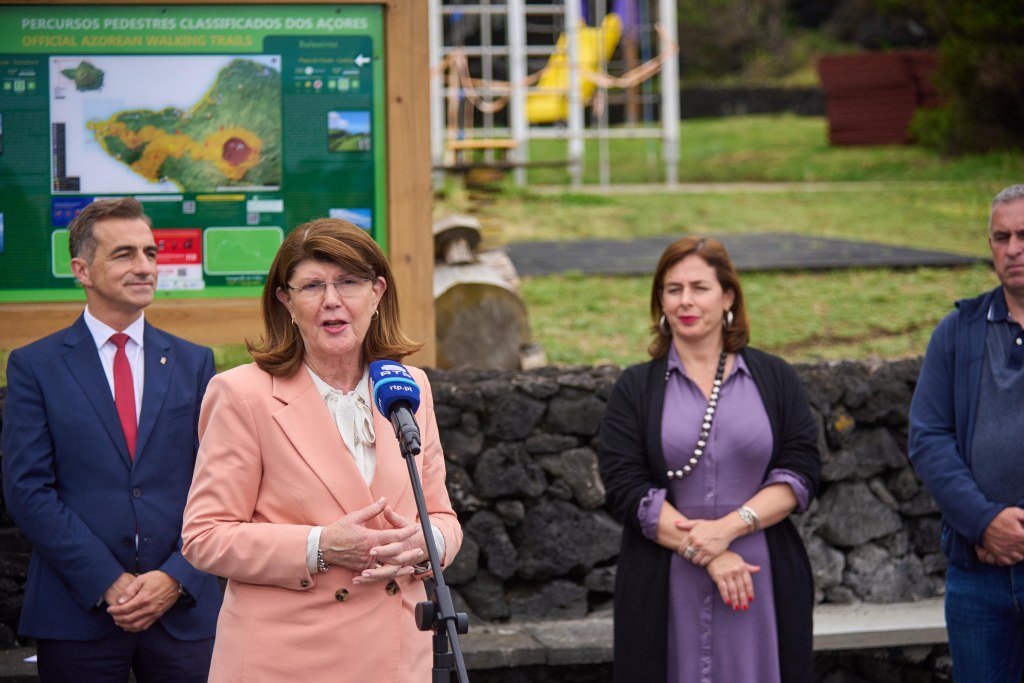
The Regional Secretary for Tourism, Mobility and Infrastructures, Berta Cabral, said this Thursday on the island of Faial that the trails are important “stones” in the construction of the tourism that we want for the nine islands of the Azores, sustainable and dynamic all year round and on all the islands.
She was speaking at the inauguration of the PR10 FAI Cedros – Varadouro trail, developed as part of the Participatory Budget – this route of more than 26 km on a trail that passes through six parishes on the island.
Berta Cabral argued that trails are “the best way to enjoy nature” and that it is for this reason that “the Azorean government is betting more and more on this type of product to offer those who visit the region and all Azoreans”. She continued: “Our tourism is fundamentally based on nature, land, sea, and human nature, which is our identity, our culture, our way of being, and our way of welcoming those who visit us.”
The inaugurated trail is now part of the Azores Regional Network of Walking Trails.
“The success of tourism lies in being genuine and authentic and in offering those who visit us what we really are: the land, the sea and the centuries-old culture, which is also expressed in the trails, because we are recovering old paths and heritage elements that are part of our identity,” she said.
“This success lies in the fact that we have chosen our true identity as the essential elements for promoting and marketing tourism in the Azores and that is why we are a destination of excellence, internationally certified as the first Gold Level archipelago in the world. That’s how we make a difference,” she added.
For Berta Cabral the government has achieved it’s goal, stating, “We’ve achieved our goal of having tourism all year round on all the islands, and we’ve made a huge leap forward in harmonizing the development of the nine islands and the cross-cutting nature that tourism has and impacts on the different sectors.”
“For more than 40 consecutive months, we have seen growth in all economic activity, and tourism plays a key role. This development is the result of everyone’s work, with entrepreneurs playing a crucial role. We are all contributing to an ever greater projection of the Azores abroad and to generating more and more wealth internally. This is the only way we can develop and maintain a prosperous region for new generations,” she said.
Tourism has created around 20,000 jobs, and Berta Cabral stressed that this figure “is very significant in terms of realizing the sector’s importance in the economic development of the Azores.”
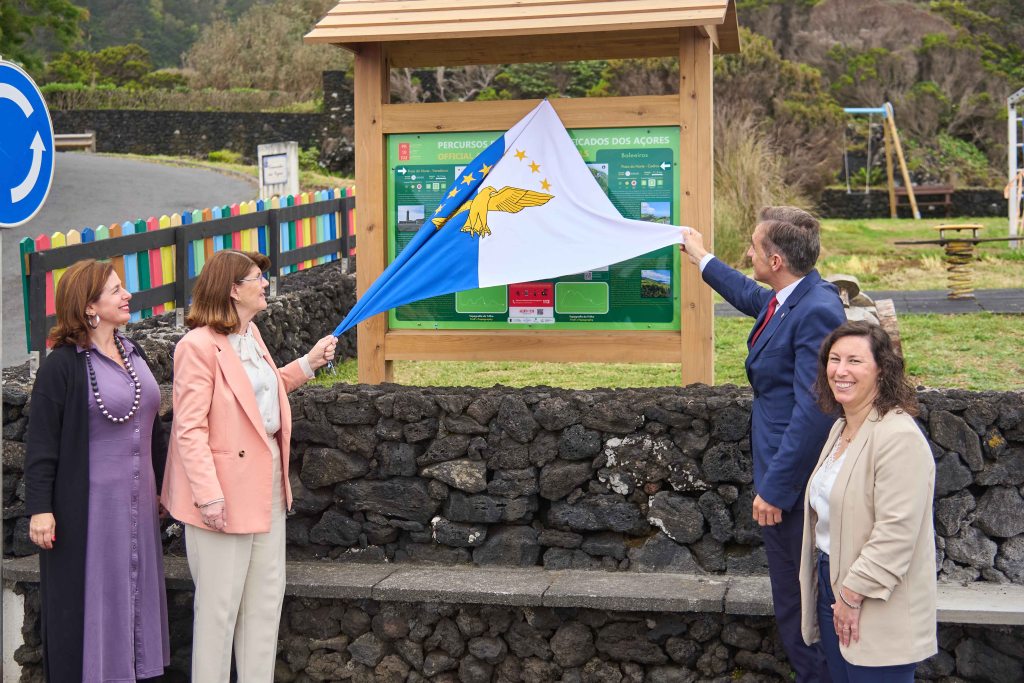
On the trail now inaugurated on the island of Faial, interpretive signs alluding to the history of whaling have been installed at the main points of interest. These signs have been integrated and articulated with the existing signs, maintaining a coherent image of the information provided.
Most of the cultural points included in the PRC10FAI Whalers’ Trail are also part of the “Origins of Whaling” itinerary, which is part of the “Routes of the Azores—Cultural and Landscape Itineraries” project. This one-day itinerary is divided into two parts: the morning is dedicated to urban points of interest, and the afternoon invites people to visit the points of interest that are part of the walking route.
The intervention also included an ecological recovery project in an environmentally degraded area next to the Faial Waste Processing Center. Around four tons of waste were removed, invasive species eradicated, and approximately 400 native species planted.
This trail marks the start of the implementation of the Rapid Intervention and Rescue Plan on the island of Faial. The plan aims to reinforce user safety by placing numbered and georeferenced markers every 500 meters along the route and identifying alternative accesses for rescue vehicles in advance.
In this way, in an emergency, anyone can inform the authorities of the number of the last post seen, allowing for a faster, more effective response tailored to the type of access, whether by ambulance, 4×4 jeep, or on foot.
With the inauguration and integration of this new trail, the official network of hiking trails in the Azores now has 91 Small Routes (PR) and 7 Great Routes (GR), making a total of 98 hiking trails in the region, totaling 871 km.
From Press Release
Translated to English as a community outreach program from the Portuguese Beyond Borders Institute (PBBI) and the Modern and Classical Languages and Literatures Department (MCLL) as part of Bruma Publication and ADMA (Azores-Diaspora Media Alliance) at California State University, Fresno, PBBI thanks Luso Financial for sponsoring NOVIDADES.

 Novidades - The Islands and the Diaspora