

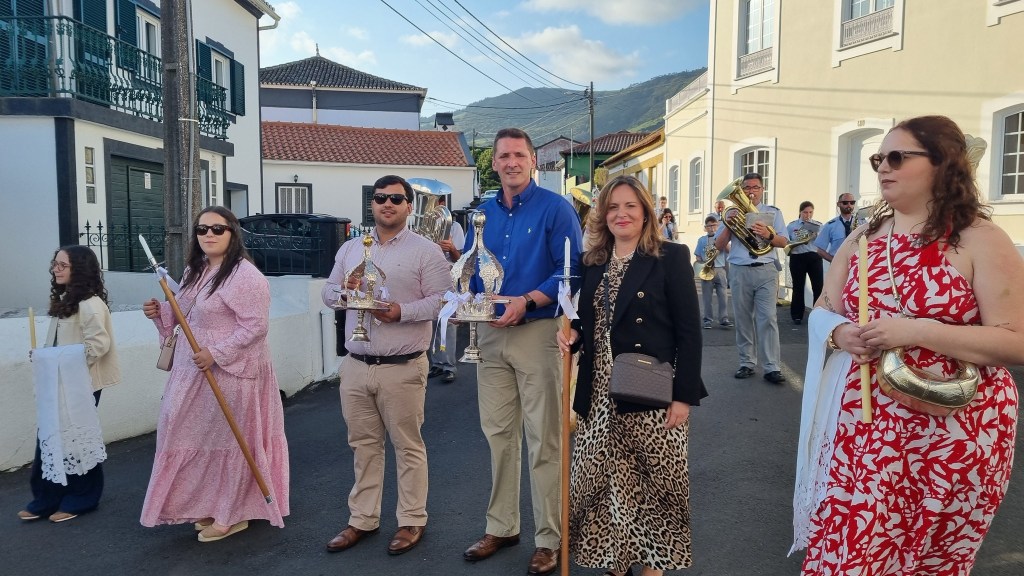
Between this Pentecost weekend and the next, Trinity weekend, there are Hollu Ghost Brotherhoods and Sisterhoods (irmandades and impérios) on all the islands, with an array of celebrations. However, it’s on the Central Group that the tradition remains most intact. Bodo Day on Terceira is perhaps the most important of the year, and on Pico this week, there are around 45 Impérios spread across all the parishes.
The Casa do Espírito Santo do Topo, on the island of São Jorge, has been buzzing since Monday. The sweets are being made and the delicacies prepared for Sunday’s feast, which began on Monday and will have its first coronation on Saturday. It sounds confusing, but it’s not. Verónica Silveira and her husband are this year’s stewards. He was a helper and didn’t have the “obligation to do the feast,” that is, a duty of the siblings, but a promise made two years ago led them to organize this year’s feast.
“At the end of the day on Saturday, we have the crowning of the Empire to the Church and from there to the House of the Holy Spirit where the alms are distributed,” which consist of bread, wine, and a piece of meat. The next day comes the traditional soup lunch, which no empire or stewardship can do without. Some are more open to the whole community, as in Santa Maria; others are by invitation to brothers and family members. However, in the Azores, this is how the Third Person of the Holy Trinity is celebrated.

Between this Pentecost weekend and the next, Trinity weekend, there are empires on all the islands, but it is on the Central Group that the tradition remains most intact. Bodo Day on Terceira is perhaps the most important of the year, and on Pico this week, there are around 45 empires spread across all the parishes.
São Mateus is one of them. The Steward is always a brother who chooses the direction of the Empire and organizes it that year. Before that, his name has to be elected from among the brothers of the Brotherhood. Dimas Baptista, a brother for 15 years, was the lucky one this year.
“It’s been a hustle and bustle. Everyone’s helping out and this Thursday we’ve already started on the logistics”. In the São Mateus empire, soups will be served at the Casa do Povo after the coronation. There will be around 500 diners. Soup, roast meat, and rice pudding will be the most served delicacies over the weekend. In São Mateus, rosquilhas are done for the arraial.
“It’s an honor to serve the Holy Spirit. We’re very happy that we’re in charge of the festivities this year,” he says, emphasizing everyone’s help.
“Nobody refuses to help. We’re counting on everyone, everyone, everyone,” he said, because the festival ”is also for everyone. No one is left without a donut,” says Dimas Baptista.
We returned to São Jorge to see another tradition. The distance from Topo to Rosais isn’t long, but the tradition is quite different.
“I don’t know who introduced it, but I think it dates back to the time of the knights who protected Queen Santa Isabel. Here we also have knights, the first in the procession to open the ramada,” says Márcia Garcia, who this year, with her husband, is taking over the Rosais empire. It was also a promise, and even her children are taking part in the religious part and the games. Aramada’ serves as a space for movement and passage during religious celebrations, especially on Pentecost and Holy Trinity Sundays. It plays a central role in representing the feast of the Holy Spirit, including recreating the tradition of serving a banquet.
“The feast began on Ascension Sunday with the arrival of the Holy Spirit, the daily recitation of the rosary and then the making of the cakes, especially the large doughnut, which is very heavy as it is made with around 7 kilos of flour,” says the butler. She won’t go out on Sunday until after the coronation and the soups, served in the rosais style, after the coronation in the church.
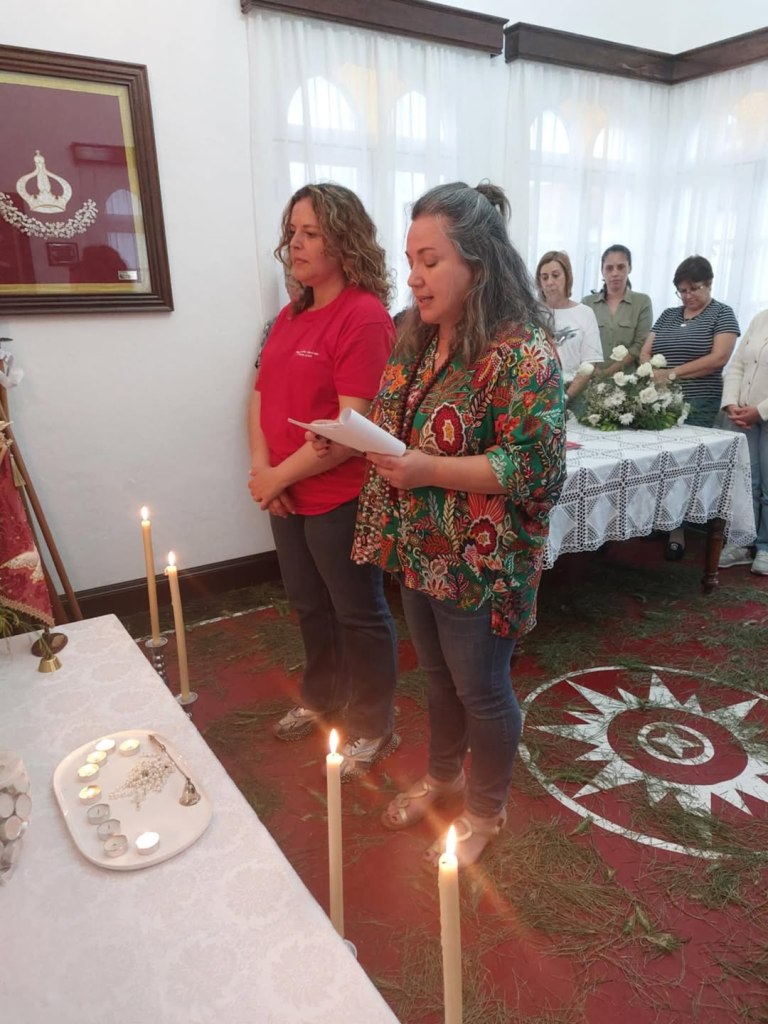
There isn’t a town in the Azores that isn’t celebrating the Feast of the Divine these days. The feasts of the Holy Spirit are part of the Azorean soul! This secular cult fosters truly humanistic and supportive attitudes and values, such as distributing food to the poorest, offering meals to everyone, and promoting conviviality among neighbors and friends.
In the Empire of Sharing or Love, as many people call it, men and women are invited to live the utopia of solidarity, realizing the dream of a free, fraternal, and happy society. Today, this cult is present in each of the Azorean communities in the United States, Canada, Brazil, and other distant places. In each of them, devotion to the Divine is expressed, and the traces of this identity, which is also cultural, are brought to life.
On the island of Terceira, the festivities have a “very original” force. They are particularly evident in the Ramo Grande area, where the economy is still predominantly agrarian, with the Vila Nova and Lajes empires, for example, being well known for the large number of people involved.
The ability to fit into an agrarian culture explains why it has remained so alive in the Azores: the appreciation of the land from which wheat and corn are grown, from which bread, wine, and meat are made, aspects in which the gifts of the Holy Spirit are materialized.
The main peculiarity of this cult in the archipelago is that it is popular and develops in the form of an empire, with a strong prophetic and political charge, without any pretense of imitating roles or dismissing powers.
When the Santas Casas da Misericórdia (Holy Houses of Mercy) were set up on the island of Terceira, the one in Angra in 1495 and then the one in Praia in 1498 were installed in the temples of the Holy Spirit, and eventually became responsible for organizing the bodos on the day of Pentecost, a fact that did not affect the creation of brotherhoods in all the parishes of these two municipalities.
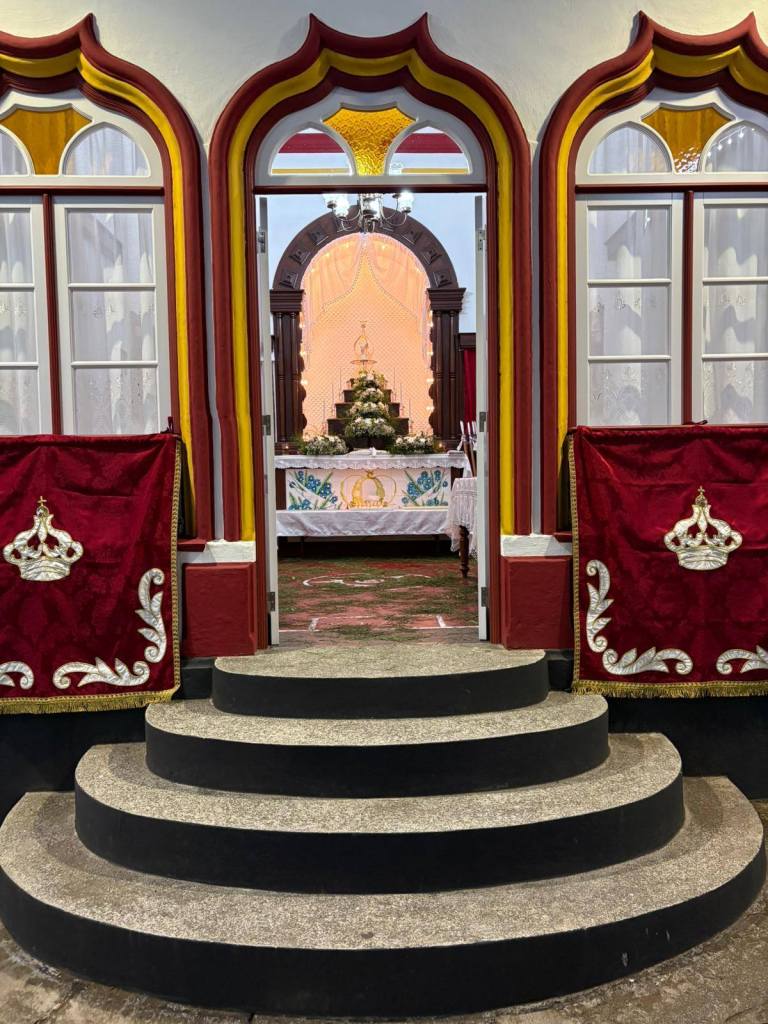
The feasts of the Holy Spirit in the Azores have a common traditional structure. Still, there are many variations between the various islands of the archipelago, as well as within the same island, between the different empires.
The cycle of festivities is, however, common. This Sunday and next Sunday are the bodos, and at the end of next Sunday’s bodo, “the lots” are drawn to find out which brothers will get the seven domingas for next year. Whoever gets the first “dominga” will have the Holy Spirit in their house for the whole year, which means that the Flag and Crown will remain in that brother’s house, in a prominent place, for a year.
The day of the Azores, known as “Monday of the Dove”, will be celebrated in the municipality of Praia da Vitória, in the Ramo Grande auditorium. The solemn session will take place at 10.30 a.m. and will be attended by the presidents of the government and parliament.
Father João Caetano Flores, among others, will be honored at the ceremony.
in Correio dos Açores – Natalino Viveiros, director
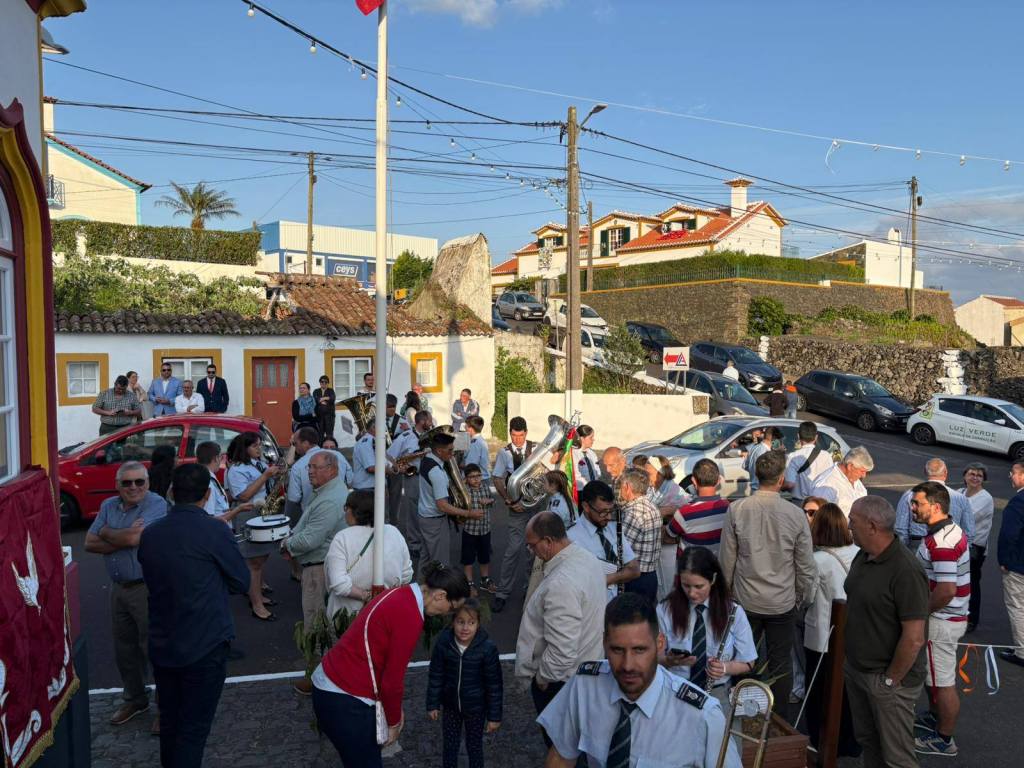
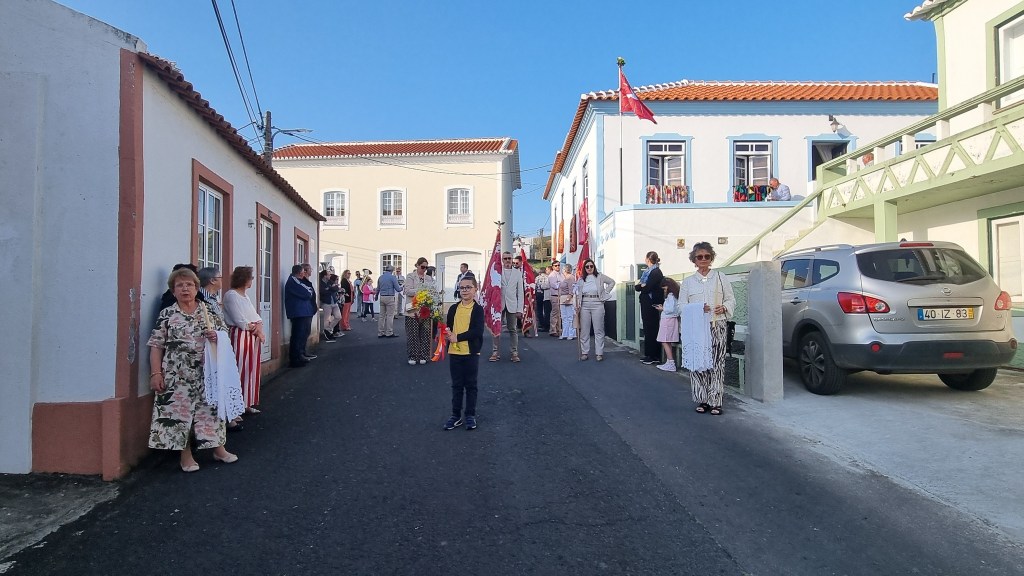
The pictures above and below are from the Primeiro Bodo from the São Luís Império, in São Bento, Terceira, Azores.
Translated to English as a community outreach program from the Portuguese Beyond Borders Institute (PBBI) and the Modern and Classical Languages and Literatures Department (MCLL) as part of Bruma Publication and ADMA (Azores-Diaspora Media Alliance) at California State University, Fresno, PBBI thanks Luso Financial for sponsoring NOVIDADES.


 Novidades - The Islands and the Diaspora