


With around 400 inhabitants and a strong historical connection to whaling, the parish of Salão, located in the municipality of Horta, remains primarily based on agricultural production, particularly milk and meat. Sérgio Gomes, president of the parish council since 2017, identifies structural difficulties such as the lack of skilled labor; the reduced participation of the population in local institutions, which he points to as an obstacle to the cultural development of the parish; and foreign pressure on the real estate market, which has kept young couples away from the possibility of buying a house. He also points to the scarcity of funds and the lack of clarity regarding the status of the land routes as obstacles to maintaining the agricultural paths, whose responsibility, in practice, falls to the parish council. “The big problem continues to be the delay in drawing up and approving the status of the land routes, in order to define who owns these roads, which sometimes belong to no one,” he says. Until such time as this is defined, it is the Junta that carries out the work with the means at its disposal.
Correio dos Açores – What do you think of Salão?
Sérgio Gomes (President of the Salão Parish Council) – Salão is a rural parish with 12 km² and around 400 inhabitants, and the basis of our economy is agriculture, especially the production of milk and meat, but in its history it has had other activities that have generated an economy, such as whaling, basketry, where there were several craftsmen in various branches, or windmills. However, I’d like to emphasize whaling, as it was in Salão that the first whaling company was established, and it was in our port that whaling operations began. Additionally, it was here that the first whales were dismantled and melted, albeit in a very archaic manner. With the construction of the whaling factory in Porto Pim and also because access to the port was difficult, Salão became a strategic departure point for whaling boats. This activity was very popular, and during the summer, many people from other parishes and the island of Pico came to settle in the parish while the season allowed for hunting.
Nowadays, many people no longer depend on farming and instead move to the city of Horta, where they work in public services and the private sector.
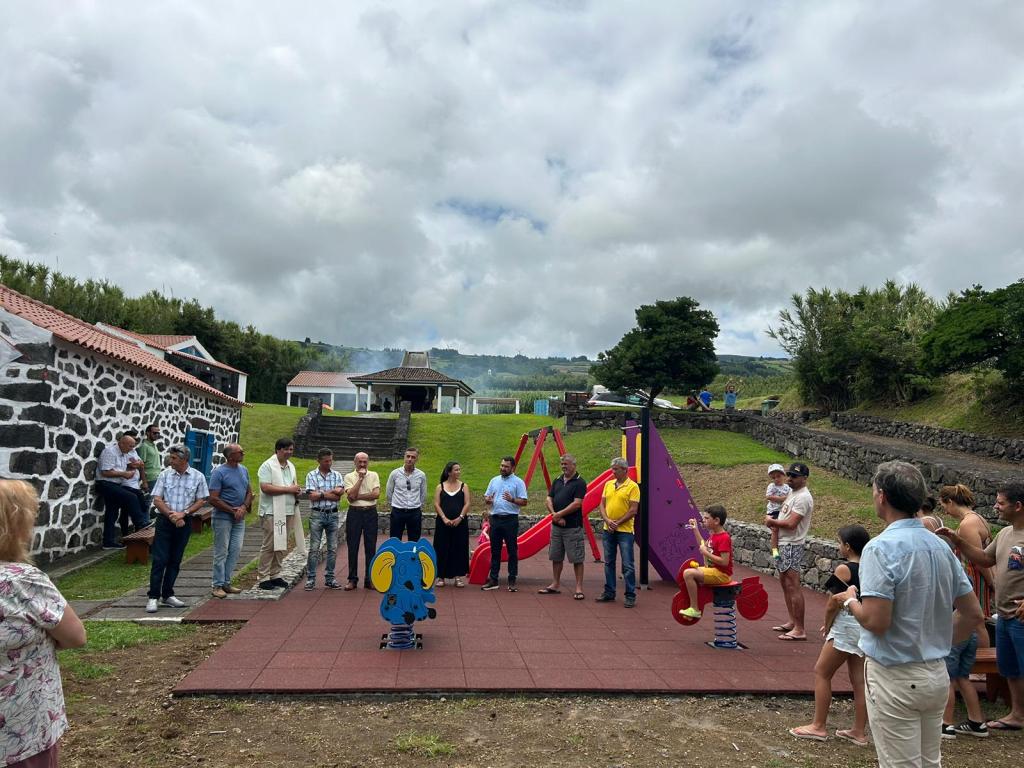
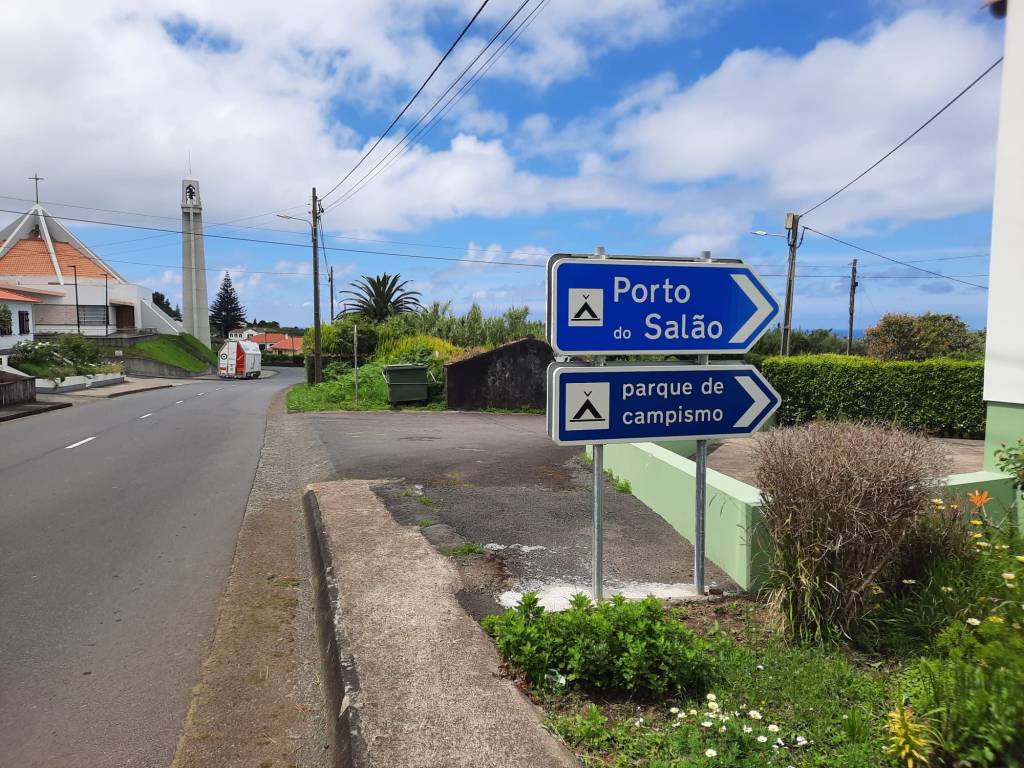
Today, the parish offers a high-quality leisure area, with facilities such as a picnic area, barbecue area, children’s playground, and campsite. The bathing area, featuring natural pools, offers clear-water bathing, and a viewpoint overlooking the parish is located next to the whale watch, which can be visited and actively supports whale watching. It’s curious that, 40 years after whaling was closed down, this whale-watching activity is once again generating an economy in the parish, and the Junta has a whaling boat which, during the summer, is part of the Clube Naval da Horta’s whaling boat races and is available for outings with the local population. Another must-see is the windmill, which has been restored and is now open to the public, where you can see and learn about the entire process of turning corn into flour.
What are the main challenges, needs, and difficulties facing the parish?
These days, the greatest challenge is keeping the parish social life active, attracting people to the institutions, especially young people, so that we can maintain their vitality. Fortunately, all the institutions have boards, but the level of population involvement is no longer the same, which means that the same people are consistently represented on the board. The activities of the institutions are reduced. In this way, we risk seeing doors close. However, I would like to highlight the fact that we have the Salão Folklore Group, which is active and always in great demand, the Sports Group, which, although it no longer plays soccer, has a trail running team, which is currently in vogue, and the Casa do Povo, with its services, and the religious institutions that keep up their traditions, whether it’s the Holy Spirit festivities or the feast of our patron saint, Senhora do Socorro.
Are the funds available enough to run the parish throughout the year?
For a Junta president, the funds are never enough, because our ambition is always greater, we always want to do something more, such as necessary work, or have more human resources for better maintenance of the parish. What is certain is that we’ve managed to implement the work we proposed in our election manifestos, and gradually, we’ve built it. In the case of the Hall, this has been the case.
With just the operational assistants we’ve had, we’ve kept the parish clean and tidy. At the same time, we’ve been building infrastructures, such as garages for vehicles, a picnic area in the leisure area, and a mortuary. I’d like to highlight the latter because it was a demanding project for our employees and for us, the executive, who also had to work to ensure its completion. This project had long been desired by several council executives in recent years, and we were fortunate enough to see it through to completion. The fact that Salão was far from the city of Horta, where the only mortuary chapel on the island was located, meant that families had to travel several kilometers. What this infrastructure brings, above all, is material and moral comfort to the mourners, as they no longer have to travel and be away from their homes and families at a time of consternation. This is undoubtedly the work that has given us the most positive feedback from the population. I’d also like to highlight the great effort made to improve the leisure and bathing areas, providing these spaces with great quality and always using the same principle: using the few financial resources rigorously to buy materials and, with the Junta de Freguesia employees, we build, as it’s impossible to use private companies due to the prices charged.
What is the size of tourism in the parish? Is the number of local accommodations increasing?
Tourism is increasing every day, and this is evident in the turnout at the restaurant, on visits to the mill, and especially at the campsite, as it’s free and offers all the necessary conditions. We receive a high volume of requests for camping reservations, which makes the leisure and bathing area very busy. Although Salão is a place to visit, rather than a place to stay, the fact is that local accommodations have started to appear, albeit in small numbers.
Is the lack of housing one of the problems for young couples? For what reasons?
Unfortunately, we can already feel this problem in Salão. Many young couples from here, as well as those from neighboring parishes, have attempted to buy houses that come up for sale. Still, they are unable to do so due to the phenomenon of “foreigners,” particularly retired Europeans, who arrive with considerable economic power and easily purchase the houses. It’s a shame, but we’re failing to attract young couples, who would contribute to the rejuvenation of the parish and a higher birth rate. We urgently need to take measures to support housing.
Do you face any challenges due to the manpower shortage in the parish?
As far as the parish council is concerned, fortunately, we have employees who have been hired within the budget and who provide us with guarantees that the tasks will be carried out. However, I can see that it’s a problem for business owners in the parish to find workers in certain sectors, especially skilled workers.
How many residents does the parish currently have? What is the percentage of elderly people compared to young people? What are the migration trends observed among young people?
Salão currently has around 400 people, with a higher percentage of elderly individuals than young people, in line with the regional trend. Regarding young people, I must admit that in recent years, the vast majority have settled in the parish. Although young people have to leave the island to pursue their studies, they typically return after completing their education and go home.
Is there a lack of essential services or infrastructure in the parish? Are the farm tracks in good condition?
The fact that we’re 15 km from the city of Horta means that we’re close to all the services that the parish doesn’t yet offer, as the Junta is concerned about this. We provide support to the population, including filing with the IRS and various other services. In terms of infrastructure, the parish has the necessary foundations in place. The 1998 earthquake destroyed the church, but a new one has already been built, along with a very important community center that supports catechesis, religious activities, and parish festivities. All institutions have their headquarters, and what is important at this stage is to maintain these infrastructures.
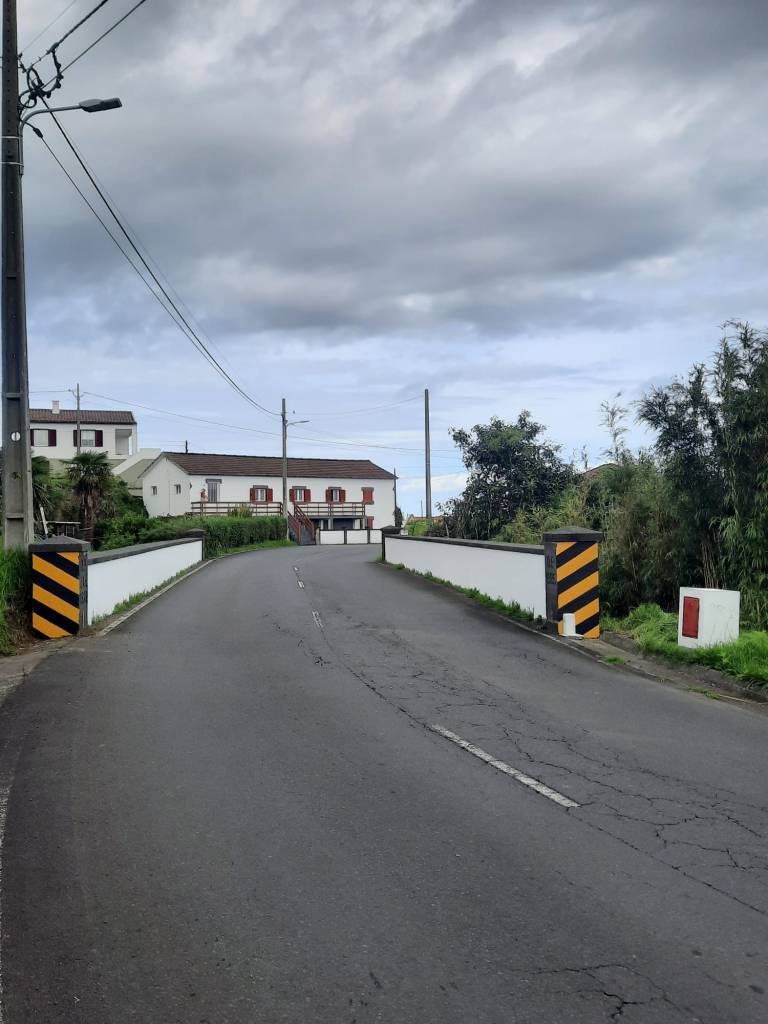
Regarding the farm tracks, regular maintenance is necessary to keep them in good condition and passable. This is a continuous and arduous job carried out by our operational assistants. Fortunately, we still have the support of the Faial Forestry Service, which provides us with the necessary machines to complete the work. The major issue remains the delay in the construction and approval of the statute for land routes, which defines ownership of these paths, as they sometimes belong to no one. In the meantime, the Parish Council is making efforts, with the few funds it has, to provide working conditions for farmers. It would be fair to define the entities responsible for these roads and then delegate funds to the parishes to carry out the tasks.
How would you describe Salão’s gastronomy?
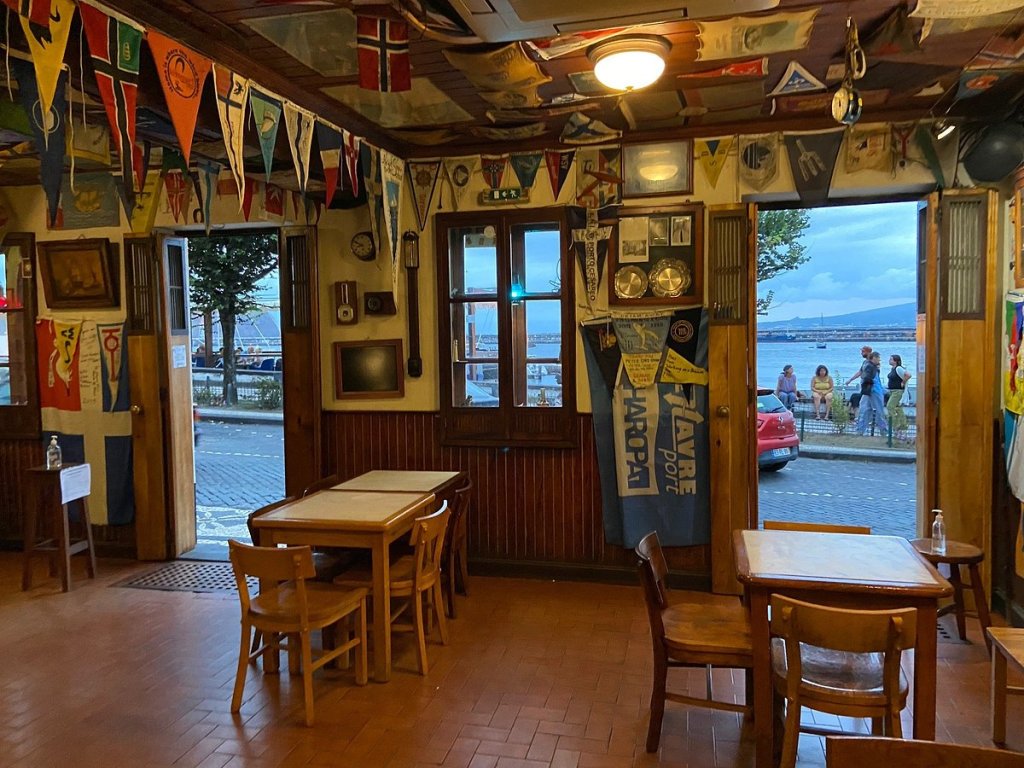
It’s a rich gastronomy, where people grow their own vegetables and raise their own animals for pig slaughter. We offer the delicious Espírito Santo soups, accompanied by sovada pasta and rice pudding, or the fresh fish caught off our coast. Almost all of this can be found at the parish restaurant, “A Pasquinha”!
Does Salão have the potential to develop further? Under what conditions and in what areas?
On a public level, Salão has good infrastructure in various areas. It’s people’s distance from institutions that leads me to say we have the potential to develop more, because we could be more active in sports, culture, and festivities.
As far as the private sector is concerned, there is enormous potential for development in various areas, of which I would highlight catering, because demand is already annual and supply doesn’t keep up.
Finally, I would like to thank all the people of Salo for how they have collaborated with the Junta in the activities carried out, in the respect for our heritage, because this is the only way we can maintain and continue to offer the best we have to the whole population, and for the closeness they have with the members of the executive to alert us and help us with what needs to be done in the parish.
Daniela Canhais a journalist for the Correio dos Açores - Natalino Viveiros, director
Translated to English as a community outreach program from the Portuguese Beyond Borders Institute (PBBI) and the Modern and Classical Languages and Literatures Department (MCLL) as part of Bruma Publication and ADMA (Azores-Diaspora Media Alliance) at California State University, Fresno, PBBI thanks Luso Financial for sponsoring NOVIDADES.

 Novidades - The Islands and the Diaspora