


Angela Alvernaz, president of the São João do Pico Parish Council since 2013, identifies the lack of affordable housing for young people, environmental disrespect, and the degradation of the Pico da Urze path as the parish’s primary current challenges. Despite the increase in tourism and investment in local accommodations, the parish faces a labor shortage in sectors such as construction, an aging population, and the absence of a day center for the elderly. Regarding the resolution of structural problems, the mayor points out: “There are projects for the parish in which we depend on protocols with the regional secretariats, as larger sums of money are needed, and there we are faced with various and countless situations that make management difficult.”
Correio dos Açores – What do you think of São João?
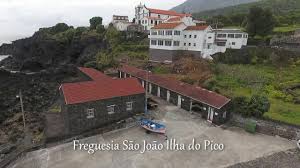
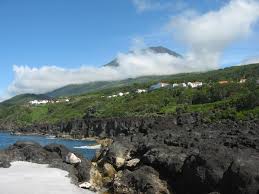
Angela Alvernaz (President of the São João Parish Council) – São João is a parish with a residential area that spans a vast area, situated between the green of the two mysteries, the Pico mountain to the north and the sea to the south. In its history, it was a parish of shepherds, of great importance in the island’s dairy industry. To this day, it is known for the cheese that bears its name, “queijo de São João”. It has also been and continues to be the site of major cultural events, encompassing music, theater, folklore, and literature.
In its 32.31 km² area, which culminates at the tip of the Pico mountain, a large part of it is known as “the Matos de São João”, an area of pastureland. Farming remains a source of income for many families. This parish is also a fishermen’s parish, where fishing represents a significant economic means for the community.
Today, its population is around 400 inhabitants.
It is a parish known for its bathing areas and the São João Pequenino forest and recreation park, pleasant places to relax and socialize in full contact with nature.
What are the main challenges, needs, and difficulties facing the parish?
Perhaps the greatest challenge facing this parish is the concern of many mayors: protecting and defending the environment. In this consumerist society, a disregard for nature can be alarming. Despite all the work that the council’s executive has been doing to raise awareness of the importance of preserving the environment, we see that more and more citizens are showing acts of total lack of civility. And we know that, most of the time, it’s not the citizens of this community who commit the acts, because “nobody wants garbage on their doorstep”.Housing for young people is a pressing concern for us.
Are the funds available sufficient to manage the parish throughout the year?
Given our area and population density, the funds available throughout the year enable us to manage the parish within the delegations and functions that fall to us. However, there are projects for the parish that require protocols with the regional secretariats, as larger sums of money are needed, and we then face numerous situations that make management difficult.
What is the size of tourism in the parish? Is the number of local accommodations increasing?
In high season, this parish is a popular destination for tourism due to its significant supply of local accommodations, which has increased considerably in recent years. It should be noted that this was one of the first parishes in the municipality to invest in local accommodation and rural tourism when this area of investment emerged in the Azores. During the low season, tourism in the parish also decreases.
Is the lack of housing one of the problems for young couples? For what reasons?
As I mentioned, this is one of the difficulties facing the parish. In fact, in recent years, there have been a few houses on the real estate market in the parish, but the prices are very high and are not compatible with the incomes of young couples, resulting in sales being made to foreign nationals.
Do you have any issues with the labor shortage in the parish?
We feel a lack of manpower in construction, carpentry, and even in the provision of services in other areas. It’s a general trend that has worsened in recent years, and it’s natural that in smaller areas, it’s felt more acutely.
How many residents does the parish currently have? What is the percentage of elderly people compared to young people? What are the migration trends observed among young people?

We currently have 400-something inhabitants, with a small percentage of children and young people. Although the largest percentage of inhabitants is of working age, we also have a significant percentage of elderly people. Young people who need to leave to pursue their studies mostly don’t return.
Is there a lack of any essential service or infrastructure in the parish? If so, which one(s)? Are the farm tracks in good condition?
In my opinion, we could utilize a daycare center in a space or housing that was donated many years ago to an institution in the municipality for this purpose. Even if its presence wasn’t only justified for the parish of São João, it could serve the neighboring parishes. This has been debated over the years, but unfortunately, no progress has been made to date.
As for the agricultural roads, one of our roads, which serves the farmers of the parish and neighboring parishes, because the pastures that once belonged only to the parish’s shepherds were sold over time and built in the 1980s, Caminho do Pico da Urze, is in terrible condition in terms of the road surface. There are areas where the holes in the asphalt resemble “craters.” It’s a long stretch of road, and, according to the authorities, that’s why it’s difficult to find the money to resurface it. It has been a major “struggle” for this executive to find a solution on this road, where our farmers pass every day, some of them twice a day.
Currently, we have been promised that the potholes will be filled in, but time passes, and the potholes only get bigger. And the state of the road is terrible.
I would, however, like to point out that on another agricultural road, “Caminho dos Matos de São João”, where for more than four years the vegetation and weeding of the roadsides has covered a good tarmac surface that has been reduced to little more than a traffic lane, the island’s Forestry Services have intervened this year. The situation has been resolved very well.
How would you describe São João’s cuisine?
It’s a gastronomy rich in seafood products, especially the well-known “Caldo de Peixe” (Fish Broth Soup), as well as products made with pork, such as sausages accompanied by yams, pork ribs, and morcela (blood sausage), among others.
What have been the main cultural promotion activities in the parish?
In a small community like ours, we have the Recreio dos Pastores Philharmonic, the Casa do Povo Folklore Group, the São João Sports Club, the São João Naval Club, the “O Alvião” cultural association, which throughout the year carry out different cultural activities that this executive has supported for the sake of our culture and traditions. We have also supported some cultural initiatives promoted by our parish of São João Baptista.
Promoted by the parish council, we hold two major cultural and sporting events every year: “The Cultural and Sporting Week”, which takes place over several days during April and ends with the commemorations of April 25, in which we have all the parish institutions, the municipality and the CPCJ as partners; the São João Baptista Regatta, in partnership with the Clube Naval, on the first weekend of July, the first edition of which was held in 2016.
Our religious festivities include our patron saint, St. John the Baptist, on June 24th, and on the first weekend of October, Our Lady of the Rosary, the protector of fishermen. We also celebrate the feasts in praise of the Divine Holy Spirit, on Pentecost Sunday and Holy Spirit Tuesday.
Does São João have the potential to develop further? Under what conditions and in what areas?
It’s a parish that has potential for development in the primary sector.
Daniela Canha is a journalist for Correio dos Açores, and Natalino Viveiros is the director.
Translated to English as a community outreach program from the Portuguese Beyond Borders Institute (PBBI) and the Modern and Classical Languages and Literatures Department (MCLL) as part of Bruma Publication and ADMA (Azores-Diaspora Media Alliance) at California State University, Fresno, PBBI thanks Luso Financial for sponsoring NOVIDADES.

 Novidades - The Islands and the Diaspora