


The sea is a big part of the Azorean landscape. For many young Azoreans, however, the sea remains a distant sight, often associated only with fishing or with hard and unappreciated professions. The Azores Sea School has sought to change this view, showing that the ocean can be an open door to new opportunities, modern and qualified careers linked to science, technology, the environment, and the blue economy. The aim is to train young people prepared for the challenges of the future, taking advantage of the potential of the territory where they live.
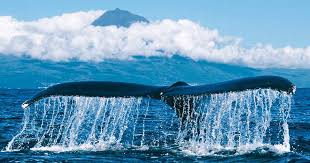
Ana Rodrigues, Chairwoman of the Board of Directors of Escola do Mar, paints a clear picture of the current situation in the region: “First of all, the immensity of the sea around us is both a great challenge and a huge opportunity. If there is room to work and to build various professions, it is certainly at sea. But we mustn’t forget that many of these professions don’t take place in the water, but on land.” This perspective is essential for breaking down stereotypes that are still very present about what it means to work with or for the sea.
It was exactly this message that Ana Rodrigues, on behalf of the Azores School of the Sea, was keen to convey. She emphasized that it is crucial to combat the limited view of professions linked to the sea, promoting a more up-to-date and comprehensive perspective that aligns with the challenges of the present and the future. The school is committed to training that is tailored to the region’s real needs, while also being attentive to international trends. Today, the sea represents much more than fishing – it is a space for innovation, science, renewable energies, sustainable tourism, security, logistics, aquaculture, and shipbuilding. It is also a strategic area for ensuring food security and facilitating the energy transition. Training young Azoreans for these opportunities requires planning, vision, and a constant connection with local communities.
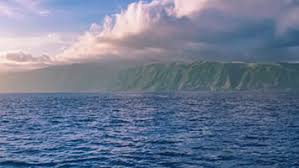
It is with this in mind that Escola do Mar regularly travels around the archipelago’s nine islands, bringing certified training to often isolated communities, reinforcing territorial cohesion, and ensuring that no young Azorean is left behind. “We are very present on the ground. We make a point of providing training on all the islands, which enables us to adapt to local realities and establish direct connections with the people. That makes all the difference,” explains Ana Rodrigues.
In recent years, the school has expanded its offerings to include courses such as shipbuilding and recreational craft, and more recently, a professional aquaculture course at level 4, equivalent to the 12th grade. In addition to these, there is a strong focus on more technical and specialized training, such as the operation of drones, remote underwater vehicles (ROVs), gliders, and autonomous monitoring systems.
However, for these opportunities to be truly exploited, awareness needs to be raised from an early age. Ana Rodrigues argues that valuing the sea and its professions should start at an early age, helping to change the perception that working with the sea is something of lesser value. For the head of the Azores Sea School, it is essential to show young people that the ocean can offer sustainable, innovative careers with a future. To this end, the school has been collaborating with local communities, participating in nautical activities, organizing summer schools, and implementing other initiatives for children and young people. The aim is to create a more conscious and positive relationship with the sea from an early age, promoting ocean literacy and encouraging young people to recognize its potential as a place to live, work, and develop sustainably.
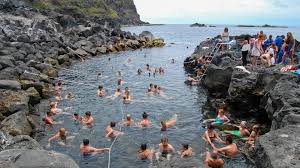
Another topic that cannot be ignored in an archipelagic territory is knowing how to swim. For Ana Rodrigues, swimming should be a compulsory skill at all stages of education: “It doesn’t make sense to live surrounded by the sea and not know how to swim. We would very much like to see a joint effort between schools, local authorities, and associations to ensure that all Azorean children learn to swim.” Although not a swimming school, Escola do Mar often emphasizes the importance of this basic skill, considering it essential for both leisure and professional and personal safety.
Ana Rodrigues’ final message to young Azoreans is one of openness, challenge, and pride. The president of the institution’s Board of Directors says that the Azores Sea School is not a closed, distant structure; on the contrary, it is an institution that wants to be close, participatory, and constantly evolving. “We want young people to challenge us, to tell us what they would like to learn, to bring us new ideas. We have a sea school, something that few archipelagos in the world have. We have to be proud of this and take advantage of it. Our doors are open to do more, better and closer to what young people expect and need.”
Filipe Torres is a journalist for the Correio dos Açores newspaper. Natalino Viveiros is the director.
Translated to English as a community outreach program from the Portuguese Beyond Borders Institute (PBBI) and the Modern and Classical Languages and Literatures Department (MCLL) as part of Bruma Publication and ADMA (Azores-Diaspora Media Alliance) at California State University, Fresno, PBBI thanks Luso Financial for sponsoring NOVIDADES.

 Novidades - The Islands and the Diaspora