

There has been much discussion lately on the subject in the title. The most recent version of this Agreement dates back to 1995 and was negotiated when I was still holding government responsibilities in our Autonomous Region. I recall a phone call from the then Minister of Foreign Affairs, José Manuel Durão Barroso, to finalize the details in the final text. It was already out of the question to include in the Agreement, as had been the case in 1979 and then in 1983, any provision for direct US aid to finance infrastructure investments in the Azores. We had already been part of the exclusive club of rich European countries for several years, embodied at the time in the European Communities, from which we immediately began to receive significant aid, which continues to this day.
However, US aid was very important and amounted to close to half a billion dollars over the years it was provided, if we also take into account other financial assistance from the same source received by the Azorean authorities for the reconstruction of the damage caused by the great earthquake of January 1, 1980, and for other purposes. During the negotiation of the Agreement in force, it was established that a permanent forum for dialogue would be created, known as the Bilateral Commission, which would meet twice a year, alternately in each of the signatory countries, with guaranteed representation from the Government of the Autonomous Region of the Azores.
The term for the granting of military facilities was set at five years. If the parties agreed, this concession could be extended for an additional five years. After this period, the Agreement would be renewed on an annual basis, provided that neither party denounced it. I do not have the text of the Agreement at hand, but this information was provided to me by a very reliable source, Armando Mendes, who studied it in depth during his academic career. The geostrategic landscape has changed considerably over the 30 years that the Agreement has been in force, but there has been no discussion of renegotiating it. It appears that the parties involved, Portugal, the Azores, and the United States, are satisfied with the text and the existing practices.
I would like to highlight the Azores because the participation of our Autonomous Region in the negotiation of international treaties and agreements that directly concern it, as well as in the benefits arising therefrom, is a prerogative guaranteed in the Portuguese Constitution.
The Azores’ geographical position has been a fundamental element in Portuguese-American relations. I have already mentioned here, if I am not mistaken, that shortly after the proclamation of independence of the thirteen British colonies in America, the US government proposed to Portugal the construction of ports on the islands of São Miguel and Faial, which Lisbon refused, without bothering to build them itself… Many years later, it was due to the Azores that Portugal, then governed by a dictatorial regime, was admitted among the founding democratic states of the North Atlantic Treaty Organization (NATO). And the same regime used the Azores as a weapon to prolong the colonial war, maintaining the American presence on our islands in the uncertainty of the extension of the agreement then in force. The rearmament of the Portuguese Armed Forces has benefited from successive agreements between Portugal and the United States on the Azores.
The creation of the Luso-American Development Foundation itself was provided for in the 1983 Agreement, so it is not an “urban myth” to link it to the Azores. There is even some justification for calling for the transfer of its headquarters and activities to our islands, as well as the appointment of its leaders to the jurisdiction of the Regional Self-Government Bodies, objectives that Lisbon is unlikely to accept. I did so when I served as a member of the Assembly of the Republic, but the question I raised at the time was not even answered by the government.
I do not recall whether the parking of tanker aircraft for in-flight refueling from the Lajes Base is expressly provided for in the 1995 Agreement. I noted, concerning recent events, that the Government of the Republic has sometimes said that such an operation requires prior participation and authorization from the Portuguese side, which has been granted, and at other times that it requires only advance notification. In either case, the Regional Government cannot be left out, as the sovereign bodies of the Republic are obliged to always consult the regional government bodies on matters within their competence concerning the Autonomous Regions, as provided for in Article 229(2) of the Constitution itself. This was the understanding, for example, of Prime Minister Francisco Sá Carneiro, who did not hesitate to call me late at night to ask whether the Regional Government had any objection to the former Shah of Persia passing through Lajes in a US military aircraft on his way into exile and to receive treatment for his illness, which would prove fatal.
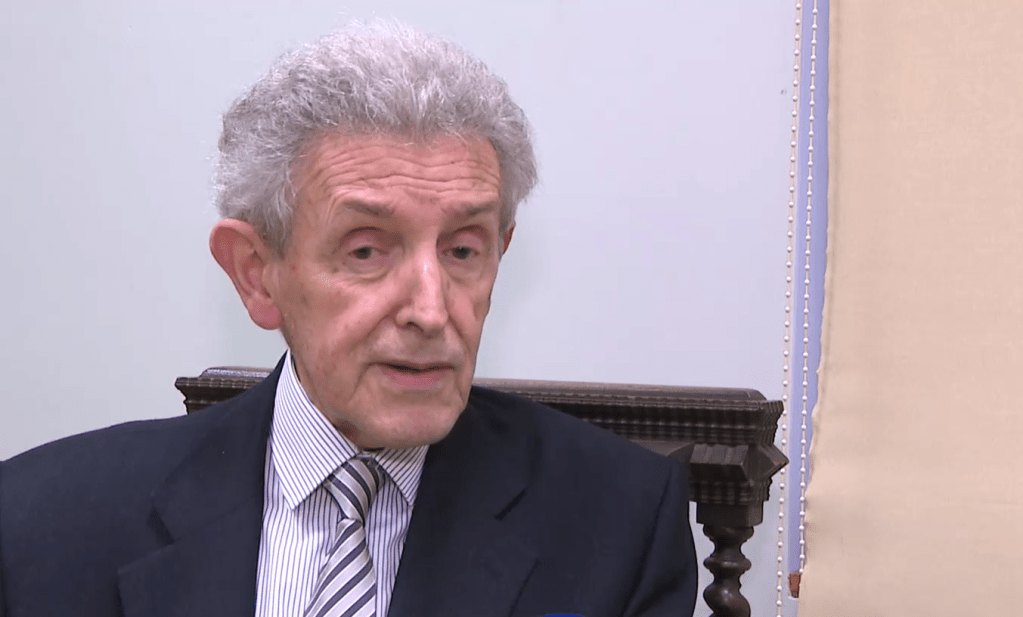
João Bosco Mota Amaral was the President of the Government of the Azores from 1976 until 1995. He is a leading political figure and has worked tirelessly to defend the interests of the Azores.
NOVIDADES will feature occasional opinion pieces from various leading thinkers and writers in the Azores, providing the diaspora and those interested in the current state of the Azores with insight into the diverse opinions on some of the archipelago’s key issues.
Translated to English as a community outreach program from the Portuguese Beyond Borders Institute (PBBI) and the Modern and Classical Languages and Literatures Department (MCLL).
 Novidades - The Islands and the Diaspora