

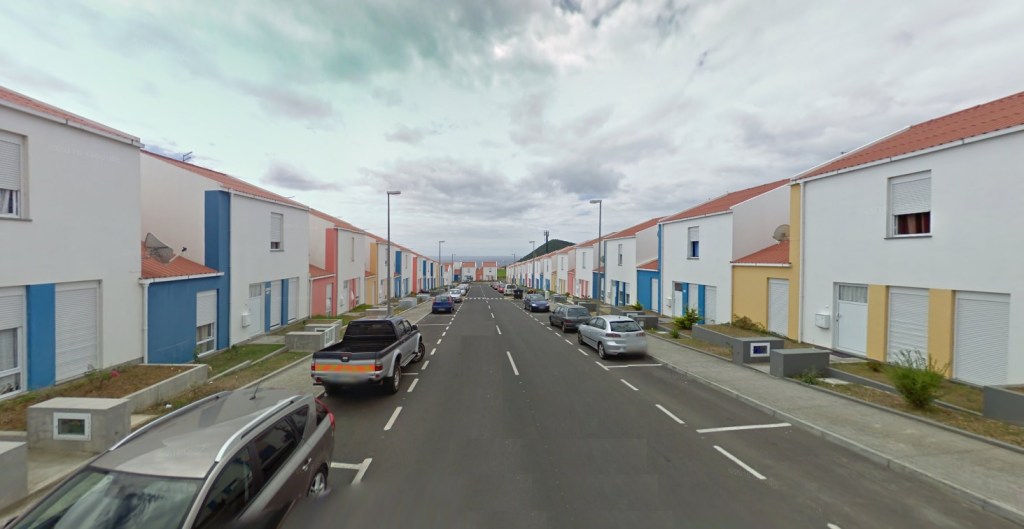
The Government Council approved a resolution establishing the Mission Structure for implementing and coordinating the Regional Plan for Social Inclusion and Citizenship (PRISC) for the period 2025-2028.
José Manuel Mendes, president of the Faculty of Economics and researcher at the Center for Social Studies at the University of Coimbra, who coordinated the PRISC, considered the step to be “fundamental.”
“This formalization is important and rare. We conducted an evaluation of the plan and proposal in close dialogue with the proposing team.
It has been enshrined in law, and a structure with a coordinator has been created,“ he described, considering that the process reflects ”political commitment.“
The researcher stated that the initial proposal was ‘consensual’ and followed the ‘political timetable’ but that the plan and its philosophy remain unchanged.’
“The objectives are there. We have the concept of a safety net, attention to vulnerable families and not just those who are already poor,” he pointed out, recalling that there are factors that lead to “entering or leaving poverty.”

José Manuel Mendes also considers support for children and young people to be “essential” and points out that progress has been made in the plan, specifically in the absence of trade-offs.
“From zero to 18 years of age, in vulnerable households, support for children and young people is understood to be universal,” he stresses.
The coordinator of the team that drew up the PRISC is not afraid of obstacles in the Regional Legislative Assembly if the measures have to be put into law and voted on by deputies.
“Any political initiative is evaluated and rarely reaches consensus. It is natural that there will be discussion and debate. Now, if there is political will to reduce poverty in the Azores, something has to be done,“ warned the researcher at the Center for Social Studies at the University of Coimbra.
José Manuel Mendes pointed out that ”poverty is not a fatality“ and stressed that when action plans are defined, they ”have an effect.”
“No one is going to say that they want to keep children and adolescents, who make up almost 30% of the population in the Azores, in poverty. We cannot allow the future of the younger generations to be compromised by the current poverty rates,” he warned.
According to the Government Council’s statement, the Mission Structure will be called “PRISC – Implementa” and will be headed by a regional coordinator.
This will be supported by a technical monitoring team, comprising representatives from each of the services and bodies involved in implementing the measures, specifically in the areas of finance, equality and social inclusion, solidarity and social security, education and training, labor and employment, housing, and health.

On June 26, the Regional Government had already approved the Regional Plan for Social Inclusion and Citizenship in the Azores.
According to the Regional Secretary for Parliamentary Affairs and Communities, Paulo Estêvão, who presented the conclusions of the Government Council, “the overall objective of PRISC is to reduce monetary poverty by 40 percent in the Autonomous Region of the Azores from 2025 to 2028, with an annual reduction of 10 percent.”
The PRISC has measures “aimed directly at people and households in situations of or at risk of poverty and social exclusion” and “is based on a clear intention to look at poverty in a disruptive way, (…) adopting new measures focused on supporting those most in need, enabling them to fully assume their citizenship and participation in society, living with the dignity they deserve.”
It has five strategic dimensions: income, education and training, work, housing, and health.
As DI reported in January, PRISC provides for increased support to create a “safety net” that keeps people out of situations of poverty and social exclusion.
The plan is the result of an evaluation process initiated in 2022 of the Regional Strategy to Combat Poverty and Social Exclusion (2018-2028) (ERCPES), which was developed by the Center for Social Studies at the University of Coimbra.
The PRISC argues that “the existence of a safety net to counteract unforeseen situations or events (illness, accident, etc.) is crucial to avoid or prevent falling into or returning to situations of poverty.”

In terms of concrete measures, there will be unified financial support for children and young people up to the age of 18 from households benefiting from PRISC, “which will be added to other support already provided (economic hardship subsidies, family allowances, school social action).”
The allocation of additional support for elderly people benefiting from PRISC is also mentioned.
The accumulation of income from work (taxable income) with social support up to a total reference amount is planned.
PRISC points out that “income security enables intergenerational solidarity and the relative safeguarding of the well-being of children and young people” and that “another component of income security relates to the working poor, mitigating the negative impact of low wages and possible fluctuations in the labor market.”
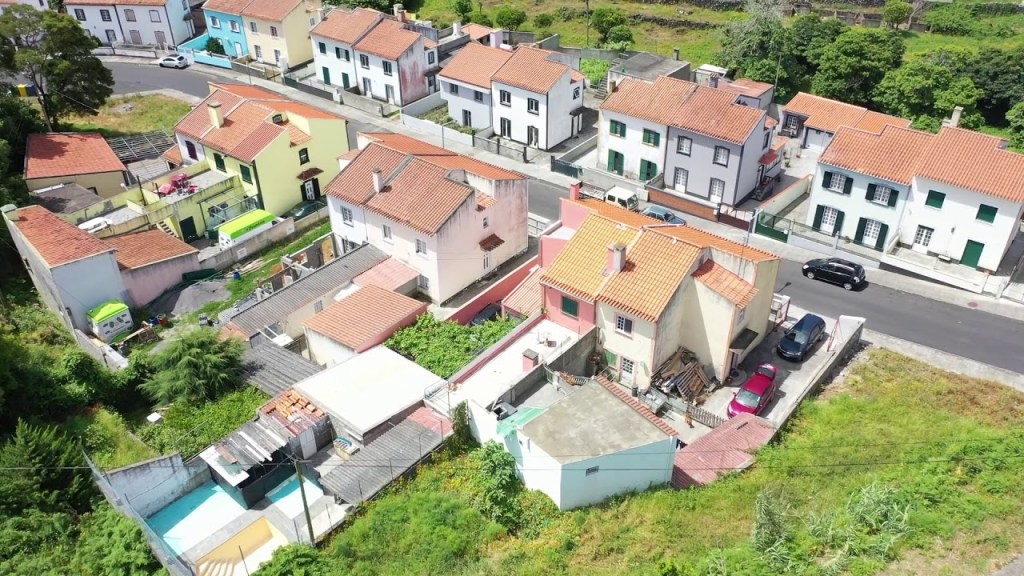
The measures also include “priority” access for target households with children, young people, and the elderly to the primary healthcare network, coordinated by family nurses. The action requires the implementation of family nurses in all health centers. It includes increasing the provision of mental health services in primary health care, “prioritizing target households,” as well as prioritizing households included in the PRISC in terms of response times to times of need. The document defines “free access to medication, through partnerships with reference pharmacies, for target individuals with chronic and mental illness.”
“The PRISC, drawing on international best practices and using the most successful poverty reduction plans as a reference, is not based on a logic of conditional support, but rather on the full assumption of rights. This is embodied in minimal intrusion into the lives of beneficiaries and their households, in their dignity and in inclusive institutional solidarity,” argued researchers from the University of Coimbra.
The study reports a rate of 24.2%. The Azores are the poorest region in Portugal and one of the poorest in Europe.
The report “Portugal, Social Balance 2024,” developed by researchers from the Nova School of Business and Economics as part of the Initiative for Social Equity promoted by the “la Caixa” Foundation and BPI, once again highlighted the Azores as the region with the highest poverty rate in the country.
“The prevalence of poverty is higher in the Autonomous Regions, which also have greater material and social deprivation and high levels of inequality than mainland Portugal. The poverty rate is almost 8 percentage points above the national average in the Azores, the region with the highest poverty rate in Portugal,” said the study, released in June.
The poverty risk rate in the Azores is 24.2%, followed by Madeira with 19.1% and the Setúbal Peninsula with 18.7%.
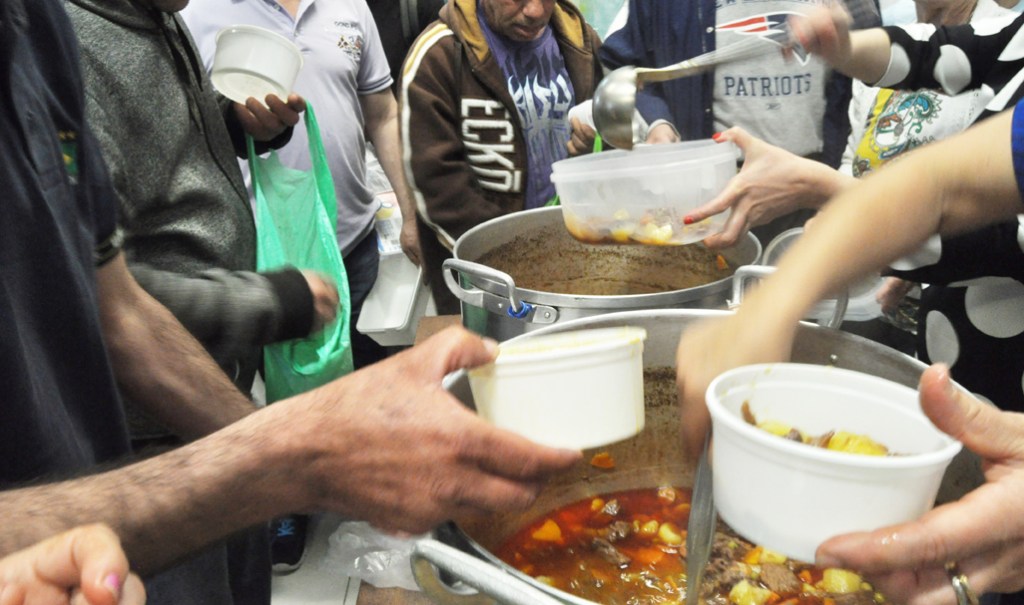
The researchers emphasized that in 2023, more than 1 in 10 people in the Azores were in a situation of severe material and social deprivation.
In August of last year, during a visit to Terceira for the 63rd Congress of the European Regional Science Association (ERSA), 2008 Nobel Prize winner in Economics Paul Krugman emphasized the importance of a “safety net” in regions like the Azores.
“Helping regions in need is very difficult and no one does it very well, but ensuring that people in these regions have adequate healthcare and are not living in deep poverty is something we know how to do and I am in favor of,” he said.
In Diário Insular, José Lourenço-director
Translated to English as a community outreach program from the Portuguese Beyond Borders Institute (PBBI) and the Modern and Classical Languages and Literatures Department (MCLL) as part of Bruma Publication and ADMA (Azores-Diaspora Media Alliance) at California State University, Fresno, PBBI thanks Luso Financial for sponsoring NOVIDADES.

 Novidades - The Islands and the Diaspora