

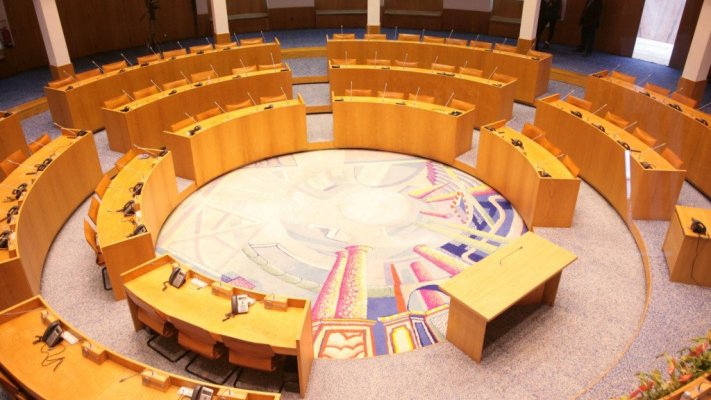
In a vibrant and, at times, heated debate in the Legislative Assembly of the Autonomous Region of the Azores, the “State of the Region” was at the center of political discourse, with the governing coalition defending its record and opposition parties warning of growing social and financial concerns.
Speaking on behalf of the Regional Government, Paulo Estêvão, Secretary for Parliamentary Affairs and Communities, declared that the Azores are in a “good and commendable” state, highlighting historic economic growth, reduced unemployment, improved educational and healthcare outcomes, and ambitious reforms in agriculture, energy, and maritime policy. He stressed that the government remains committed to “doing more, much more” for the people of the archipelago.
However, opposition voices strongly challenged this optimistic assessment. Nuno Barata of the Liberal Initiative accused the government of indulging in “rose-tinted rhetoric” while ignoring a ballooning public debt, degraded infrastructure, and underperforming transport and cultural sectors. António Lima of the Left Bloc placed blame on both regional policy and the Regional Finance Law, calling for debt relief without austerity, and lamented crises in housing, health, and demographic decline. Berto Messias of the Socialist Party (PS) echoed concerns over the poor execution of EU funds and the government’s failure to meet financial commitments to institutions and companies, warning that trust in public institutions is at risk.
While the coalition lauds its record of modernization and social investment, the opposition paints a picture of a region burdened by debt, mismanagement, and mounting social pressures. The debate reveals a stark divide between the true “state of the region” and the political paths forward for the Azores. Below are the statements by all parties.
The region (Autonomous Region of the Azores) is in good shape, and the government is committed to doing more and better, says Paulo Estêvão

The Regional Secretary for Parliamentary Affairs and Communities, Paulo Estêvão, stressed today that “the state of the region is good and commendable,” and the Regional Government is committed to “doing more, much more,” with ambition and always “for the Azores and the Azoreans.”
“Unprecedented economic growth in all sectors. Almost full employment. A huge increase in spending on education, health, and social support. A dramatic reduction in the tax burden on the population. Innovation and modernization. Social peace. Yes, this is happening here in the Azores. The state of the region is good and commendable. More needs to be done, much more. We are here for that. We have already shown that we can do it. We will never lack the ambition to do more and better,” the governor stressed.
Paulo Estêvão was speaking at the Legislative Assembly of the Autonomous Region of the Azores, in the city of Horta, in response to a question to the government raised by the Left Bloc.
The Regional Secretary regretted the stance of the Left Bloc parliamentarian, “always excessive in his criticism and sparse in his solutions,” without “the credibility that only balance in analysis and truth in arguments can achieve.”
He appealed: “Look truthfully at the state of the region. Look fairly at the work done over the past four and a half years.”
Then, listing several areas of governance, Paulo Estêvão began by referring to the fiscal component, recalling that it was with the coalition that the Azores were freed from a “brutal tax burden.”
“We used the entire tax differential that the law allows us: 30% less in personal income tax, 30% less in VAT, and 30% less in corporate income tax. Imagine, dear Azoreans, just for a moment, just for a few seconds, that taxes returned to their previous levels. That we were paying the same tax burden as in Lisbon or Madeira. The Regional Government would be swimming in money and the people would be crushed by an unbearable tax burden. We, the Government of the Azores, have made a choice. To have much less so that the people can have much more. And that is where we stand, despite the difficulties. Every day, we are defending the wall that protects us from all those who want to solve the difficulties by increasing the tax burden,“ he argued.
He added: ”Never has the Azorean economy grown so much and for so long. I repeat, because it is an undeniable truth: never has the Azorean economy grown so much and for so long. Economic activity indicators have been growing for 48 consecutive months. Our GDP has grown more than the national average and the debt ratio has broken its upward trend. In 2024, it stood at 57.7%.”
In the field of employment, the Regional Secretary recalled that in 2025 the Azores recorded historically low unemployment rates, with youth employment, qualification, and training indicators at their highest levels.
Between 2020 and 2025, he explained, registered unemployment fell by 49.25%, youth employment (16-34 years) increased by 18.11%, and the rate of young people not in employment, education, or training reached historic lows: only 11.2%.
“The tourism sector has certainly contributed to these results. Tourism currently has an estimated impact of around €1 billion on our economy and accounts for 17% of GDP, 20% of GVA and 17% of employment, concentrating more than 20,000 jobs. In 2024, the Azores achieved historic results in the tourism sector, exceeding four million overnight stays and €200 million in revenue, with sustainable growth that reflects the destination’s qualifications,“ added the minister.
In addition, the coalition ”was able to introduce far-reaching reforms in traditional sectors such as agriculture and fisheries.”
Paulo Estêvão recalled the end of cuts in EU support for agriculture, “restoring around €15 million per year, improving farmers’ incomes,“ in addition to support for the purchase of corn seeds, ”as part of a local animal feed production strategy,“ which has resulted in ”a record 14,309 hectares of corn in 2024.”
“We have eliminated the ceilings on agricultural diesel consumption per farmer, a demand that farmers have been making for over 20 years. Diesel consumption was an obstacle to agri-food production in the Azores. These and many other measures have boosted agricultural production in various sectors and increased farmers’ incomes,” he stressed.
The Azores Government, Paulo Estêvão also said, has developed a maritime policy focused on autonomy and the strategic enhancement of the maritime space through the implementation of the Maritime Spatial Planning Plan and the creation of the Regional Network of Marine Protected Areas (RAMPA), which protects 30% of the Azorean sea.
He continued: “These measures, based on scientific knowledge and public participation, are linked to the revision of the Azores Marine Park, promoting an integrated, transparent, and sustainable approach to marine management, in line with national and international marine conservation commitments.”
In the area of fisheries, the Sector Restructuring Plan for 2025-2030 was approved, “which aims to ensure the sustainability and competitiveness of the activity, with multi-annual funding and compensation adjusted to the impact of the new protected areas.”
“The management of tuna fishing and coordination with Madeira and the Republic in defending regional interests are examples of coordinated and participatory action. At the same time, the Azores Sea Cluster is being developed, based on R&D, innovation, and training, with structural investments such as the research vessel, MARTEC, and the Sea School,” he continued.
Then, referring to the field of transport, Paulo Estêvão recalled the “robust investment to improve” mobility: “In the maritime sector, more than €168 million has been invested in ports and equipment, and cargo handled exceeded 2.7 million tons; in air transport, the “Azores Tariff” boosted inter-island connections, with more flights and passengers than ever before; in land transport, a structural reform of the public service is underway.”
In energy, the Azores “are moving forward with the energy transition, with strategic investments in decarbonization and renewable energies, notably the SOLERNEGE program and EDA’s geothermal projects,” while in public works, “PRR investments have strengthened the road network and improved infrastructure on all islands, with a direct impact on the well-being and quality of life of the population.”
In education, in addition to the recovery of teachers’ working hours and the entry of more professionals into schools, the Region achieved, in terms of the results of the 2024 national exams, in 10 subjects, an average higher than the national indicator, including Portuguese and Mathematics A, Descriptive Geometry, Geography A, Spanish (beginner), English (continuation), Drawing A, History and Culture of the Arts, Latin A, and Portuguese Literature.
“In addition, the latest data from the TIMMS international assessment highlight that, in the 8th grade, in Mathematics and Science, Azorean students exceeded the national average scores in 2023 the national average scores“ and ”there was a historic decline in 2024 in the early dropout rate from education and training in the Azores, from 22.9% to 19.8%: when the first coalition government took office, this rate was 26.3%, remaining stagnant during the five years prior to 2020.”
In health, “unprecedented investment in the sector” led to an increase in the coverage rate of family doctors from 86% in 2019 to 91%, and growth in healthcare activity: hospital specialty consultations increased by 42% between 2019 and 2024, the number of surgeries increased by 32%, and primary healthcare consultations increased by 15%.
“The careers of healthcare professionals, from senior diagnostic and therapeutic technicians to nurses, doctors, and general careers, benefited from an increase of €14 million in 2025 alone,” emphasized the Regional Secretary for Parliamentary Affairs and Communities.
In the social field, Paulo Estêvão recalled the free childcare and the creation of 815 new places since 2020, “which has saved Azorean families around €4 million.”
He continued: “The ‘New Seniors’ program and the paradigm shift towards aging at home now reach all the islands. This is a civilizational advance that has become an aspiration for almost everyone in Europe. This is in addition to the annual increases in the regional pension supplement since 2021, which, in 2024 and 2025 alone, will increase by 30%. It is also important to highlight the significant growth in the number of beneficiaries. The same can be said of the large increases in the amounts and number of beneficiaries of the supplement for the purchase of medicines by the elderly (Compamid), the daily allowance granted to displaced patients and their companions, the Special Supplement for Cancer Patients (CEDO), the Azorean supplement to family allowances for children and young people (CAAF) and the “Nascer Mais” program.
In closing, the minister recalled that, in the environmental field, the Regional Government has been implementing an ambitious waste management strategy, with emphasis on the Agenda for the Regional Circular Economy and PEPGRA 20+, aimed at reducing waste production and increasing its recovery.
“More than €9 million has been invested in modernizing waste processing centers on several islands and strengthening the Eco-Freguesia program, with a cumulative investment of more than €4 million between 2021 and 2025. In the fight against climate change, the focus has been mainly on adaptation, with the implementation of the PRAC through the LIFE IP CLIMAZ project, with an investment of 20 million euros. Also noteworthy is the support for climate emergencies, already activated on 12 occasions, and the strengthening of civil protection, with more than 46 million euros invested in four years,” he concluded.
Nuno Barata (IL/Azores) criticizes the Azorean Regional Government: “Saying that the region is better with the coalition is highly irresponsible rhetoric.”

On Tuesday, Nuno Barata, member of the Liberal Initiative (IL) in the Azores Parliament, criticized the President of the Regional Government coalition for stating that the region is better off today than it was under socialist governments, lamenting that José Manuel Bolieiro now has “the same rose-tinted rhetoric that the coalition parties criticized so much in the past.”
In a parliamentary debate on “The state of the Region,” Nuno Barata heard the President of the PSD/CDS/PPM majority government state that the social, economic, and political situation in the Region is better today than before 2020, which led him to describe such a statement as “a speech of the utmost irresponsibility.”
“Public debt is above 3.4 billion, for the first time in the history of autonomy; we want the Republic to pay for health and education in the region; we have taken on public debt that, if it did not exist, would be enough to solve the enormous problems of lack of maintenance of public infrastructure; we continue to have an airline that is a case study, because the more it flies, the more passengers it carries and the more operational records it breaks, the more losses it accumulates,” listed the Liberal MP.
But, Barata continued, other indicators lead the IL to believe that it is irresponsible to say that things are better in the Azores today: “In five years, we have not managed to improve, but rather worsen, the maritime transport system for goods to and from the Azores; we have sports clubs closing their doors due to non-payment of public subsidies; we have bankrupt public companies that continue to serve only political party clienteles; we have cultural agents who are desperate for government responses to move forward with the development of their projects.”
The liberals also find other situations that justify criticism of the regional coalition government: “We have farmers and fishermen who don’t know where to turn; we have schools that haven’t seen a bucket of paint in years; health services that don’t respond, despite the statistical increase in numbers; the poor are piling up at the doors of the bankrupt and/or impoverished middle class, and drug addicts are swarming like weeds among the stones of our land.”
After being criticized for not speaking in Parliament for more than six months, the President of the Government intervened to say that the region is better off today. Nuno Barata considers this speech irresponsible and even ended up saying to Bolieiro: “If you were going to come here and spout the same kind of rose-tinted rhetoric that the coalition parties have criticized so much in the past, Mr. President, you would have been better off not coming.”
The Left Bloc (Bloco) argues that the Republic should assume part of the region’s debt without imposing austerity measures.

The Left Bloc argues that the Republic should assume part of the region’s public debt, “without austerity, given that the current Regional Finance Law is partly responsible for its worsening.” In a debate on the state of the region, scheduled by the Bloco, António Lima also pointed to the coalition government’s direct responsibility for the region’s worrying financial situation, because it reduced taxes on the richest and on large profits, made excessive appointments, and increased debts to suppliers.
The result of the policy of the PSD, CDS, and PPM government, which has the support of Chega, is a region where “a large part of the population lives poorly” because “wages are low, the cost of living is high, and the cost of housing is astronomical.”
In addition to the housing crisis, which must be the first priority to be resolved, the Bloco pointed to “another serious warning sign” about the state of the region: “There have never been so few births in the Azores,” which fell from 2,047 in 2022 to just 1,854 in 2024, representing the largest decline in the entire country.
António Lima stresses that the sharp decline in the birth rate in the Azores “is the result of policies that fail to guarantee housing, public nurseries, decent employment, and accessible health services.”
About investment in nurseries and after-school programs in 2024, for example, the figures “are alarming: of 20 planned projects, 16 have less than 2% execution.”
“By failing to guarantee a public network of nurseries, or even the investments it proposes, the Regional Government’s policy has contributed to the decline in the birth rate,” said António Lima.
In health, “waiting lists are growing, promised health centers are not getting off the ground, and the fire at the HDES revealed the state of degradation” that has been reached, stressed the Bloco deputy, who accused the government of hiding waiting list data since March.
António Lima believes that “a profound change is needed in the Regional Health Service: funding, organization, human resources, and modernization,” and warns that “if the Regional Health Service does not change, it will no longer be able to respond to the people.”
On housing, the data is also very worrying: “In the last four years, house prices have risen by 34% and rents by 42%. Overcrowding was 11.2% in 2021, and in 2024 it was 16.2%.”
“This reflects the tragedy of entire families living in appalling conditions,” warned António Lima.
The problem is so evident that today, the European Commission itself recognizes the need for rent control and limits on local accommodation. However, the regional government’s approach has been to go in the opposite direction, subsidizing the opening of more local accommodation units.
“Decent wages, time to live, daycare, and access to public services, such as access to quality health care and education, are the best incentives for birth rates there can be,” concluded the deputy.
António Lima highlighted the proposals that the Bloco has made to improve the region’s financial situation, namely a €150 million increase in transfers to the area, a reduction in interest on arrears payable to EDA, which was approved and resulted in immediate savings, and the proposal that large profits should contribute more to ensuring better health and education and avoiding indebtedness for the majority of Azoreans.
“The Azores need a change of course,” said António Lima, considering that the Bloco is doing its part.
The Regional Government is creating serious problems for institutions and companies by failing to pay what it owes them, says the PS-Azores.
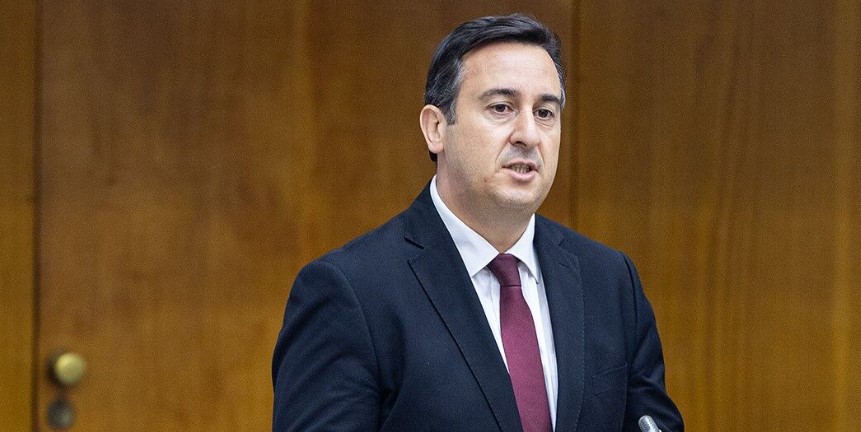
PS/Azores MP Berto Messias stated today in the Azores Parliament that “the Regional Government, led by José Manuel Bolieiro, is not paying anyone. Every day we see news reports, complaints, and concerns from companies and institutions that are not receiving the financial support promised and contracted with the Regional Government.”
“In many cases, they cannot even get a response from the Government to their requests. We have institutions across the islands that organize events that are fundamental to the local economy, companies that have been waiting for support promised to them months, even years ago, we have teams that are unable to prepare for the next season, cultural institutions that do not know whether or not they will be supported because no one responds to them,” said Berto Messias in a debate on the State of the Region promoted by the Left Bloc.
According to the socialist, “what is happening in the management of support for events to promote tourism in the region, commonly known as DLR 18 support, is unacceptable. Everything is done on the fly. First they say they support it, then they say they still have to decide, then they suspend the online application forms and then they inform by telephone that they do not support it.”
“This is not a serious way of working and is disrespectful to all the institutions in the Azores that promote iconic events and have lost support or cannot even get answers,” said Messias, regretting that the government has not answered the question of who it will or will not support, what the criteria for support are, what the budget for this support is, and what the government’s options are in this regard.
“These institutions need predictability, to know what they can count on. At stake is the social contract that must be clear between the government and the driving forces of the Azores. The relationship of institutional trust cannot be called into question, otherwise trust in public institutions will be undermined and it will become increasingly difficult to secure social bodies for these institutions,” he said.
Berto Messias also expressed several concerns about various sectors of governance and the government’s shortcomings and incapacities. “The state of the region is not good in terms of public policy implementation. Underlying this worrying state of affairs is a concerning financial situation regarding public finances.
“Today, we have a regional public administration debt of around €3.4 billion. This figure has increased by €1 billion in five years. That is a growth rate of around €1 million per day. These figures are not mine, nor are they from the PS. They are figures from the Bank of Portugal that should concern us all,” said Berto Messias.
The socialist deputy also affirmed the “total availability of the Socialist Party to help the Government in whatever way necessary to ensure the full and effective implementation of the Recovery and Resilience Plan and the 2030 community framework.”
“The Economic and Social Council’s committee monitoring the implementation of the PRR has already warned of the risks of low implementation in the Azores, currently around 38%. Today, the President of the Ponta Delgada Chamber of Commerce and Industry has warned in the media of the low implementation of the EU’s Building 2030 framework. We cannot allow the Region to cease to be a good example in the application of EU funds, so as not to lose money and to ensure good negotiating capital in the next EU framework, the public discussion process for which has already begun,” concluded Berto Messias.
Enough is enough. Copyright fees and bureaucracy are shameful, says the ultra-right-wing Chega

CHEGA’s preliminary proposal to amend the Copyright and Related Rights Code is clear: non-profit entities should only pay 10% of the “unfair and disproportionate” fees charged by the Portuguese Authors’ Society (responsible for copyright) and PassMúsica (responsible for related rights, now known as Audiogest).
Congresswoman Olivéria Santos, who presented CHEGA’s draft bill today, pointed out that “many artists do not receive what they are owed, while companies and intermediaries accumulate large revenues based on criteria that are not very transparent.”
This makes the payment of copyright fees “absolutely unfair” when it comes to “popular festivals, religious celebrations, or traditional dances,” with CHEGA arguing that the fees should take into account the nature of the entity and the event in question. This is because, to collect these fees, “small non-profit associations and other collective entities without this type of purpose have been treated in the same way as profitable event companies.”
The disproportion is therefore clear and is jeopardizing small communities, popular cultural activities, and popular festivals—such as parish festivals and festivals in honor of the Holy Spirit—which “live off the goodwill of the people, most of which are held with meager resources but are bogged down by fees and other bureaucracy.”
Deputy Olivéria Santos explained that paying only 10% of the planned fees will be a way of “maintaining the tradition of celebrating various popular festivals, thus ensuring the appreciation of cultural diversity in our region. More than the payment of fees and taxes, it is important to preserve and protect, first and foremost, the Azorean traditions, our people, and our culture,” she concluded.
From Press releases and Rádio Ilhéu
Translated to English as a community outreach program from the Portuguese Beyond Borders Institute (PBBI) and the Modern and Classical Languages and Literatures Department (MCLL) as part of Bruma Publication and ADMA (Azores-Diaspora Media Alliance) at California State University, Fresno, PBBI thanks Luso Financial for sponsoring NOVIDADES.

 Novidades - The Islands and the Diaspora