

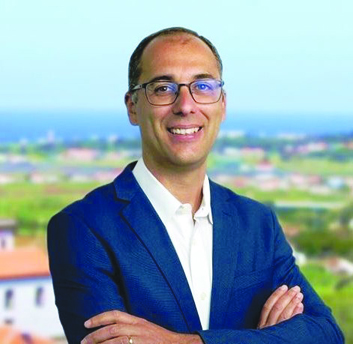
Paulo Sousa, president of the Fontinhas Parish Council since October 2017, describes a rural parish with strong ties to the Serra do Cume and strategic proximity to the cities of Praia da Vitória and Angra do Heroísmo. He acknowledges the challenges of an aging population and lack of housing, while valuing the hard-working community and local cultural traditions. In addition, he highlights the importance of the port of Praia da Vitória as an essential hub for the region’s economic development, advocating its enhancement to ensure greater predictability in the transport of goods and boost growth on the island of Terceira. With the primary sector as the economic engine and a clear commitment to sustainable development, Paulo Sousa remains committed to strengthening infrastructure and services, especially for seniors, promoting quality of life and social cohesion in Fontinhas.
Correio dos Açores – What is your experience as President of the Fontinhas Parish Council?
Paulo Sousa (President of the Fontinhas Parish Council) – I have been President of the Fontinhas Parish Council since October 2017, and I consider it to have been a deeply enriching experience. This is a mission that brings me very close to the community, which makes it both rewarding and demanding. Over the years, I have had the opportunity to get to know the parish better, listen to its inhabitants, and gain a better understanding of their needs and aspirations. It is a position that requires dedication, responsibility, and the ability to respond to everyday challenges. However, it is also a valuable opportunity to actively contribute to improving the quality of life of our parishioners, promoting solutions to existing problems and driving the development of our land. It has undoubtedly been a great learning experience and an honor to serve the community of Fontinhas.
How would you describe the parish of Fontinhas?
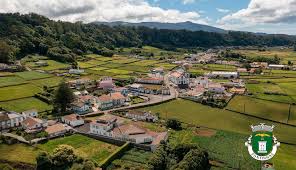
Fontinhas is a predominantly rural parish, one of the few on Terceira Island with no connection to the coast. It stretches out lengthwise, parallel to the Serra do Cume, and its name derives from the numerous small springs that flow from the slopes of the mountains, marking the landscape and local history.
The parish is distinguished by a welcoming, hard-working community with a strong spirit of mutual support. Its rural identity, combined with the tranquility of everyday life and the richness of cultural and religious traditions—kept alive by the commitment of the population—give it a very unique and authentic character.
Fontinhas has great potential, both in terms of its people and its landscape. It has consolidated basic infrastructure, good road access, social and community facilities, and a resilient and participatory population.
Despite the demographic and economic challenges affecting many rural areas, the parish has managed to resist and evolve, investing in the enhancement of its heritage, the preservation of traditions, and the promotion of local associations. The future of Fontinhas will certainly involve continuing to promote proximity, social cohesion, and sustainable development, always with respect for its identity and the values that define it.
What are the main challenges, needs, and difficulties facing the parish?
It is essential to continue to enhance the Fontinhas parish, strengthening communication and coordination with the relevant authorities to ensure that current needs are met, to prepare a better future for our community.
The parish needs new infrastructure, in particular the opening of roads to create conditions for the population to settle, responding to one of the greatest current needs: housing.
Its privileged geographical location and good accessibility are very positive factors, as it is very close to the city of Praia da Vitória, as well as the ease of access to the city of Angra do Heroísmo, making Fontinhas an attractive place to live.
With the progressive aging of the population, it is becoming increasingly urgent to create support services for the elderly, which will enable their needs to be met and, above all, ensure that this age group remains integrated in the parish where they grew up and to which they have contributed so much throughout their lives. Valuing our seniors is also a way of honoring the history and identity of Fontinhas.
At the same time, it is essential to address some critical issues in the parish, which have been highlighted as a result of bad weather. These problems require urgent and effective solutions to ensure the safety and well-being of the population.
What is the most developed sector in the parish of Fontinhas?
The most developed sector in the parish of Fontinhas is traditionally the primary sector, with agriculture and livestock farming being the most important activities. The fertility of the soil has allowed for consistent agricultural activity, which continues to play an important role in the local economy and in the occupation of the territory.
The proximity to two urban centers (Praia da Vitória and Angra do Heroísmo) and the Lajes Air Base has also facilitated the mobility of the population and access to new professional opportunities outside the parish, complementing its economic base.
How has tourism grown in recent years? Has the number of local accommodations increased in Fontinhas? Is housing a problem in the parish?
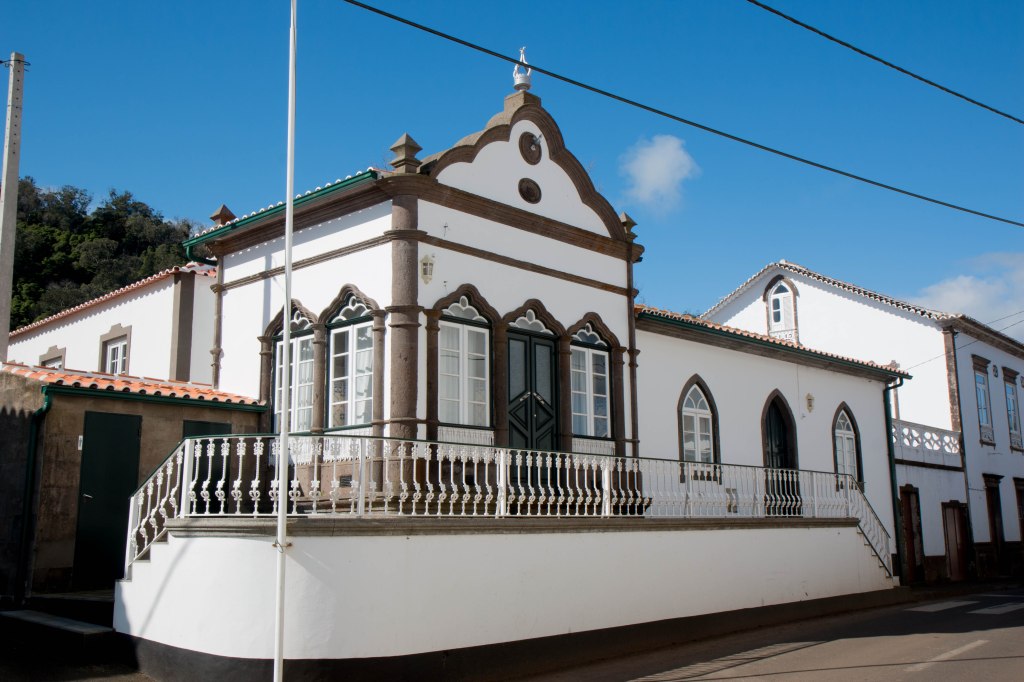
Despite the growth in tourism on Terceira Island, this impact is not significantly felt in the parish of Fontinhas. There are some properties intended for local accommodation, with good occupancy rates, but they are few in number.
The lack of housing is a real problem in the parish, resulting from several factors. On the one hand, there is a shortage of space for the construction of permanent housing, as mentioned above. On the other hand, there are vacant or dilapidated properties that could be renovated and put to use by the community. This situation makes it difficult for new residents, especially young couples, to settle in the area.
Are the funds sufficient to manage the parish throughout the year? Is there a lack of infrastructure?
When there are projects and ideas, the funds are never enough, but the Parish Council has sought to manage its budget rigorously and responsibly, ensuring high implementation rates and responding, within its means, to the needs of the population.
We have been applying for all available support, which has enabled us to fulfill some of the community’s most important wishes. In this context, a new leisure and recreation area is being created, which aims not only to serve the local population but also to contribute to the parish’s tourist appeal.
At the same time, as a result of the acquisition of various equipment over the last few years, it is becoming increasingly necessary for the Parish Council to have its own adequate space for storage and logistics, thus allowing for more efficient management of available resources.
What are the conditions of the municipal roads? And what about the agricultural roads?
In general, the municipal roads in the parish of Fontinhas are in good condition. Still, some sections need to be upgraded, either due to natural wear and tear or as a result of specific situations, such as bad weather, which causes damage to the pavement and ditches.
Agricultural roads are essential for access to farms and to support the primary sector, which is so important in the parish. Although many are in reasonable condition, several sections require urgent intervention, particularly in terms of road surface consolidation, drainage, and vegetation clearance.
The poor condition of some roads hinders the transport of agricultural produce and access to pastures for some machinery.
The Parish Council has sought to highlight these needs to the relevant authorities, collaborating whenever possible with municipal services and the Regional Government to ensure the necessary improvements are made. Some improvements have already been achieved, namely the paving of Canada do Coxo and the upcoming intervention on Canada do Barreiro.
What are the typical dishes in the parish of Fontinhas? Is there a lack of restaurants/cafés?
The parish of Fontinhas shares most of the typical dishes of Terceira Island, perhaps standing out for its Espírito Santo soups, alcatras (pork dishes) and traditional dishes derived from pig slaughter, in particular debulho and morcela. However, it cannot be said that there is a typical dish exclusive to the parish.
Currently, there is a significant lack of restaurants, as there are no establishments in operation in the parish. As for cafés, despite their decline in number in recent years, the parish has an adequate response to local needs, mainly through the bar of the Sociedade Musical União das Fontinhas, located in the central area of the parish.
What are the conditions of public air, sea, and road transport?
The parish of Fontinhas is only directly served by road transport, which, however, has significant limitations in terms of both the geographical coverage of the parish and available timetables. Currently, it is users who adapt to the existing offer, and not the other way around. I therefore consider that there is a deficit in terms of school, professional, and personal transport. Concerning air and sea transport, I think that the models currently in place need to be thoroughly reviewed to ensure a serious, equitable, and consistent response to the needs and aspirations of the Azoreans. The concentration of most flights and aircraft at São Miguel airport has caused constraints at that airport, such as recurring delays, while other airports in the region, including Terceira, remain underutilized.
Concerning maritime transport, it is urgent to give due importance to the port of Praia da Vitória, making it a dynamic hub not only for Terceira Island but for the Azores in general. Its enhancement would ensure greater predictability in the transport of goods, something that has been the subject of much criticism from our traders.
What are the conditions of the schools in the parish? Are there any specific activities or support for local youth?
The parish of Fontinhas currently has a primary school that caters for around 140 children. It is a very popular school, sought after by parents, and is one of the institutions with the highest number of students in this age group in the municipality of Praia da Vitória.
As for the school building, although it is relatively new, it has some shortcomings and structural flaws, which the City Council has sought to resolve through some interventions.
One of the school’s great strengths is its stable teaching staff, which has remained consistent over time, ensuring high-quality teaching and satisfactory results for parents. Additionally, the school offers a nursery and an after-school program, making Fontinhas a very attractive place for families, as it provides adequate responses to their educational and support needs.
Filipe Torres is a journalist for Correio dos Açores, under the direction of Natalino Viveiros.
Translated to English as a community outreach program from the Portuguese Beyond Borders Institute (PBBI) and the Modern and Classical Languages and Literatures Department (MCLL) as part of Bruma Publication and ADMA (Azores-Diaspora Media Alliance) at California State University, Fresno, PBBI thanks Luso Financial for sponsoring NOVIDADES.

 Novidades - The Islands and the Diaspora