

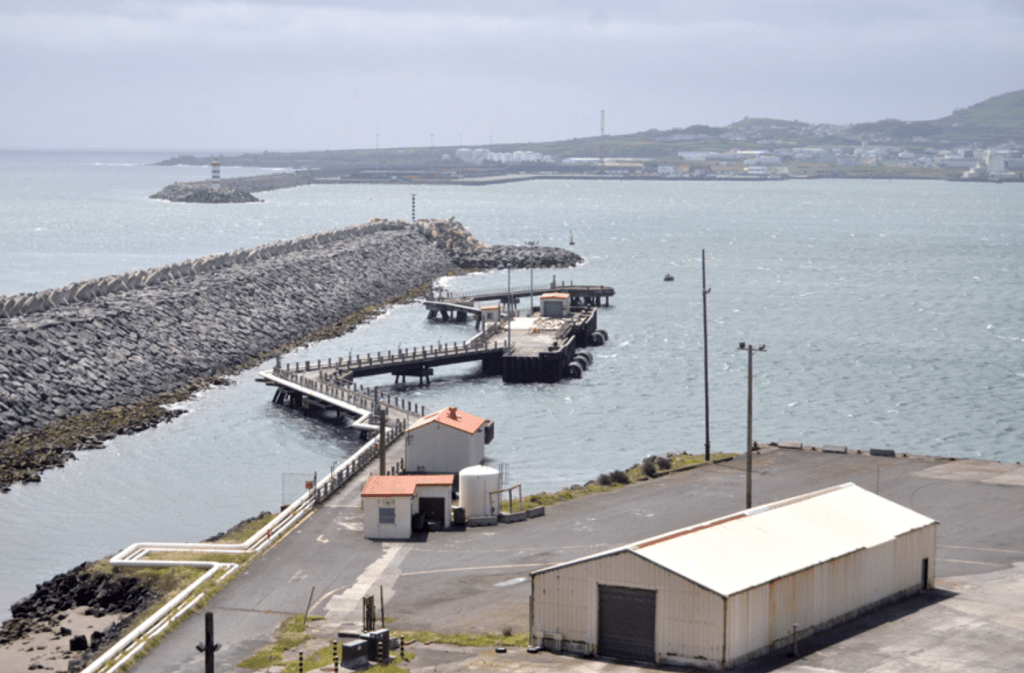
The Port of Praia da Vitória, on Terceira Island, will gain new port infrastructure with the construction of an extension to the Multipurpose Quay, a project promoted by Portos dos Açores S.A. and contracted to Consulmar.
The project, currently in the execution phase, is subject to an Environmental Impact Assessment (EIA) procedure by current legislation.
The Regional Directorate for the Environment and Climate Action is managing the procedures, making the project’s Environmental Impact Study available for public consultation for 30 working days from July 30 to September 10, 2025, inclusive.
The work arises from the need to respond to the increase in maritime traffic and the growing size of ships arriving in Praia da Vitória Bay. It provides for the extension of the current quay by 12 meters (ZH) in length and approximately 20 meters in width, with operating depths of up to -18 meters, which will allow cruise ships, container ships, and other large vessels to dock.
The future port structure will be prominent, allowing simultaneous operations on both sides: the west side, designed for large ships, and the east side, intended for tugboats and auxiliary vessels. The work also includes the implementation of energy, water, data, and fuel supply networks, as well as firefighting systems, providing the quay with all the infrastructure necessary for modern and autonomous operation.
Portos dos Açores aims for this intervention, in addition to enhancing the port’s operational efficiency, to contribute to greater logistical flexibility and the attraction of new commercial and tourist routes.
The Environmental Impact Assessment (EIA) identified the so-called “Solution 3A” as the most viable solution, which combines a box-shaped quay structure with a partial embankment, ensuring a useful width of around 30 meters, sufficient for the movement of mobile cranes and heavy vehicles. This solution was chosen based on technical feasibility, estimated costs (approximately €20 million), and the potential for future expansion of the embankment, which would create conditions for container parking and more intensive logistics operations. This phased approach allows the work to be adapted to financial availability and the progressive growth of port demand.
The extension of the quay also improves the shelter of the port basin. Currently, the existing structure is vulnerable to sea swells and storm surges during adverse weather conditions. To mitigate these risks, the curtain wall of the south breakwater will be raised to a height of +11 meters (ZH), which will significantly reduce storm surges and protect the new operating areas.
The hydrodynamic study showed that extending the wall is the most effective solution to ensure the safety of infrastructure and equipment, such as cranes and vehicles, that will operate in the new areas of the port.
The work is subject to a set of environmental constraints, including the need for dredging to deepen the turning basin, which may have potential impacts on sediments and water quality. The port area is classified as a “heavily modified water area,” and an environmental monitoring plan is in place to track the evolution of water quality, marine biodiversity, and waste production.
The Environmental Management Plan for the Works (PGAO), which is part of the project, defines a set of mandatory mitigation measures, as well as clear responsibilities for the contractor, supervisor, and owner of the works, from the planning stage to demobilization.
The Assessment Committee, coordinated by the Regional Directorate for the Environment and Climate Action, provided a favorable opinion on the new version of the EIA, validating the adjustments made following the initial analysis and emphasizing the need for archaeological monitoring during the works, given the area’s potential for underwater finds.
The EIA’s declaration of conformity now enables the next phase of licensing and contract execution to proceed.
The construction of the new Multipurpose Pier in Praia da Vitória represents a strategic step towards strengthening Terceira’s role in the Azores port system, responding to the challenges of modern maritime transport, boosting cruise tourism, and increasing the capacity for goods handling. It is an infrastructure designed for the future, which could play a crucial role in the island’s and regional economy.
In Diário dos Açores-Paulo Viveiros, director
Translated to English as a community outreach program from the Portuguese Beyond Borders Institute (PBBI) and the Modern and Classical Languages and Literatures Department (MCLL) as part of Bruma Publication and ADMA (Azores-Diaspora Media Alliance) at California State University, Fresno, PBBI thanks Luso Financial for sponsoring NOVIDADES.
 Novidades - The Islands and the Diaspora