

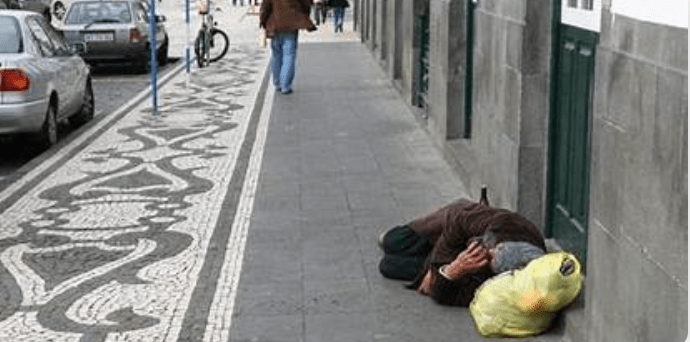
In 2023, the Azores recorded 386 homeless people, two-thirds of whom lived on the island of São Miguel (66.3%). Most are men, aged between 30 and 59, with low levels of education and a history of substance abuse. The data is part of a technical study that forms the basis for the new regional plan for the sector. PRIPSSA 2025-2030 was presented yesterday at the Public Library and Archives in Ponta Delgada.
The Azores had 386 homeless people in 2023, of whom 235 were homeless—that is, living in temporary accommodation centers or transitional structures—and 151 were sleeping rough, sleeping in public spaces or precarious locations. The data was revealed yesterday at the Ponta Delgada Public Library and Archive, during the presentation of the First Regional Plan for the Inclusion of Homeless People (PRIPSSA) 2025-2030.
The distribution by island reveals a marked concentration in São Miguel, with 66.3% of cases, followed by Terceira with 20.2%, Pico with 6%, Faial with 3.9%, Santa Maria, São Jorge, and Flores with 1%, Graciosa with 0.5%, and no data for Corvo.
The majority of this population is male (78%), with more than 70% aged between 30 and 59, 25 to 29 years old, with 7.6%; 30 to 39 years old – 23.3%; 40 to 49 years old – 26.2%; 50 to 59 years old – 24.6%. Only 6.5% are under 25, and 11.9% are elderly people aged 60 or over.
In terms of education, 4% of homeless people cannot read or write, 9.5% have not completed primary school, 31.1% have only completed primary school, 26.8% have completed secondary school, and 17.5% have completed tertiary education. Only 11% have qualifications beyond basic education – 9.5% have secondary or vocational education, and only 1.5% have higher education.
The use of psychoactive substances or alcohol affects 78.5% of these people, with 48.9% using illicit substances and 19.9% drinking alcohol. The main factors identified as causing homelessness include substance abuse, family breakdown, and, to a lesser extent, a history of imprisonment. Most have lost family ties: 62% have no contact with family members.
The sociodemographic profile of this population reveals a majority of men (78%), predominantly aged between 30 and 59 (over 70%). Only 6.5% are under 25, and 11.9% are elderly people aged 60 or over. The level of education is mostly low: 4% cannot read or write, 9.5% have not completed primary school, 31.1% have only completed primary school, 26.8% have completed secondary school, and 17.5% have completed upper secondary school. Only 11% have qualifications beyond basic education – 9.5% have secondary or vocational education, and only 1.5% have higher education.
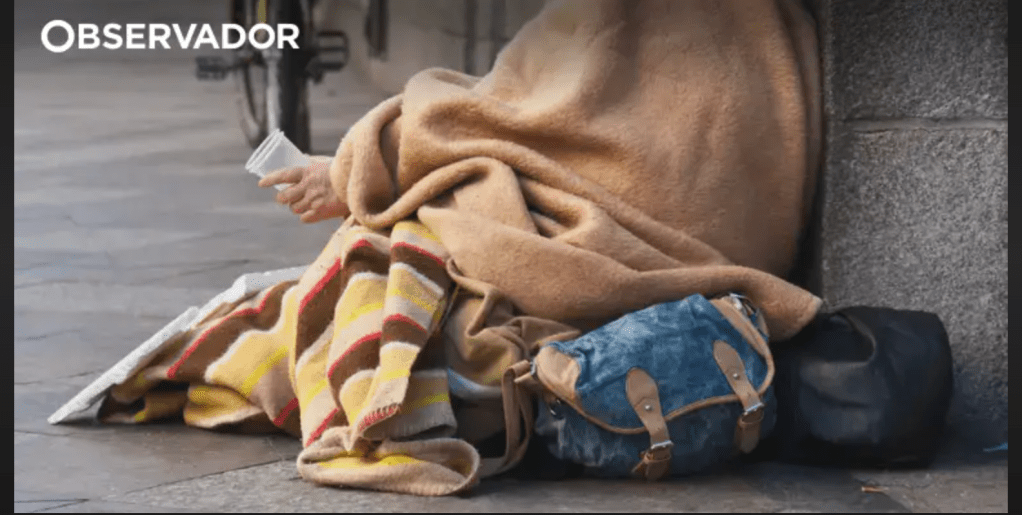
According to the study, the origins and persistence of homelessness are also linked to psychoactive substance use (43.8%), alcohol abuse (42.2%), and a history of imprisonment (7.8%), among other factors.
In terms of family background, 63% report unfavorable childhood and youth experiences, with reports of early entry into the labor market (38.1%), illegal emigration at an early age (31.7%), dysfunctional families (28.6%), death of a parent (25.4%), domestic violence (19%), unhappy childhood (19%), among others. Most have cut family ties: 62% have no relationship with family members, and only 30% say they maintain them.
The Regional Government supports social institutions working with the homeless with €3.3 million annually, benefiting 12 institutions and 361 beneficiaries on five islands – São Miguel (€2.3 million), Terceira (€640,000), São Jorge (€47,000), Pico (€83,000,) and Faial (€165,000).
Study reveals that 386 people were homeless in the Azores in 2023, and most live without any family contact.
It is in this context that PRIPSSA was developed, based on the technical study by Norma-Açores, presented by Pedro Santos, which involved fieldwork, consultation with regional entities, analysis of socioeconomic data, and technical review by various government departments.
The plan is aligned with the National Strategy for the Integration of Homeless People (ENIPSSA) and with European guidelines, namely the 2021 Lisbon Declaration, which reinforces the principle that no one should be left on the streets due to a lack of alternatives.
The plan’s mission is to mobilize public entities, private social solidarity institutions, local authorities, companies, the community, and the users themselves in a concerted and sustainable response. PRIPSSA’s vision is based on dignifying people, with an approach focused on their specific needs, aiming to reduce the number of homeless people, both those without a home and those without shelter, and to increase opportunities for social inclusion and the exercise of full citizenship.
Presented by Marta Gonçalves, coordinator of the technical group, the plan is structured around five strategic axes: intervention and prevention of risk situations and resource management; accommodation and housing; monitoring and rehabilitation; social integration; and knowledge, communication, and social participation.
In the area of intervention and prevention, there are plans to consolidate methodologies, such as the creation of a regional digital platform, where users can register and be monitored. Case managers will be appointed to work closely with users, and the NPISA (Intervention and Prevention Centers for Homeless People) will be promoted as inter-institutional structures providing local support. In terms of accommodation and housing, emergency and transitional accommodation centers will be reinforced, supported living units will be created, and innovative approaches such as “Housing First” will be implemented.
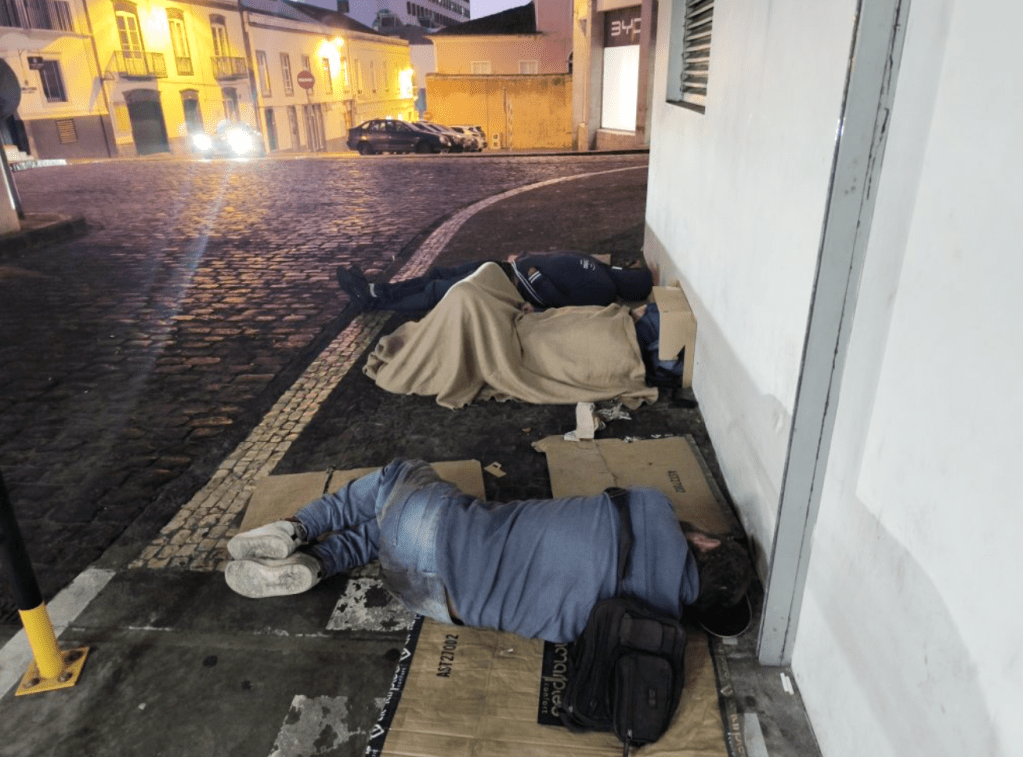
Street teams provided support to 176 people in 2024
In terms of monitoring and rehabilitation, PRIPSSA is committed to strengthening street teams and community health teams. In 2024, the two existing teams in São Miguel provided support to 176 people, with 236 mental health consultations and 156 infectious disease consultations. Of these, 79 had sexually transmitted diseases and 114 had a diagnosis that required regular psychiatric follow-up. These teams are set to be reinforced, including more qualified professionals who are trained to intervene in complex situations.
In terms of social integration, the plan provides for occupational workshops adapted to each person’s level of rehabilitation, vocational profiling, and coordination with employment services and social labor market measures. It also includes figures such as professional mentors and entrepreneurship programs. Finally, in the area of knowledge and communication, PRIPSSA aims to combat stigma, promote annual reports, adjust measures in real time, and involve society through awareness campaigns and the production of up-to-date knowledge.
During the presentation, the Regional Secretary for Health and Social Security, Mónica Seidi, stressed that “rather than throwing money at the problem, we need to reorganize services and improve coordination to avoid duplication of responses,” and emphasized that “we have a problem that is not the same as it was five or ten years ago and that will become increasingly difficult to solve.” The Regional Government supports these institutions with €3.3 million annually.
For the Regional Secretary, the phenomenon of homelessness in the Azores is strongly linked to addiction and mental health, realities that have been exacerbated by new psychoactive substances. Nevertheless, she made it clear that “the Regional Government is aware of the problem it faces, but that it should not fall solely on the Government. There is a shared responsibility for all: government, local authorities, institutions, the private sector, and the community.“ She also stated that ”prevention is key.”
Marta Gonçalves, coordinator of the technical group responsible for drawing up the plan, also reinforced the importance of a response on the ground, stating that “the plan is based on the territorialization of responses and the revitalization of local authorities,” citing the existing NPISA in Ponta Delgada as an example. She acknowledged, however, that “there are still no similar structures in other municipalities” and that implementation will be gradual but essential to ensure proximity and effectiveness. Regarding the regional registration and monitoring platform, she clarified that “it is ultimately a shared management tool that allows data to be extracted, cases to be monitored, and measures to be adjusted in a fairer and more effective way.”
The full version of the plan has entered a 30-day public consultation phase. After gathering contributions and making any adjustments, it will be submitted to the Government Council for approval. Some measures are already in place, such as case managers and street teams. Others will be implemented in phases, respecting the response capacity of the institutions involved and the need to assess the impact of each action on the ground.
Above all, PRIPSSA aims to break the cycle of exclusion, prevent new situations of risk, and ensure that no one is left behind.
Filipe Torres is a journalist for the newspaper Correio dos Açores-Natalino Viveiros is the director.
Translated to English as a community outreach program from the Portuguese Beyond Borders Institute (PBBI) and the Modern and Classical Languages and Literatures Department (MCLL) as part of Bruma Publication and ADMA (Azores-Diaspora Media Alliance) at California State University, Fresno, PBBI thanks Luso Financial for sponsoring NOVIDADES.

 Novidades - The Islands and the Diaspora