

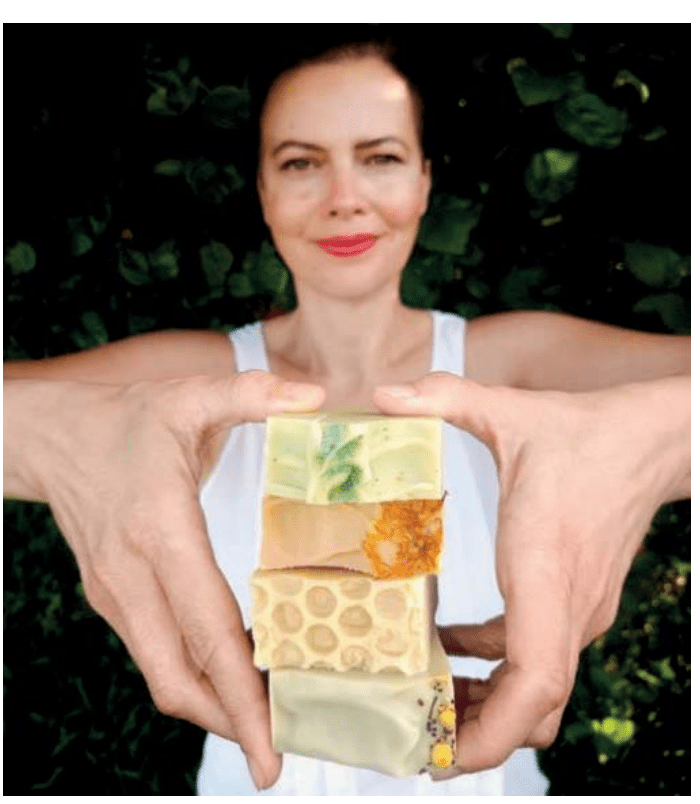
What led you to create the natural cosmetics brand “Shizen”?
I have always been very concerned about what we put on our skin. The truth is that the skin is the largest organ in the human body and absorbs many of the ingredients it comes into contact with. With a degree in Biochemistry, I began to investigate the composition of conventional cosmetics and came across substances such as phthalates, parabens, and other synthetic ingredients. These have potential cumulative effects on the body. This sparked a concern in me. I started making my own hygiene and cosmetic products to ensure that I know exactly what I am using on my skin. From there, a passion was born: to study, formulate, and test based on natural and local ingredients. The creation of Shizen was a natural step—an extension of that personal care and desire to share safe, effective, and nature-aligned alternatives with others.
What ingredients did you find on Graciosa Island with cosmetic properties?
Believing that “our skin also eats,” I looked for local, pure ingredients that I identified with and that reflected the spirit of the island. I started with honey from Graciosa, which is one of the few places in the world where there are no bee diseases, namely varroa—a very rich product with moisturizing, healing, and nourishing properties. Then I discovered locally produced spirulina, a superfood that is also an excellent antioxidant and skin regenerator. I also use safflower (Carthamustinctorius), a plant traditionally used in our cuisine, especially in the famous fisherman’s sauce, which also has soothing and anti-inflammatory properties for the skin. More recently, I started including aloe vera from the arborescens species, which I grow organically myself. And the next soap to be launched will be an exfoliating soap with coffee grown on the island of Graciosa.
These are simple, effective ingredients with a direct link to our territory. Why did you choose the name “Shizen”?
‘Shizen’ means “nature” in Japanese. I chose this name because it is short, sonorous, and because it perfectly translates the brand’s philosophy: to return to the essentials, to use what nature offers us with respect, wisdom, and balance. Japanese culture inspires me because of its connection to simplicity, detail, and harmony—values that I also try to apply to my products. Each Shizen soap is handmade in small batches, with attention to ingredients, textures, and environmental impact—after all, Graciosa Island is a Biosphere Reserve.
How have consumers responded? Is this type of product increasingly in demand?
The response has been very positive, which makes me deeply grateful. I have received messages and feedback from people who identify with the brand’s values and really feel the difference on their skin. Many are looking for more natural, sustainable, and conscious alternatives—and they find that answer in Shizen. I believe there is a clear change in the way people choose their hygiene and cosmetic products—they want to know what they are using, where it comes from, how it is made, and for what purpose. That’s why I feel that this type of product is increasingly in demand, not only among residents but also among tourists and emigrants who value what is made locally. Consumers associate the Azores with authenticity, greenery, and fresh air, and this gives enormous strength to any local brand that respects these values. In my case, I make a point of showing that the ingredients are grown or harvested here, and that the entire process is done in a traditional and conscious way. What is made in the Azores, with products from the Azores, carries a unique identity.
Do you feel that the name Azores is already associated with nature-related products?
Yes, increasingly so. The Azores are recognized for their natural landscape, biodiversity, and sustainable way of life. And it is natural that this image also extends to products. Consumers associate the Azores with authenticity, greenery, and fresh air, and this gives enormous strength to any local brand that respects these values. In my case, I make a point of showing that the ingredients are grown or harvested here, and that the entire process is done by hand and with care.
What is made in the Azores, with products from the Azores, carries a unique identity. Has insularity been a challenge in developing this brand?
Without a doubt. Insularity brings challenges, particularly logistical ones, that are not always visible to outsiders—from sourcing natural raw materials, such as butters and vegetable oils that I cannot obtain locally, to transportation limitations and shipping costs. Everything takes more time, more energy, and more persistence. But at the same time, it is this insularity that inspires me. Graciosa is the heart of Shizen. This is where authenticity comes from, the contact with the land, the appreciation of what is made with time and soul. So even with challenges, I continue to believe deeply in this path.
AE/DI–Atlântico Expresso/Diário Insular
Translated to English as a community outreach program from the Portuguese Beyond Borders Institute (PBBI) and the Modern and Classical Languages and Literatures Department (MCLL) as part of Bruma Publication and ADMA (Azores-Diaspora Media Alliance) at California State University, Fresno, PBBI thanks Luso Financial for sponsoring NOVIDADES.

 Novidades - The Islands and the Diaspora