

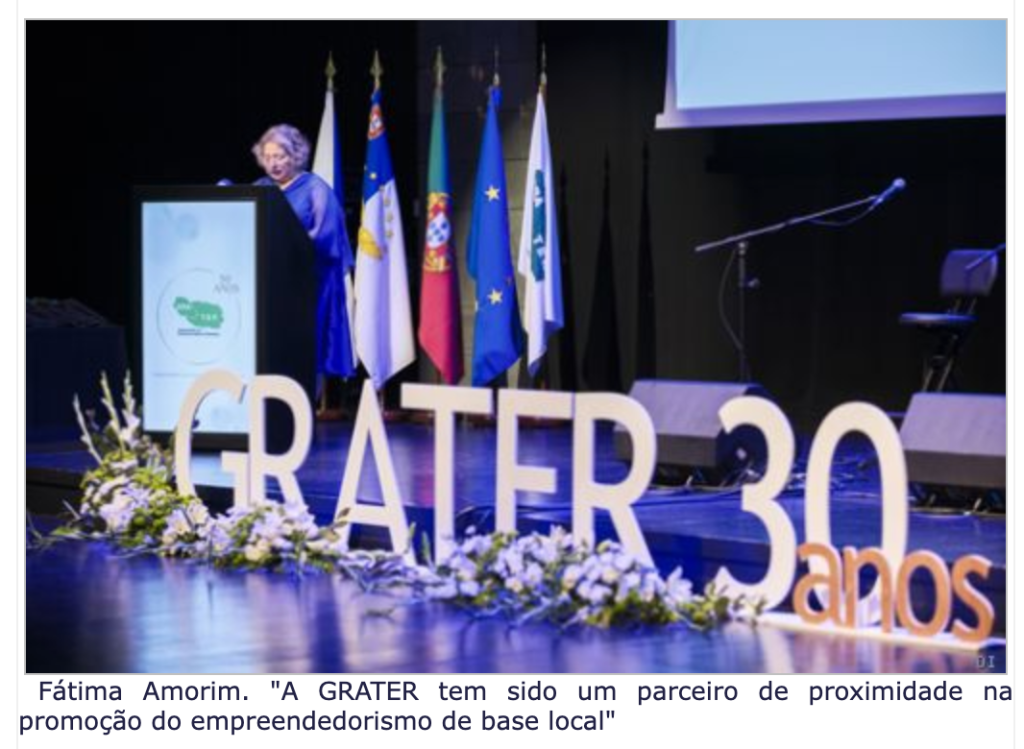
GRATER celebrated its 30th anniversary, with more than 750 projects approved and an investment of over €27 million. What are some notable examples of the work carried out over these three decades?
Over the past three decades, GRATER has had the opportunity to support transformative projects that have had a positive impact on local development and the quality of life of the population. I would highlight, for example, the redevelopment of Baía do Refugo, which used to be an open-air dump and is now a popular beach resort on Terceira Island. This is a clear symbol of the capacity for regeneration and environmental enhancement with a direct impact on people’s lives. Another example is the restaurant “Caneta – do Prado ao Prato,” which promotes local production and values our gastronomy, linking the territory to the cultural identity of the region. The project “Persistir e Singrar no Mundo das Flores” (Persist and Succeed in the World of Flowers) boosted floriculture in Terceira and paved the way for its promotion in new markets. Also in the field of heritage, we highlight the creation of a workshop for the conservation and restoration of works of art, essential for the preservation of our historical legacy, and the “Azulart” project, focused on artistic ceramics. In the social area, we highlight the Casa de Acolhimento do Idoso (Elderly Care Home) in Ramo Grande, with the construction of one-bedroom apartments that complement the senior housing response. In terms of creative industries, support was given to the creation of an audiovisual studio in the parish of Cabo da Praia, with the acquisition of equipment that gave rise to the current VITEC, now a regional reference. Other important examples include the São Pedro Veterinary Clinic, which has improved access to care for domestic animals, and the opening of an optician’s on the island of Graciosa, filling an essential need for the population. Many other projects have contributed to the revitalization of inland areas, the enhancement of built heritage, the strengthening of agri-food production, and the development of cultural and social initiatives that strengthen the identity of communities. But during these 30 years, we have developed several projects in partnership with other LAGs in the Azores, on the mainland, in Europe, and even outside Europe, creating networks, sharing good practices, and leaving a lasting impact on communities. Among these, initiatives such as Inter Vitis, Qualifying Active Tourism, Environmental Footprint, Playing to Learn, Cultivating & Cooperating, Living Heritage, and Short Marketing Circuits stand out.I am particularly proud of the Craft & Art project, which brought together the territories of Macaronesia to promote crafts as an economic activity with its own identity, promoting training, creative residencies, and innovation without losing authenticity.
Is GRATER also a lever for local entrepreneurship?
Without a doubt. GRATER has been a close partner in promoting local entrepreneurship. Over the years, we have supported the launch of numerous businesses in the areas of tourism, agriculture/processing/marketing, crafts, and the social economy. Our work is not limited to financial support: we also offer technical assistance, strategic guidance, and constant support. It is often this support that transforms a good idea into a solid and sustainable project.
What has been your work in the field of the sea and fishing communities?
The sea is a vital part of our identity and economy. We have supported projects that improve the working conditions of fishing professionals, promote the value of local fish, and encourage sustainable practices. We also support diversification of activity, with projects linked to maritime tourism, seafood processing, and environmental education. Close ties with fishing communities have been essential in ensuring that support reaches where it is really needed and makes a difference.
The regional secretary for agriculture mentioned possible 20% cuts in local development funding. Is this something that concerns you?
Yes, it is a scenario that concerns us. Over the years, GRATER has built up a highly qualified technical team with in-depth knowledge of the territory and its specific characteristics. This team is the cornerstone of our work: it accompanies promoters from the initial idea to the implementation and completion of projects, ensuring not only rigorous management of funds but also that investments are tailored to local needs. A 20% cut in funding would have a direct impact on our ability to maintain this technical structure, jeopardizing the quality of the support provided and, consequently, the success of the projects supported. More than numbers, we are talking about people, accumulated knowledge, and proximity to communities—elements that are essential to ensuring the sustainable and cohesive development of territories.
At a time when much of Europe’s attention is focused on defense, how can local development associations assert their relevance? Do you agree with the idea that we need to “go beyond the numbers,” as Márcia Mendes, president of A2S, said at GRATER’s 30th anniversary gala?
We totally agree. Real development goes far beyond economic indicators. Investing in local development means investing in human security, social cohesion, and the vitality of territories. Associations such as GRATER play an irreplaceable role in promoting more resilient, participatory, and inclusive communities. The defense of Europe is also built on the territories: spaces that offer quality of life, opportunities, and a strong sense of belonging. Going beyond the numbers means recognizing that each project supported is a concrete contribution to a more just, cohesive, and future-oriented society, because we work with people, with territories, and with real results.
In Diário Insular, José Lourenço-director
Translated to English as a community outreach program from the Portuguese Beyond Borders Institute (PBBI) and the Modern and Classical Languages and Literatures Department (MCLL) as part of Bruma Publication and ADMA (Azores-Diaspora Media Alliance) at California State University, Fresno, PBBI thanks Luso Financial for sponsoring NOVIDADES.

 Novidades - The Islands and the Diaspora