

On December 24, 2024, on the eve of the anniversary of the birth of the baby Jesus in Bethlehem, a new regional regulatory decree was issued for the support system for cultural agents in our region. Some people innocently believed that the date of publication was a mere coincidence, but some immediately predicted that it would turn out to be a big Christmas turkey. The most optimistic still waited for the arrival of the Messiah reincarnated in that document to save an archipelago of peaceful and shipwrecked island artists.
The truth is that the new proposal does contain some interesting reforms, given the state of decay that had been reached. After all, it is a region full of artists who have historically made their mark on the national and often international scene. Still, the stage had long been almost empty, filled only by those who could afford to pay out of their own pockets to survive.
This situation was exacerbated by incomprehensible regulations, excessive bureaucracy, and a panoply of unexplained criteria, supported by anachronistic ways of acting and juries selected based on sympathy, without any justification of merit or sense. All this was deeply aggravated by the lack of qualified managers within the department to handle this type of process, and compounded by consecutive delays worthy of an Olympic record, which from 2020 onwards have been extended even further, to the point where one year’s support was paid in January of the following year.
In the corridors of the Silveira e Paulo Palace, it is said that professionals in the sector continue to breathe anxiously, whispering words of scorn and disappointment at the glaring lack of strategy shown by the long list of directors who have recently sat there.
No matter how many ceremonies and announcements the ladies in charge make, those who try to work there know how hard it is to lift a stone that will never reach the top of a mountain that only knows how to give birth to rats. Every year, religious and cultural agents gather in pilgrimage to the newspapers to announce yet another problem and one less solution.
When attempts were made to hold general meetings to pretend that people were being listened to, there were islands where there was not even internet access to receive them. Even in São Miguel, where the management and secretariat gathered on the same day to show the importance of centralism, there were more doubts than certainties about what would come in the new regulations. And when they were released, nothing changed on that December 24, 2024.
Of course, change does not happen overnight. I understand that no one is born knowing everything. However, this executive is the same one who never excused a mistake made by its predecessors. Worse than that, it has been there long enough to know better. So, a new regulation is prepared without everything being ready for implementation? And when such a flaw is corrected, the result is the launch of a platform that still requires the fax number to be included in the entity’s profile? The lack of a future is evident. The lack of vision is desperate.
And the overly qualified technicians and engineers in a mansion, burning with the frustration of those who would like to do something if they were allowed to, are in despair. Let us not forget that this problem is exacerbated by the new organizational structure, designed to elevate the regional director, but which in the end seems to have only served to change the name and confuse people even more. A quick look at the Regional Directorate for Culture’s website, which is already a museum piece with more flaws than qualities, shows that we now have a Directorate for Cultural Development Services, which is responsible for cultural promotion, and a Cultural Promotion Division, which is responsible for immovable heritage. What’s going on? This isn’t silly season, nor is it a consequence of the Praia da Vitória festivities. That’s how it is. A house without a front door, a boat without a rudder, and a car with a broken engine.
But let’s get back to the support system for cultural activities. In fact, the current law sought to prevent several of the previous problems by establishing criteria and renewed methodologies to try to combine the implementation of projects with their proper evaluation and monitoring. I acknowledge all these merits, if only because I also recognize some points inspired by a proposal that I once took to our Regional Parliament. That’s fine. What interests me is public service.
However, here we are in the first week of August, the time for new applications and the administrative work of cultural agents to begin. On August 1, the Government announced the progressive platform that still talks about the fax machine. It held a ceremony, inviting only those it wanted, or those who knew they would flatter rather than impartially analyze the issue. During the last eight months, it has not held a single public session to clarify the new law, as far as we know. We have a Secretariat that mixes Culture with Education, but it doesn’t even know how to teach! This will always be the legacy of the secretary. All smoke and mirrors. Lots of press releases, few conditions to work. Even the teachers are finally realizing this.
We can guess how this new cycle of cultural support will end. Against poorly managed services, incomprehensible bureaucracy, and decrees that in practice have only served to keep everything the same, the murder of our culture will continue, sponsored by the government least interested in cultural policy in the history of Portugal. Will only those who buy fax machines be supported? What is the point of regulations if people do not know how to apply them? It’s a real 360-degree turn! A Christmas turkey, served cold and without accompaniments, once again relegates an entire professional class to a pit that seems to have no bottom.
No promotion, no cultural development. A symptom of a prolonged illness in the region, which is now in palliative care. As the president would say these days, we’re used to it. Aren’t we?
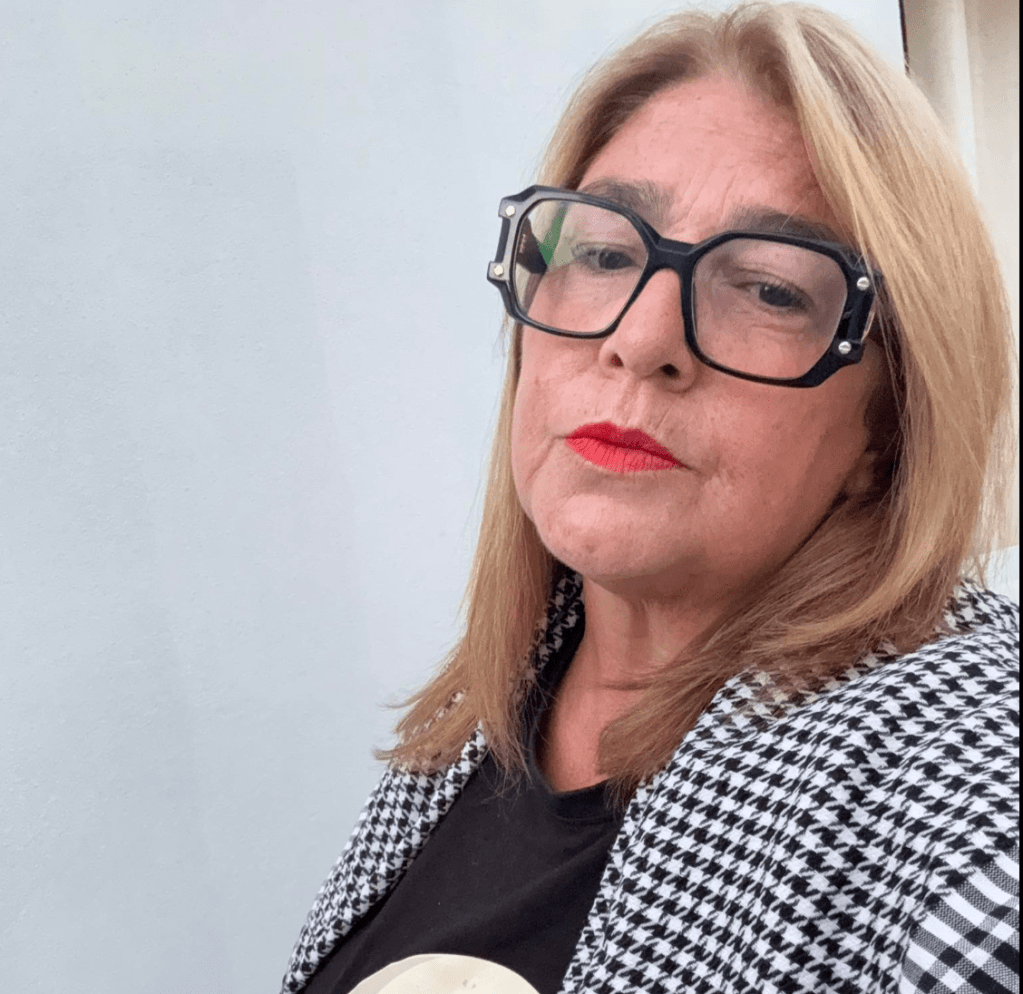
Alexandra Manes is from Flores Island but lives on the island of Terceira in the Azores. She is a regular contributing writer for several Azorean newspapers, a political and cultural activist, and has served in the Azorean Parliament.
NOVIDADES will feature occasional opinion pieces from various leading thinkers and writers in the Azores, providing the diaspora and those interested in the current state of the Azores with insight into the diverse opinions on some of the archipelago’s key issues.
Translated to English as a community outreach program from the Portuguese Beyond Borders Institute (PBBI) and the Modern and Classical Languages and Literatures Department (MCLL).
 Novidades - The Islands and the Diaspora