


Juntos Pelo Povo (JPP – Together for the People), a new political entity in Portugal, presented a draft resolution to the Assembly of the Republic that aims to create a Mission Structure to study the additional costs of insularity. How much extra does it cost to live on the islands of the Azores and Madeira?
According to the proposal, this would involve setting up a “technical and scientific Task Force, composed of representatives from the Autonomous Regions, the Government of the Republic, and the academic sector, to carry out a comprehensive, comparative, and verified scientific study on ‘How much does it cost to live on the islands?’, compared to residents on the mainland.”
The party believes that “the development and completion of this political project is the only way to bring truth and realism to future decisions that the Portuguese State may take in relation to the Autonomous Regions of Madeira and the Azores.”
In the national legislative elections in May this year, the JPP elected a member of the national parliament for the first time, from the constituency of Madeira. JPP MP Filipe Sousa now argues in the proposal that the task force, to be set up under the supervision of the Assembly of the Republic, should include representatives of all parties with seats in parliament, the governments of the Republic and the Regional Governments of Madeira and the Azores, and “experts and individuals from academia and science with experience in regional economics, public finance, and territorial cohesion.”
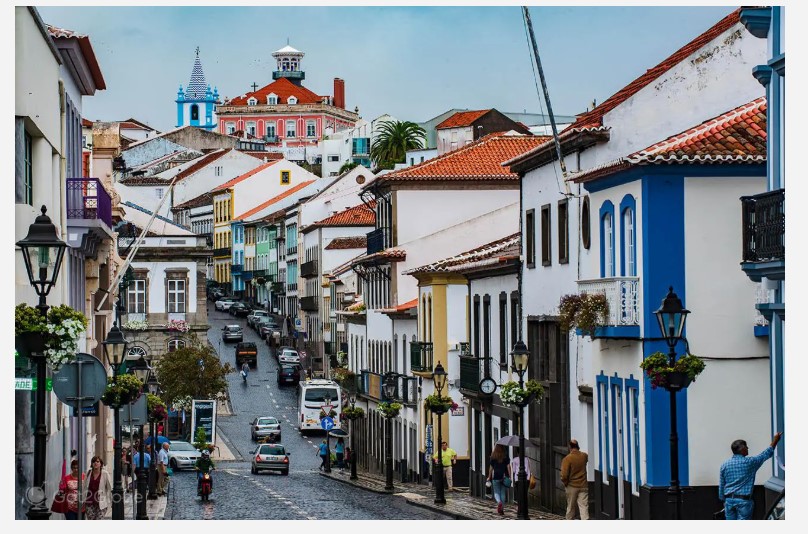
According to the JPP, “the ultimate goal will be to draw up a national framework document to serve as a reference for defining public funding from the State to the Autonomous Regions.” Several decades have passed since an analysis of this nature was last carried out. JPP wants to compare the cost of health, education, transport, housing, construction, food, and other essential goods, as well as the real differences with the mainland in terms of taxation and wages.
Another object of analysis will be the “impacts of these differences on family budgets, public policies, and the quality of life of island citizens.”
“Only with objective data is it possible to demand fair policies. Only with serious figures is it possible to dismantle centralist discourse and put an end to the narrative that the islands live on subsidies. What is lacking is not assistance—it is justice,” argues the party.

Last month, Prime Minister Luís Montenegro said there was openness to a review of the Regional Finance Law, but with “shared responsibility.”
“We want the new Regional Finance Law to provide more predictability and greater sustainability for regional finances, so that there can be shared responsibility between the Government of the Republic and the autonomous regions, but also between the autonomous regions and their financial management,” he said at the time in an interview with RTP.
Montenegro said that the matter will be discussed by the three governments in September. “We have been working with the PSD/Azores and the PSD/Madeira for some time from a party perspective, and now we are also going to start this dialogue from a government perspective. My expectation is that, in September, we will have the presidents of the regional governments of Madeira and the Azores in Lisbon, at a meeting of the Council of Ministers, precisely to deal with some issues that have to do with the autonomous regions, at the forefront of which will be the Regional Finance Law,” he specified.
In Correio dos Açores, Natalino Viveiros, director, and Diário Insular, José Lourenço, director.
Photos from DI and https://www.got2globe.com/en/
Translated to English as a community outreach program from the Portuguese Beyond Borders Institute (PBBI) and the Modern and Classical Languages and Literatures Department (MCLL) as part of Bruma Publication and ADMA (Azores-Diaspora Media Alliance) at California State University, Fresno, PBBI thanks Luso Financial for sponsoring NOVIDADES.


 Novidades - The Islands and the Diaspora