

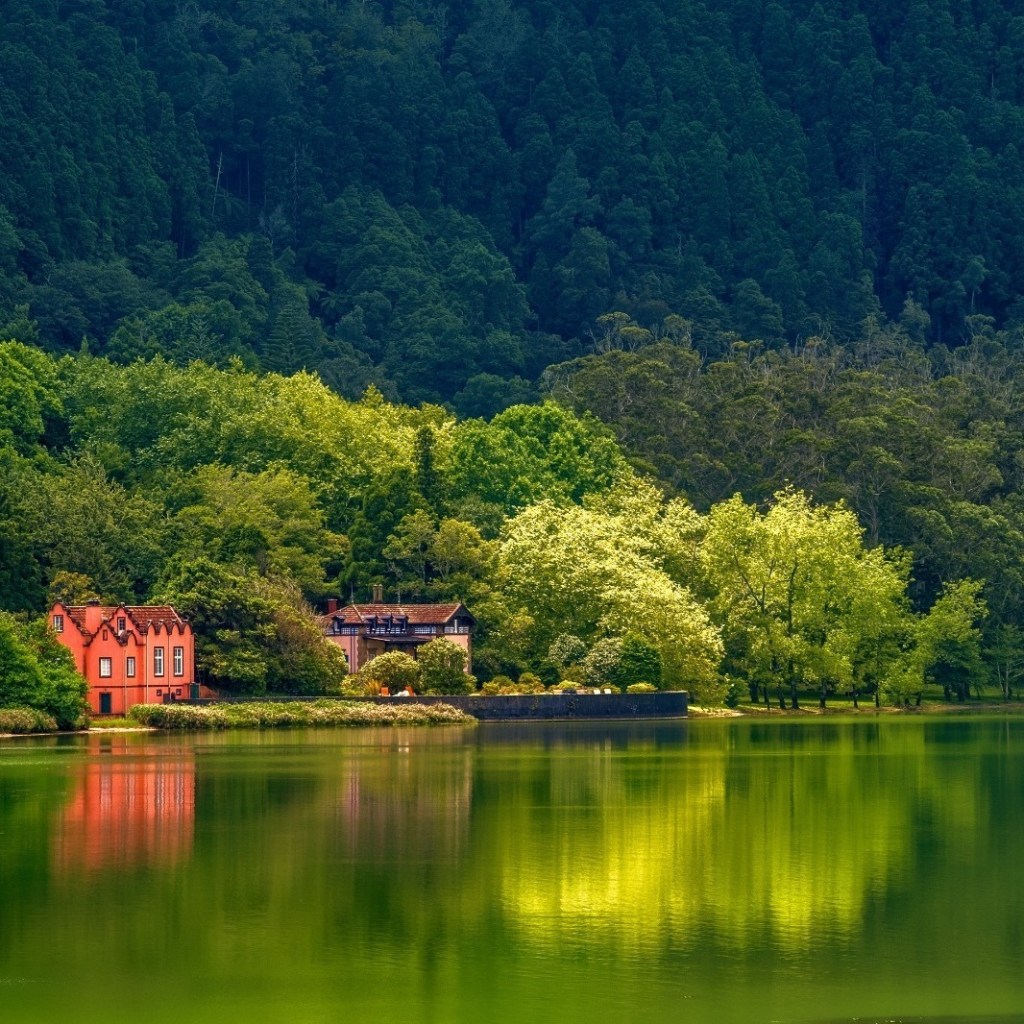
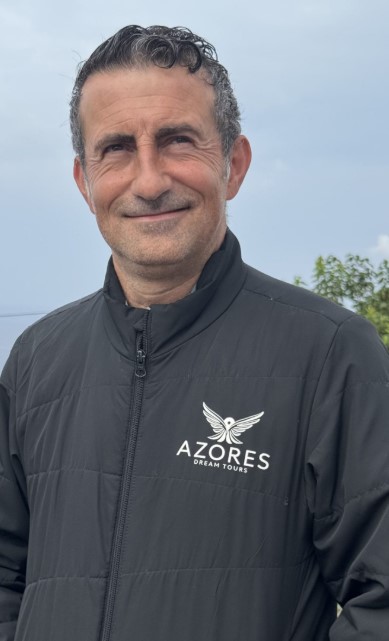
“Service and experience have become more important than the vehicle itself or the infrastructure,” says Miguel Correia, founder of Azores Dream Tours
From his work experience on cruise ships and as a traveling photographer, Miguel Correia turned challenges into opportunities by creating Azores Dream Tours, a benchmark in tourism in São Miguel. The entrepreneur has faced economic crises, passing fads, and even the pandemic, constantly reinventing himself and finding new ways to adapt to the sector. Combining personalized experiences, unique tours, and attention to detail, the tourist entertainment company provides its customers with an exceptional experience. Today, Azores Dream Tours attracts tourists from all over the world through digital media, guided by creativity, dedication, and the ability to anticipate the expectations of each visitor.
Correio dos Açores – How has your journey been to create Azores Dream Tours?
Miguel Correia (founder of Azores Dream Tours) – I arrived here in 2008, and my field has always been related to tourism. I have always tried to create something. At that time, tourism in the Azores was not what it is today. It was very, very small, and behind times, in a touristic sense. Then I went through the pandemic and had to reinvent myself within tourism, create new solutions.
I started my tourist entertainment company in 2010. Between 2010 and 2012, there were months when I didn’t even make €200 because the market was already very competitive and the established names were very strong. So, I always chose to do something different, to offer a unique service. It was very difficult.
When I arrived, we had the 2008 crisis, which didn’t help at all. I was lucky because I came from abroad, I brought some savings and innovative ideas. I had also always worked with photography: in France, for example, they sold photos for €20 each.
Here in the Azores, I decided to adapt: I set up a mobile studio and started taking photos in bars and restaurants, selling them on the spot. Instant photography was a quick fad, lasting about a year, because on an island, fads come and go quickly. After that, I looked for another source of income.
One memorable experience was photographing pilgrims: when they stopped for lunch, I would capture the festivities, the patron saint, the ranch, and then I would put the photos in frames and sell them for 15, 17, or 20 euros. It was an unexpected success and showed that creativity and timing are essential.
I always kept my tourism business open because, from an early age, I was used to working hard. I worked on cruise ships: 80 hours a week, getting up at 6 a.m., drinking Red Bulls and coffee, and working until 1 a.m. That pace taught me the importance of being active (rather than reactive) and of quickly gaining the customer’s trust.
Later, during a local election campaign in Lagoa, I created an innovative postcard for the then mayor, João Ponte: I left space to insert a photo on the spot. I presented the idea in person, and the deal was closed in minutes. That experience showed me that innovation and initiative are crucial. I also worked as a photographer for the municipality, but the hours and freelance pay didn’t appeal to me in the long run.
Meanwhile, I had just finished photographing a visitor on the way up to Lagoa do Fogo and was thinking, “What am I going to do now? I have a family and I need money.” That’s when I saw a tourist bus full of people passing by, and I had an idea. I thought, “I have my cameras with me, I can print photos on the spot.”
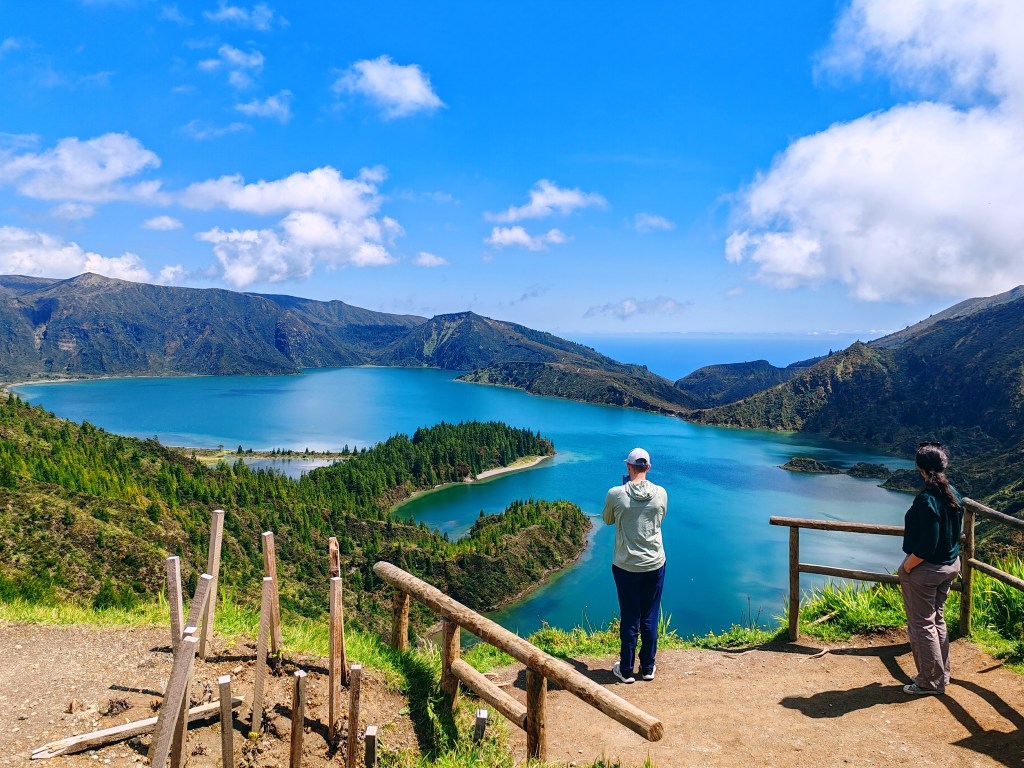
I seized the opportunity. The van followed the bus to the Lagoa do Fogo viewpoint. When the tourists got out, I introduced myself to the guide: “I’m Miguel, a photographer. I can take a group photo with no obligation, and if you like it, you can buy the photo right away.”
The result was an immediate success. I photographed the group and, in just 10 minutes, made over 200 euros. At that moment, I realized I had discovered a new way of working. From then on, it became a matter of constantly reinventing myself.
With tourism evolving and the arrival of Ryanair, bringing a constant flow of tourists, I started exploring low-cost tours, taking advantage of gaps in the market. I adapted to the tourist profile, offering different experiences, instant photos, snacks, fresh water, and personalization. Service and experience became more important than vehicles or infrastructure.
I always needed to reinvent myself: I created unique experiences, such as night tours, before anyone else could. My strategy has always been to mold myself to the market and anticipate trends, because competition is fierce and fast.
Today, I continue at the same pace. I didn’t take any formal courses in photography or tourism; my life experience, practical training on cruise ships, hard work, and constant observation of the market were my school. Whenever an opportunity arises, I try to innovate, reinvent, and differentiate myself. That’s how Azores Dream Tours was born and grew: by adapting to the needs of tourists and offering unique experiences.
Focusing solely on Azores Dream Tours, how has this summer of 2025 been going?
This summer has been better than the last, and last summer was better than the one before that, and so on. For now, we’ve been able to put bread and butter on the table; I have a daughter who is about to turn two, and everything is fine in terms of diapers and milk.
Has the fact that the weather has been a little unstable this year had an impact on tourism flows?
I usually say that these are the “islands of mist.” For example, at Vista do Rei, we can go every day, and the landscape will always be different. The magic is in the change: you get there, the view is covered in fog, and suddenly the sun comes out, just like when Lagoa do Fogo is revealed through the mist. It’s always something magical.
I tell customers: “Look, I can cancel for you if the forecast indicates bad weather after the morning.” But often we are already fully booked for the day, and we always go after the weather. Each visitor has a different perception: for some, a rainy day is a summer day; for others, a sunny day is a perfect spring day.
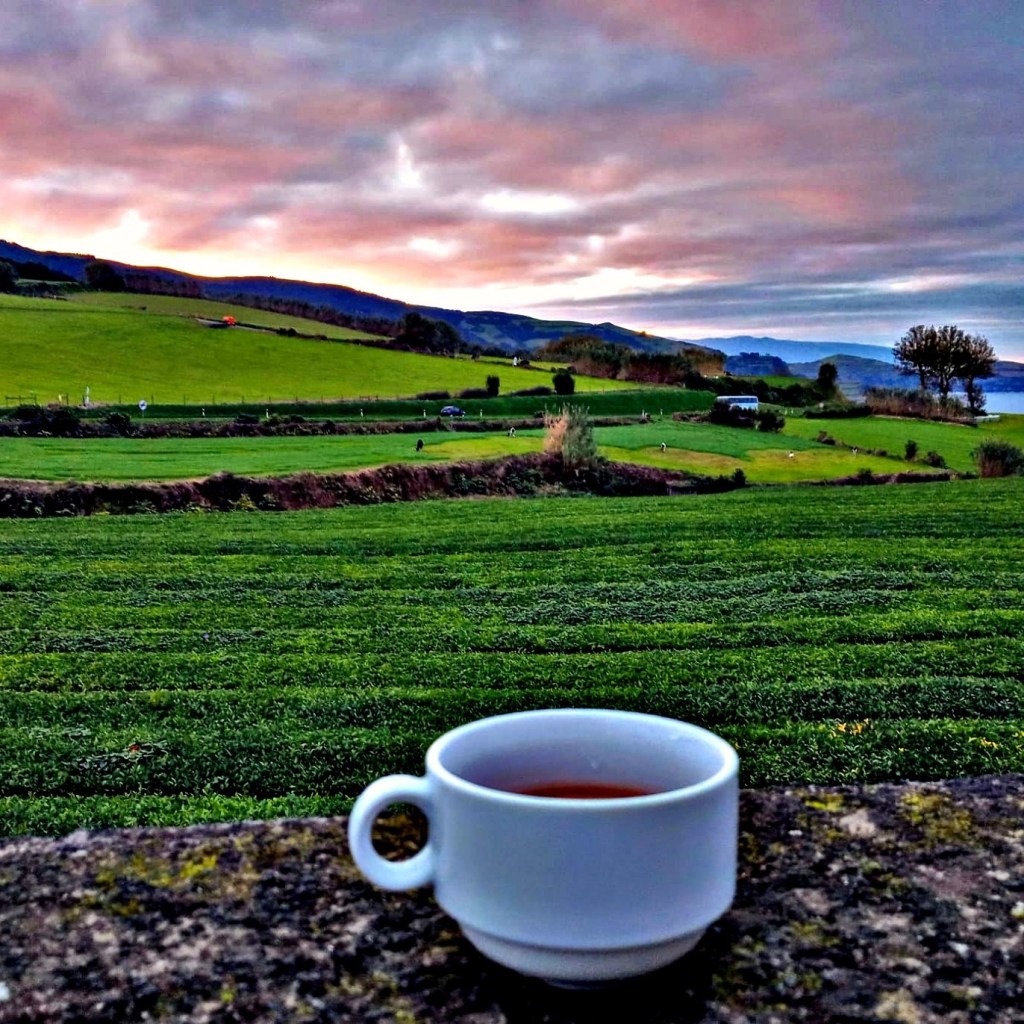
Even on the most difficult days, there are always alternatives. The Coal Cave, the pineapple fields, the tea plantations, the museums, the churches… There is always something to explore. That’s why we always have plans B and C: if plan A, say visiting the Seven Cities or Lagoa do Fogo, isn’t possible, we go somewhere else, like Furnas. And there are incredible experiences: bathing in the hot waters of Furnas while it rains, for example, is a unique sensation.

Is it difficult to find qualified people to work in tourism?
Very, very difficult. I usually divide guides into three types: the “super-qualified,” whom I call “super-guides”: this generation is disappearing. We have maybe a dozen of them here, and that’s not even enough to keep the tourism industry going. These guides work on buses, have a different type of remuneration, a different type of client, and a different type of service. They don’t have to wash vans, carry equipment, or fetch towels and cups. They are “super guides” indeed.
Then we have a new generation of guides: they are growing rapidly, especially since the period just before and after the pandemic, and most of them have adequate training.
Finally, we have those guides who love their land. They are people who don’t have as much technical knowledge, but who know the region, who are really from here, and who are eager to learn. There are always very technical details related to volcanoes, churches, and history that need to be absorbed. I prefer someone keen to learn rather than someone who thinks they already know everything.
A guide who is learning needs to understand that, at the end of the day, there are responsibilities: washing the van, polishing it, and organizing everything. Our vans are black and new, Mercedes Vitos, costing 60,000 euros each. We take great care because the safety of our customers depends on it. But I like to get a feel for the person, their commitment, and those who really collaborate become part of the core of Azores Dream Tours.
There are eight lives plus the guide’s life inside the van. We may think “this will never happen,” but the reality is that it can happen. Although we don’t think about it, it’s a very responsible job. Now, that’s not to say that a “super guide” has more or less responsibility than a guide who is learning.
I have to feel it, I like to feel the people who really collaborate and are part of my tour core and the respective means, not just the guides themselves. When I get to the end of the service, there is a speech to make, a toast to make, and I always announce that “on behalf of Azores Dream Tour, I would like to thank you for choosing us.”
I do this at the last stop of the day, where we make a toast with a glass of liqueur. I also always remind them to leave their comments, as this is very important to us; it is what makes us grow and keep going.
I don’t work directly with hotels; most of my customers come through the internet.
Those who arrive at a hotel and ask a receptionist to book a tour or rent a car are my mother’s, my grandfather’s, and my aunt’s generation. My son picks up his cell phone and rents a car; he was born into a generation that is native to technology. I consider myself a migrant in this regard. That generation of hotels will come to an end, and this system of finding customers will come to an end. Let them fight among themselves, let them waste their energy on each other. I channel my energy into the digital age
During the pandemic, for example, I used TikTok, YouTube, Instagram, and Facebook to attract customers. Today, 99.99% come from digital channels; nothing comes from hotels.
The guides who work with me also participate: they take photos, selfies with customers, videos, everything to feed social media. It’s a daily job, almost all year round, with attention to detail, identifying people, and constant creativity. That’s how I channel the company’s marketing: everything is experience, everything is digital, and it’s very intense.
I always try to find out how my service reaches tourists when they search for tourism companies, what search tools, tags, keywords, etc., they use. I’ve also paid other people to do this. I’ve learned a lot and read a lot. I spent sleepless nights learning how to do it. Obviously, you have to be very active on social media, especially during the winter. From September onwards, I need to be extremely active in the digital world, where I have to make three posts a day, and for that, I have a huge database of photos and videos.

How important is it for Azores Dream Tour to provide a good experience for its customers?
It’s everything. It really is everything. You have to love what you do. And not only that: you have to love where you are and who you’re with. Here in the Azores, we have the complete package: beaches, lagoons, volcanoes, history, culture, gastronomy… nothing is missing. I’ve traveled a lot, Mexico, the Bahamas, the Caribbean… every place has its charm, but here we have it all together.
Our tourism is nature-based; it’s not raves on the beach like in Ibiza, or jeep rides on the sand like in Dubai. But nowadays, with the warmer climate, some people want to go to the beach, and we take them there, but the essence is always nature. And everything we do is designed to be different. I don’t copy anyone. I observe, see what’s missing, and create. That’s how my brother and I came up with the night tours to Dona Beija, for example.
In terms of price, we initially thought of something along the lines of low cost, like Ryanair and EasyJet: low, affordable prices. We created a product designed for that segment.
Now times are different. If you want a tour for just $5, I can offer you the experience, with a tour that leaves from Portas do Mar, visits the São Brás Fort, and returns. However, for $80, we offer a full day, covering 200 km, and including a meal prepared on volcanic soil. So, which experience will the customer prefer?
Humility is the cornerstone of everything. Without humility, the service is not the same. We work in a family environment, with employees who respect the customer and the company’s mission. It’s not just about price, it’s about quality, attention, and experience.
I greatly value fairness and loyalty. The restaurants that helped us in difficult times continue to work with us. We also have social awareness: we collaborate with Make-A-Wish, and, in these cases, these people have priority, even if the President of the Republic is passing by.

I dedicate myself body and soul. I have worked 86 hours a week, six months in a row, without a day off. But this dedication is reflected in the experience we give our customers.
We also have an influencer program, where they can participate in tours for free. For example, one of my followers participated in a tour; she has several Instagram pages, one with 513,000 followers, and others even bigger. It’s impressive. Sometimes I think it’s better to “get on people’s good side” than to try to be funny.
She paid for the tour as normal, but halfway through, I found out she was an influencer. Luckily, I was with her, and we started talking. Then she posted about Caldeira Velha, tagged Azores Dream Tours, and in a matter of minutes, we gained between 50 and 60 followers.
Now, pay attention: we’re talking about people with hundreds of thousands of followers. It makes no sense to accept influencers with 2 or 3 thousand followers, or only connected to beauty or food products. That’s why I really value this type of collaboration.
In addition, there are also opportunities for filming and productions. If I see an opening for this, I can arrange for my guides to participate, which works as indirect advertising. These are markets with great reach and volume, and sometimes we end up photographing clothes or other products during the tour, a form of strategic collaboration that can be very advantageous.
FF/JHA–Correio dos Açores, Natalino Viveiros, director (Photos from Azores Dream Tours Facebook Page:
https://www.facebook.com/azores.dreamtours

Translated to English as a community outreach program from the Portuguese Beyond Borders Institute (PBBI) and the Modern and Classical Languages and Literatures Department (MCLL) as part of Bruma Publication and ADMA (Azores-Diaspora Media Alliance) at California State University, Fresno, PBBI thanks Luso Financial for sponsoring NOVIDADES.


 Novidades - The Islands and the Diaspora